


Unintended pregnancy and subsequent postpartum long-acting reversible contraceptive use in Zimbabwe
- PMID: 30477497
- PMCID: PMC6258256
- DOI: 10.1186/s12905-018-0668-z
Unintended pregnancy and subsequent postpartum long-acting reversible contraceptive use in Zimbabwe
Abstract
Background: The postpartum period is an opportune time for contraception adoption, as women have extended interaction with the reproductive healthcare system and therefore more opportunity to learn about and adopt contraceptive methods. This may be especially true for women who experience unintended pregnancy, a key target population for contraceptive programs and programs to eliminate mother-to-child HIV transmission. Among women in Zimbabwe surveyed in 2014, we examined the relationship between pregnancy intention associated with a woman's most recent pregnancy, and her subsequent postpartum contraceptive use.
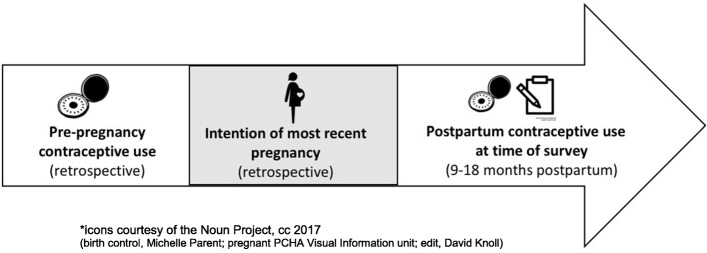
Methods: In our analysis we utilized a dataset from a random selection of catchment areas in Zimbabwe to examine the association between pregnancy intention of most recent pregnancy and subsequent postpartum contraceptive use using multinomial logistic regression models. We also explored whether this association differed by women's HIV status. Finally, we examined the association between pregnancy intention and changes in contraception from the pre- to postpartum periods.
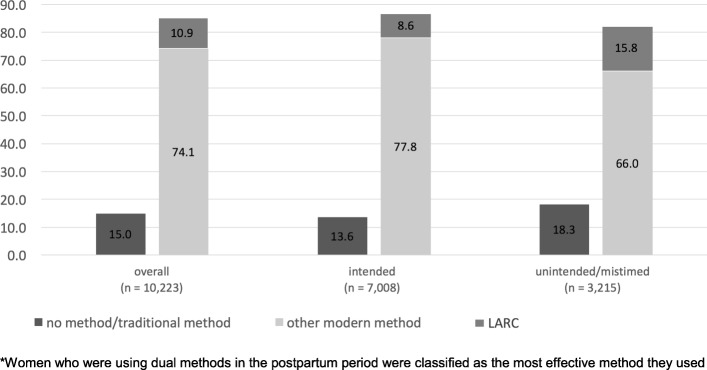
Results: Findings suggest that women who reported that their pregnancy was unintended adopted less modern (all non-traditional) contraceptive methods overall, but adopted long-acting reversible contraception (LARC) more frequently than women reporting an intended pregnancy (OR 1.41; CI 1.18, 1.68). Among HIV-positive women, this relationship was particularly strong (OR 3.12; CI 1.96, 4.97). However, when examining changes in contraceptive use from the pre-pregnancy to the postpartum period, women who had an unintended pregnancy had lower odds of changing to a more effective method postpartum overall (OR 0.71; CI 0.64, 0.79).
Conclusions: We did not find evidence of higher modern method adoption in the postpartum period among women with an unintended pregnancy. However, women who were already on a method in the pre-pregnancy period were catalyzed to move to more effective methods (such as LARC) postpartum. This study provides evidence of low modern (non-traditional) method adoption in general in the postpartum period among a vulnerable sub-population in Zimbabwe (women who experience unintended pregnancy). Simultaneously, however, it shows a relatively greater portion specifically of LARC use among women with an unintended pregnancy. Further research is needed to more closely examine the motivations behind these contraceptive decisions in order to better inform distribution and counseling programs.
Conflict of interest statement
Ethics approval and consent to participate
The study protocol was approved by the Medical Research Council of Zimbabwe, University College London and the UC Berkeley Committee for the Protection of Human Subjects. All participants provided informed consent at the interview; participants who were under the age of 18 and participated were all emancipated minors and were able to give consent.
Consent for publication
Not applicable.
Competing interests
The authors declare that they have no competing interests.
Publisher’s Note
Springer Nature remains neutral with regard to jurisdictional claims in published maps and institutional affiliations.
Figures
References
-
- Sonfield A, Hasstedt K, Kavanaugh ML, Anderson R. The social and economic benefits of women’s ability to determine whether and when to have children. 2013.
Publication types
MeSH terms
Grants and funding
LinkOut - more resources
Full Text Sources
