


Low birth weight and its associated factors in Ethiopia: a systematic review and meta-analysis
- PMID: 30477557
- PMCID: PMC6258299
- DOI: 10.1186/s13052-018-0586-6
Low birth weight and its associated factors in Ethiopia: a systematic review and meta-analysis
Abstract
Background: Different primary studies in Ethiopia showed the burden of low birth weight. However, variation among those studies was seen. This study was aimed to estimate the national prevalence and associated factors of low birth weight in Ethiopia.
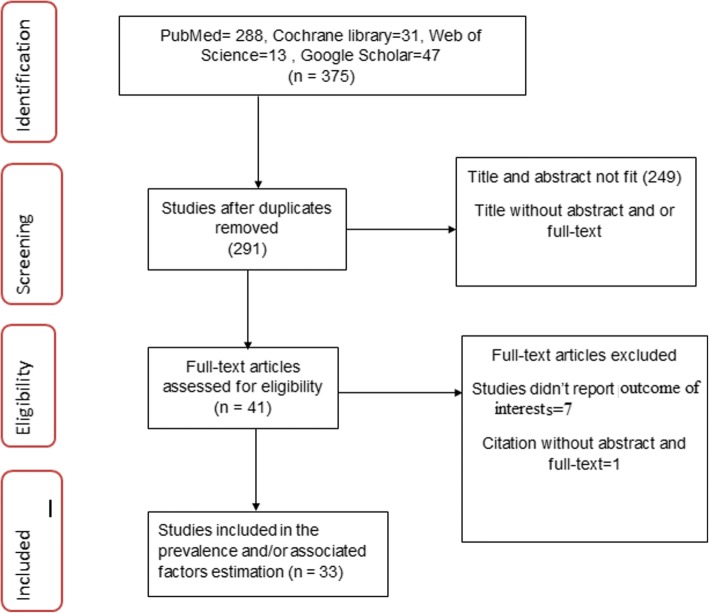
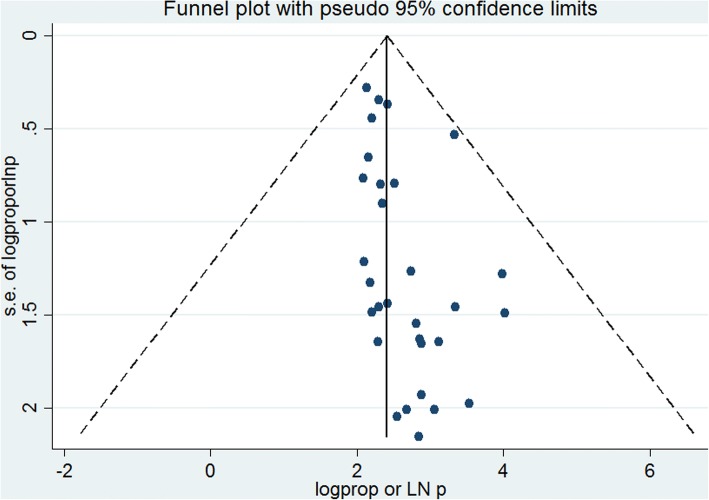
Methods: PubMed, Web of Science, Cochrane library, and Google Scholar were searched. A funnel plot and Egger's regression test were used to see publication bias. I-squared statistic was applied to check heterogeneity of studies. A weighted inverse variance random-effects model was applied to estimate the national prevalence and the effect size of associated factors. The subgroup analysis was conducted by region, study design, and year of publication.
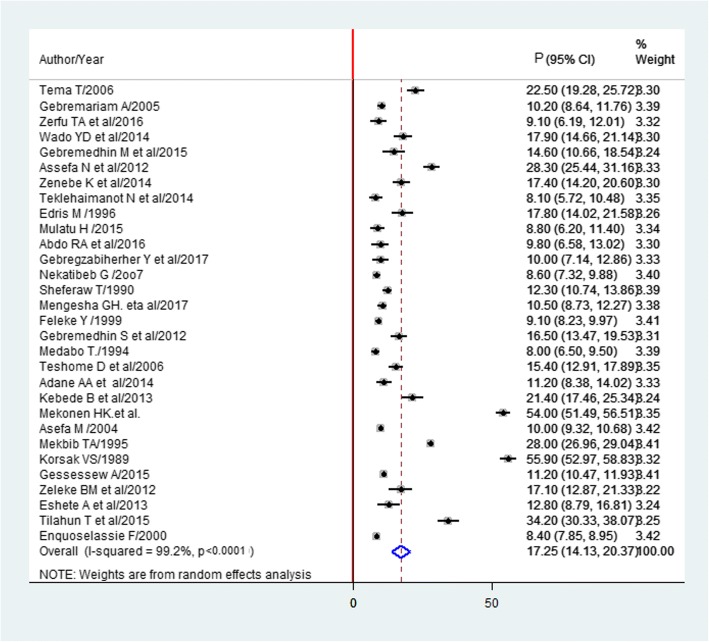
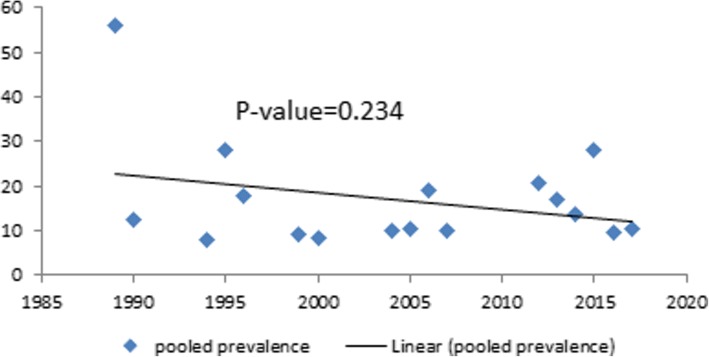
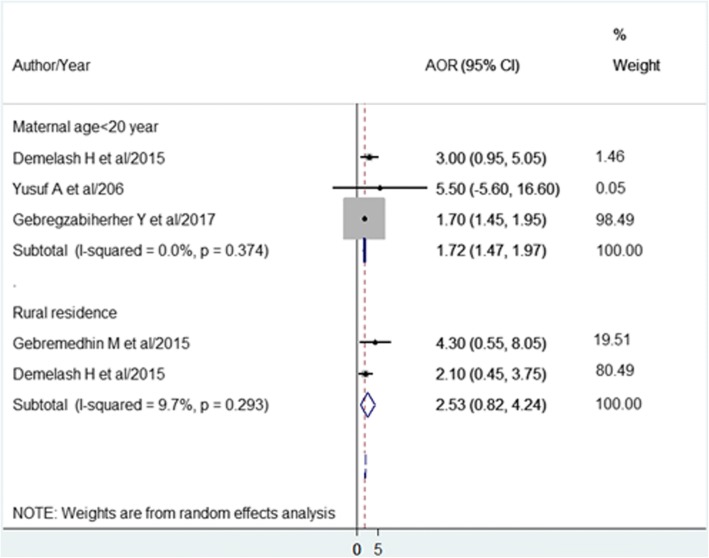
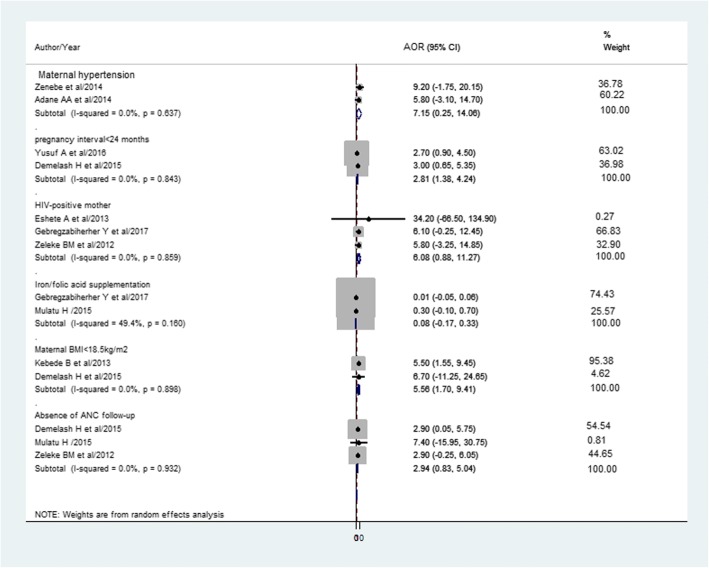
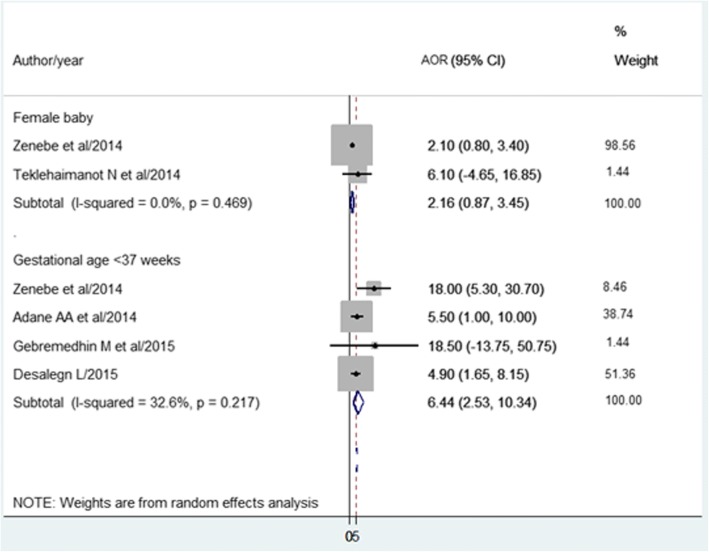
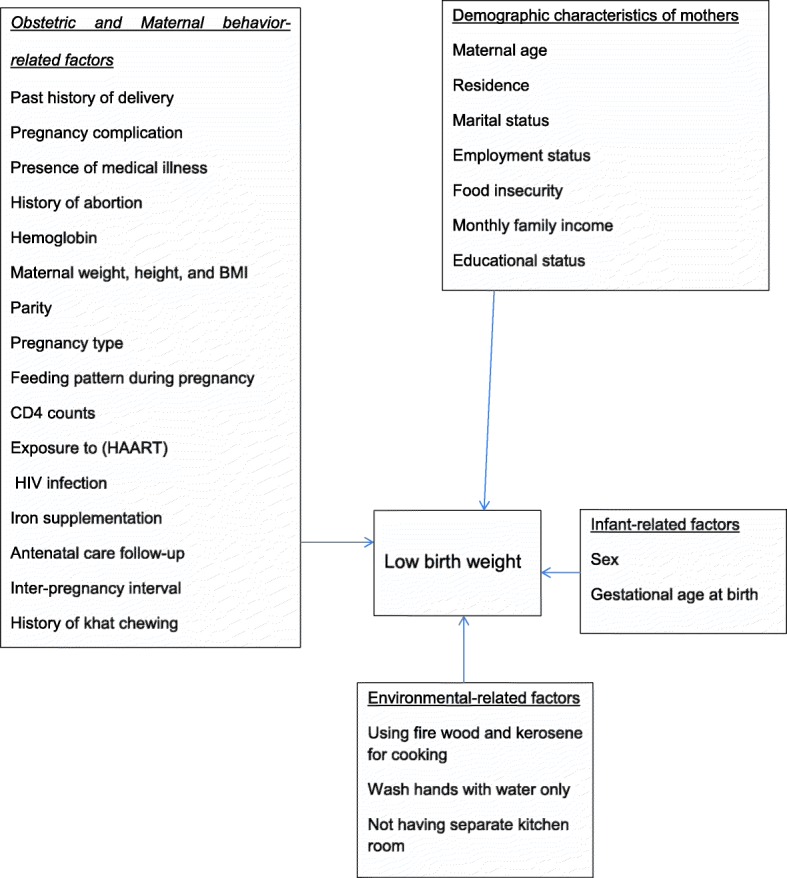
Result: A total of 30 studies with 55,085 participants were used for prevalence estimation. The pooled prevalence of LBW was 17.3% (95% CI: 14.1-20.4). Maternal age < 20 years (AOR = 1.7; 95% CI:1.5-2.0), pregnancy interval < 24 months (AOR = 2.8; 95%CI: 1.4-4.2), BMI < 18.5 kg/m2 (AOR = 5.6; 95% CI: 1.7-9.4), and gestational age < 37 weeks at birth (AOR = 6.4; 95% CI: 2.5-10.3) were identified factors of LBW.
Conclusions: The prevalence of low birth weight in Ethiopia remains high. This review may help policy-makers and program officers to design low birth weight preventive interventions.
Keywords: Birth outcome; Ethiopia; Low birth weight.
Conflict of interest statement
Ethics approval and consent to participate
Not applicable because no primary data were collected.
Consent for publication
Not applicable.
Competing interests
The authors declared that they have no competing interest.
Publisher’s Note
Springer Nature remains neutral with regard to jurisdictional claims in published maps and institutional affiliations.
Figures
References
-
- Rezende Chrisman J, Mattos IE, Koifman RJ, Koifman S, Moraes Mello Boccolini P, Meyer A. Prevalence of very low birthweight, malformation, and low Apgar score among newborns in Brazil according to maternal urban or rural residence at birth. J Obstet Gynaecol Res. 2016;42(5):496–504. doi: 10.1111/jog.12946. - DOI - PubMed
-
- Azoumah K, Djadou K, Aboubakari A, Bothon A, Agbodjan-Djossou O, Agbèrè A.General medicine: open evaluation of the glycemia of low-weight newborns within the 24th hour of life at Lome University hospital (Togo). Archives de pediatrie: organe officiel de la Societe francaise de pediatrie. 2011;18(10):1037–1043. - PubMed
-
- Seyum T, Ebrahim E. Proportion of neonatal hypothermia and associated factors among new-borns at Gondar University teaching and Refferal hospital, Northwest Ethiopia: a hospital based cross sectional study. General Medicine: Open Access. 2015;2015.
-
- Gutbrod T, Wolke D, Soehne B, Ohrt B, Riegel K. Effects of gestation and birth weight on the growth and development of very low birthweight small for gestational age infants: a matched group comparison. Arch Dis Child Fetal Neonatal Ed. 2000;82(3):F208–FF14. doi: 10.1136/fn.82.3.F208. - DOI - PMC - PubMed
Publication types
MeSH terms
LinkOut - more resources
Full Text Sources
Medical
