Comparison of Meat Quality Characteristics of Wet- and Dry-aging Pork Belly and Shoulder Blade
- PMID: 30479502
- PMCID: PMC6238040
- DOI: 10.5851/kosfa.2018.e27
Comparison of Meat Quality Characteristics of Wet- and Dry-aging Pork Belly and Shoulder Blade
Abstract
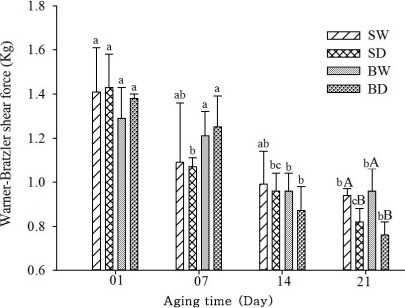
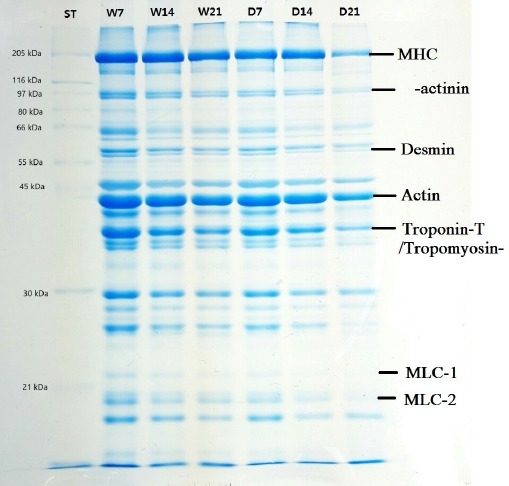
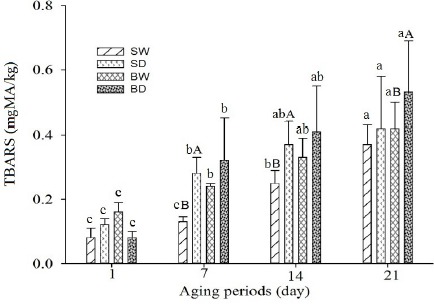
The physicochemical characteristics and oxidative stability of wet-aged and dry-aged pork cuts were investigated at different aging periods (1, 7, 14 and 21 d). Samples were assigned into four groups in terms of shoulder blade-wet aging (SW), shoulder blade-dry aging (SD), belly-wet aging (BW), and belly-dry aging (BD). SD showed significantly higher pH at 21 d of aging than the other samples. Wet-aged cuts had significantly higher released water (RW) %, lightness (L*) and shear force compared to the dry-aged meats. Sodium dodecyl sulfate-polyacrylamide gel electrophoresis (SDS-PAGE) analysis showed greater degradation of proteins for dry-aged cuts than the wet-aged cuts. At the end of aging, wet-aged cuts showed significantly lower thiobarbituric acid-reactive substances (TBARS) value than the dry-aged samples, indicating higher oxidative stability for wet-aged pork cuts. However, dry-aging led to higher degradation of proteins resulting in increased water-holding capacity (WHC) and decreased shear force value.
Keywords: dry aging; dry-aged pork; pork aging; pork quality; wet aging.
Figures
References
-
- Adegoke GO, Falade KO. Quality of meat. J Food Agric Environ. 2005;3:87–90.
-
- Aksu MI, Kaya M, Ockerman HW. Effect of modified atmosphere packaging and temperature on the shelf life of sliced pastirma produced from frozen/thawed meat. J Muscle Foods. 2005;16:192–206. doi: 10.1111/j.1745-4573.2005.08404.x. - DOI
-
- Campbell RE, Hunt MC, Levis P, Chambers E., IV Dry-aging affects on palatability of beef longissimus muscle. J Food Sci. 2001;66:196–199. doi: 10.1111/j.1365-2621.2001.tb11315.x. - DOI
LinkOut - more resources
Full Text Sources