


Challenges in the Polyene- and Azole-Based Pharmacotherapy of Ocular Fungal Infections
- PMID: 30481082
- PMCID: PMC6354613
- DOI: 10.1089/jop.2018.0089
Challenges in the Polyene- and Azole-Based Pharmacotherapy of Ocular Fungal Infections
Abstract
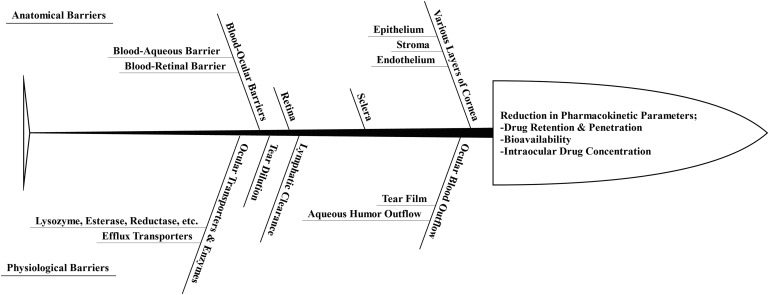
Polyenes and azoles constitute 2 major drug classes in the antifungal armamentarium used to treat fungal infections of the eye such as fungal keratitis, endophthalmitis, conjunctivitis, and blepharitis. These classes of drugs have come to occupy an important niche in ophthalmic antifungal therapy due to their broad spectrum of activity against a variety of filamentous and yeast-like fungi. Natamycin suspension (Natacyn®), a polyene antifungal drug, is currently the only US FDA-approved formulation for treating ophthalmic fungal infections, whereas the other polyene and azole antifungals such as amphotericin B, fluconazole, itraconazole, ketoconazole, miconazole, voriconazole, and posaconazole are routinely used off-label in the clinical setting. Despite potent antifungal activity, the clinical utility of these agents in ophthalmic infections has been challenged by their physicochemical properties, the unique ocular anatomy and physiology, selective antifungal activity, ocular and systemic toxicity, emergence of resistance and cross-resistance, and absence of reliable techniques for developing a robust in vitro-in vivo correlation. This review discusses the aforementioned challenges and the common approaches undertaken to circumnavigate the difficulties associated with the polyene- and azole-based pharmacotherapy of ophthalmic fungal infections.
Keywords: anti-infectives; keratitis; ocular fungal infections; ocular pharmacotherapy; polyene and azole antifungals.
Conflict of interest statement
No competing financial interests exist.
Figures
References
-
- CDC. Fungal Diseases. 2014. www.cdc.gov/fungal/diseases/index.html Accessed September9, 2018
-
- Patil A., Lakhani P., Taskar P., et al. Formulation development, optimization, and in vitro-in vivo characterization of natamycin-loaded PEGylated nano-lipid carriers for ocular applications. J. Pharm. Sci. 107:2160–2171, 2018 - PubMed
-
- Noor S.S.M., Michael K., Marshall S., and Ren J. Spatial and spectral analysis of corneal epithelium injury using hyperspectral images. In: Second International Conference on Robotics and Machine Vision: Bellingham, WA: SPIE; 2017; p. 11
Publication types
MeSH terms
Substances
Grants and funding
LinkOut - more resources
Full Text Sources