Possible Effects of Radiofrequency Electromagnetic Field Exposure on Central Nerve System
- PMID: 30481957
- PMCID: PMC6513191
- DOI: 10.4062/biomolther.2018.152
Possible Effects of Radiofrequency Electromagnetic Field Exposure on Central Nerve System
Abstract
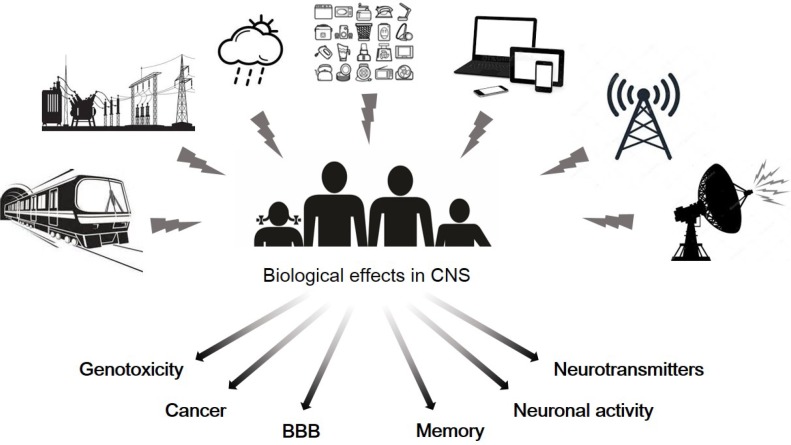
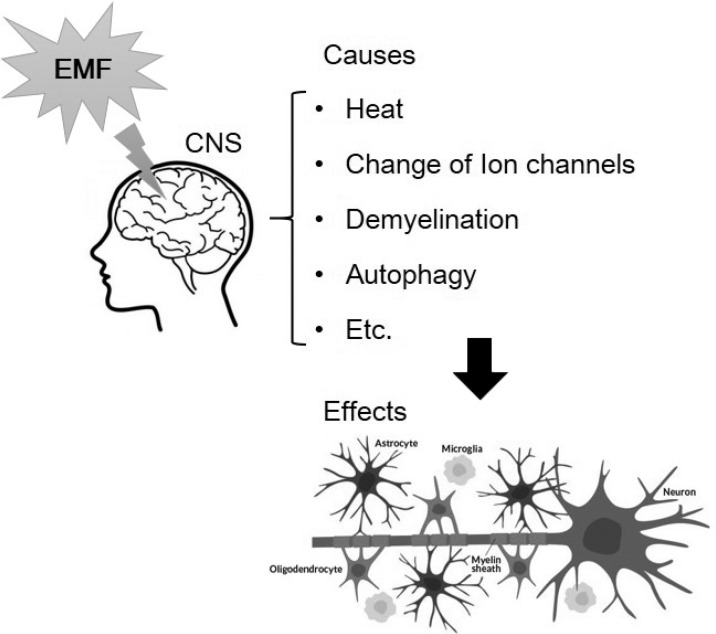
Technological advances of mankind, through the development of electrical and communication technologies, have resulted in the exposure to artificial electromagnetic fields (EMF). Technological growth is expected to continue; as such, the amount of EMF exposure will continue to increase steadily. In particular, the use-time of smart phones, that have become a necessity for modern people, is steadily increasing. Social concerns and interest in the impact on the cranial nervous system are increased when considering the area where the mobile phone is used. However, before discussing possible effects of radiofrequency-electromagnetic field (RF-EMF) on the human body, several factors must be investigated about the influence of EMFs at the level of research using in vitro or animal models. Scientific studies on the mechanism of biological effects are also required. It has been found that RF-EMF can induce changes in central nervous system nerve cells, including neuronal cell apoptosis, changes in the function of the nerve myelin and ion channels; furthermore, RF-EMF act as a stress source in living creatures. The possible biological effects of RF-EMF exposure have not yet been proven, and there are insufficient data on biological hazards to provide a clear answer to possible health risks. Therefore, it is necessary to study the biological response to RF-EMF in consideration of the comprehensive exposure with regard to the use of various devices by individuals. In this review, we summarize the possible biological effects of RF-EMF exposure.
Keywords: Brain; Central nervous system; Electromagnetic field; Neuron; Radiofrequency; Stress.
Conflict of interest statement
The authors declare no competing interests.
Figures
References
Publication types
LinkOut - more resources
Full Text Sources