


Why Is Tinnitus a Problem? A Qualitative Analysis of Problems Reported by Tinnitus Patients
- PMID: 30482102
- PMCID: PMC6277754
- DOI: 10.1177/2331216518812250
Why Is Tinnitus a Problem? A Qualitative Analysis of Problems Reported by Tinnitus Patients
Abstract
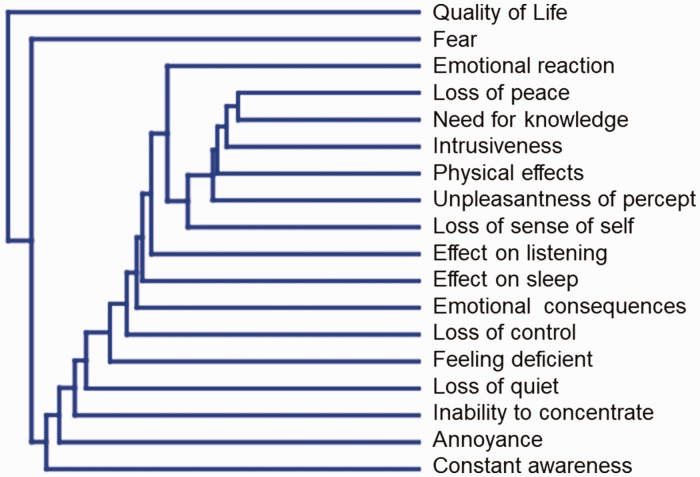
Tinnitus is a prevalent complaint, and people with bothersome tinnitus can report any number of associated problems. Yet, to date, only a few studies, with different populations and relatively modest sample sizes, have qualitatively evaluated what those problems are. Our primary objective was to determine domains of tinnitus problem according to a large clinical data set. This was a retrospective analysis of anonymized clinical data from patients who attended a U.K. Tinnitus Treatment Center between 1989 and 2014. Content analysis was used to code and collate the responses of 678 patients to the clinical interview question "Why is tinnitus a problem?" into categories of problems (domains). We identified 18 distinct domains of tinnitus-associated problems. Reduced quality of life, tinnitus-related fear, and constant awareness were notably common problems. Clinicians need to be mindful of the numerous problem domains that might affect their tinnitus patients. Current questionnaires, as well as being measures of severity, are useful clinical tools for identifying problem domains that need further discussion and possibly measurement with additional questionnaires. The domains identified in this work should inform clinical assessment and the development of future clinical tinnitus questionnaire.
Keywords: adult or general hearing screening; behavioral measures; psychosocial or emotional.
Figures
References
-
- Andersson G. (2002) Psychological aspects of tinnitus and the application of cognitive-behavioural therapy. Clinical Psychology Review 22(22): 971–990. - PubMed
-
- Andersson G., Edvinsson E. (2008) Mixed feelings about living with tinnitus: A qualitative study. Audiological Medicine 6(1): 48–54.
-
- Baguley D. M., Andersson G. (2003) Factor analysis of the Tinnitus Handicap Inventory. American Journal of Audiology 12(1): 31–34. - PubMed
Publication types
MeSH terms
Grants and funding
LinkOut - more resources
Full Text Sources
Medical
