


Heat Shock Proteins Regulatory Role in Neurodevelopment
- PMID: 30483047
- PMCID: PMC6244093
- DOI: 10.3389/fnins.2018.00821
Heat Shock Proteins Regulatory Role in Neurodevelopment
Abstract
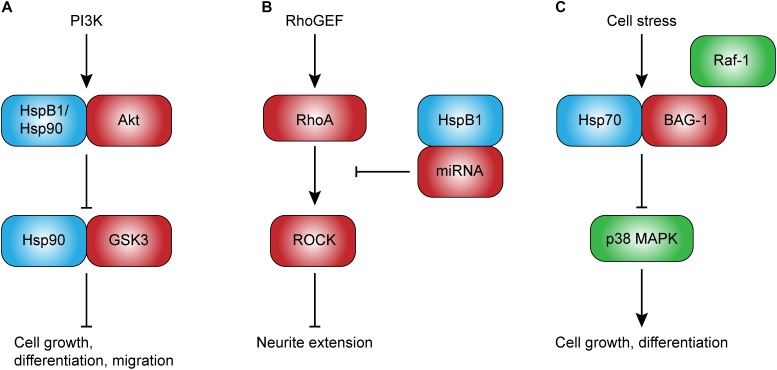
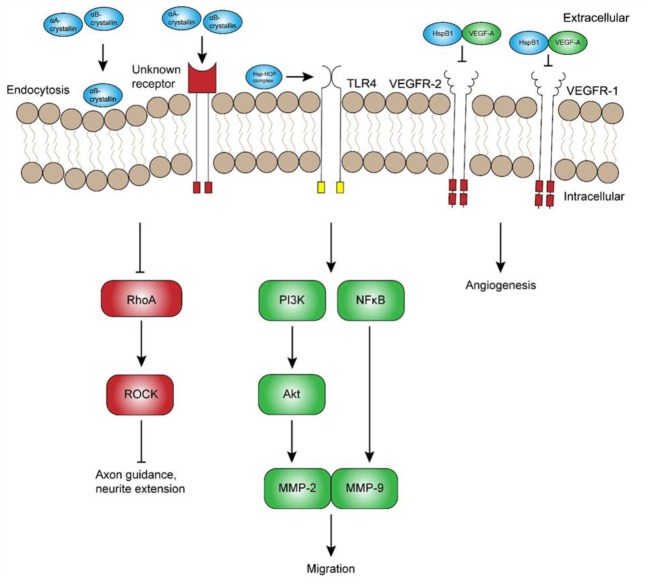
Heat shock proteins (Hsps) are a large family of molecular chaperones that are well-known for their roles in protein maturation, re-folding and degradation. While some Hsps are constitutively expressed in certain regions, others are rapidly upregulated in the presence of stressful stimuli. Numerous stressors, including hyperthermia and hypoxia, can induce the expression of Hsps, which, in turn, interact with client proteins and co-chaperones to regulate cell growth and survival. Such interactions must be tightly regulated, especially at critical points during embryonic and postnatal development. Hsps exhibit specific patterns of expression consistent with a spatio-temporally regulated role in neurodevelopment. There is also growing evidence that Hsps may promote or inhibit neurodevelopment through specific pathways regulating cell differentiation, neurite outgrowth, cell migration, or angiogenesis. This review will examine the regulatory role that these individual chaperones may play in neurodevelopment, and will focus specifically on the signaling pathways involved in the maturation of neuronal and glial cells as well as the underlying vascular network.
Keywords: axon guidance; cell migration; heat shock proteins; neurite extension; neurodevelopment; neurovascular unit.
Figures
References
-
- Arrigo A. P., Welch W. J. (1987). Characterization and purification of the small 28,000-dalton mammalian heat shock protein. J. Biol. Chem. 262 15359–15369. - PubMed
Publication types
Grants and funding
LinkOut - more resources
Full Text Sources
