


Epidemiology and clinical course of inflammatory bowel disease in the Central Province of Sri Lanka: A hospital-based study
- PMID: 30483577
- PMCID: PMC6207030
- DOI: 10.1002/jgh3.12058
Epidemiology and clinical course of inflammatory bowel disease in the Central Province of Sri Lanka: A hospital-based study
Abstract
Background and aim: There is increasing prevalence of inflammatory bowel disease (IBD) in Asia, but Sri Lankan data on the state of epidemiology and clinical course of IBD are scarce.
Methods: A hospital-based study was done by recruiting IBD patients who permanently reside in the Central Province (population 2.57 million, 12.6% of Sri Lankan population) of Sri Lanka. Cases were confirmed by standard criteria and data were collected from health records and patient interviews at clinic visits and hospital admissions.
Results: There were 200 cases of IBD; (ulcerative colitis [UC]-140, Crohn's disease [CD]-60, microscopic colitis-7). The crude prevalence rate of UC was 5.44/100 000 (95% CI 5.41-5.47/100 000) and CD was 2.33/100 000 (95% CI 2.31-2.35/100 000). Female to male ratios were 1:0.8 for UC but 1:1.5 for CD.Mean age at diagnosis was 42.0 and 31.9 years for UC and CD, respectively. One UC and one CD patient had positive family history of IBD. Among the UC patients, 60.7%, 24.3%, and 15% had proctitis, left sided, and extensive disease, respectively. At presentation, 62.1% of the UC patients have had moderately severe disease. 60% of the CD patients had only large bowel involvement and 80% had nonstricturing and nonpenetrating disease. Extra intestinal manifestations were present in 45.7% and 60.0% of UC and CD patients, respectively, in which peripheral arthralgia and arthritis being the commonest. 6.4% of UC and 23.3% of the CD patients (total of 23) required infliximab for induction of remission.
Conclusion: The prevalence of IBD in the Central Province of Sri Lanka is lower than other Asian and Western populations. There is a predominance of male gender and isolated colonic disease in CD patients. UC patients have an equal gender distribution and a higher proportion of proctitis. CD needed induction with infliximab than UC.
Keywords: Sri Lanka; clinical course; disease characteristics; induction of remission; prevalence of ibd.
Figures
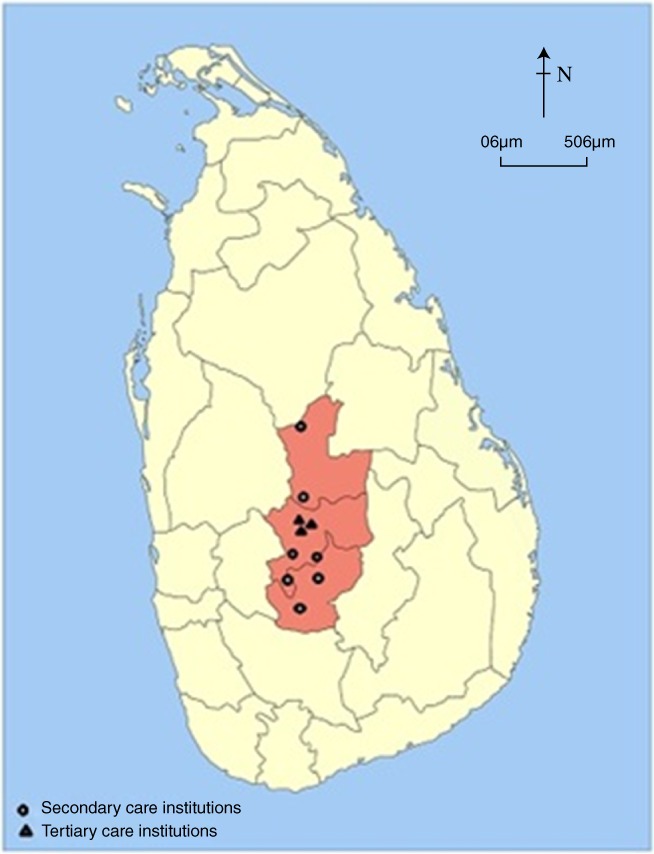
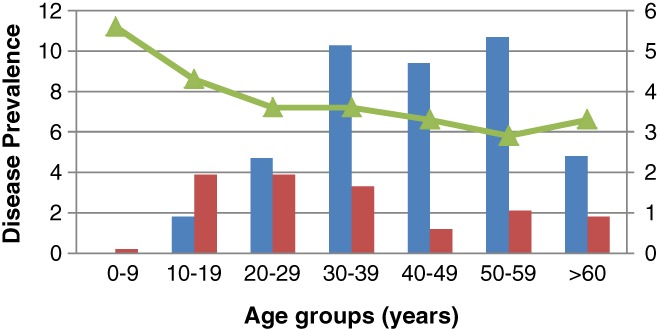
 , Prevalence UC per 100 000;
  , Prevalence CD per 100 000;
  , Population (× 100 000).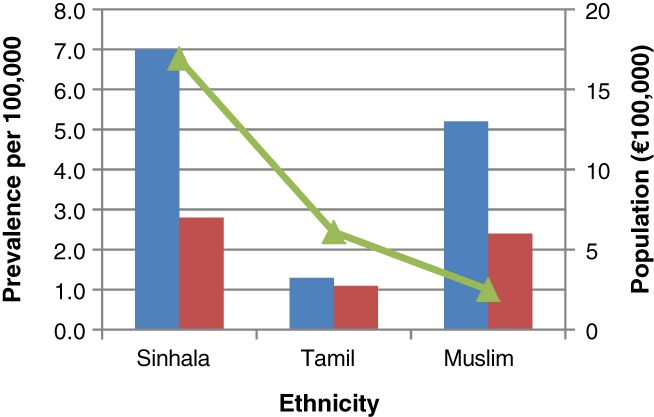
 , Prevalence of UC per 100 000;
  , Prevalence of CD per 100 000;
  , Population (× 100 000).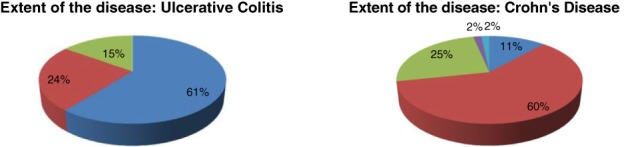
 , Distal disease;
  , Left‐sided disease;
  , Extensive disease. Among CD patients 60% had only large bowel (L2) involvement followed by ileocolonic (L3) disease (23.3%) and ileal disease (L1) (16.7%).
  , Only small intestinal involvement;
  , Only large intestinal involvement;
  , Large and small intestinal involvement;
  , SI and upper GI;
  , LI and upper GI.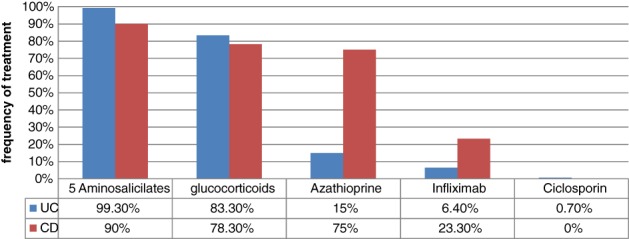
References
-
- Ng SC, Tang W, Ching JY et al Incidence and phenotype of inflammatory bowel disease based on results from the Asia‐pacific Crohn's and colitis epidemiology study. Gastroenterology. 2013; 145(1): 158–65 e2. - PubMed
-
- Asakura K, Nishiwaki Y, Inoue N, Hibi T, Watanabe M, Takebayashi T. Prevalence of ulcerative colitis and Crohn's disease in Japan. J. Gastroenterol. 2009; 44(7): 659–65. - PubMed
-
- Cosnes J, Gower‐Rousseau C, Seksik P, Cortot A. Epidemiology and natural history of inflammatory bowel diseases. Gastroenterology. 2011; 140(6): 1785–94. - PubMed
-
- http://www.statistics.gov.lk/page.asp?page=Population%20and%20Housing 2012. Cited 2017.
LinkOut - more resources
Full Text Sources
