


Effect of mcl-PHA synthesis in flax on plant mechanical properties and cell wall composition
- PMID: 30484148
- PMCID: PMC6353814
- DOI: 10.1007/s11248-018-0105-y
Effect of mcl-PHA synthesis in flax on plant mechanical properties and cell wall composition
Abstract
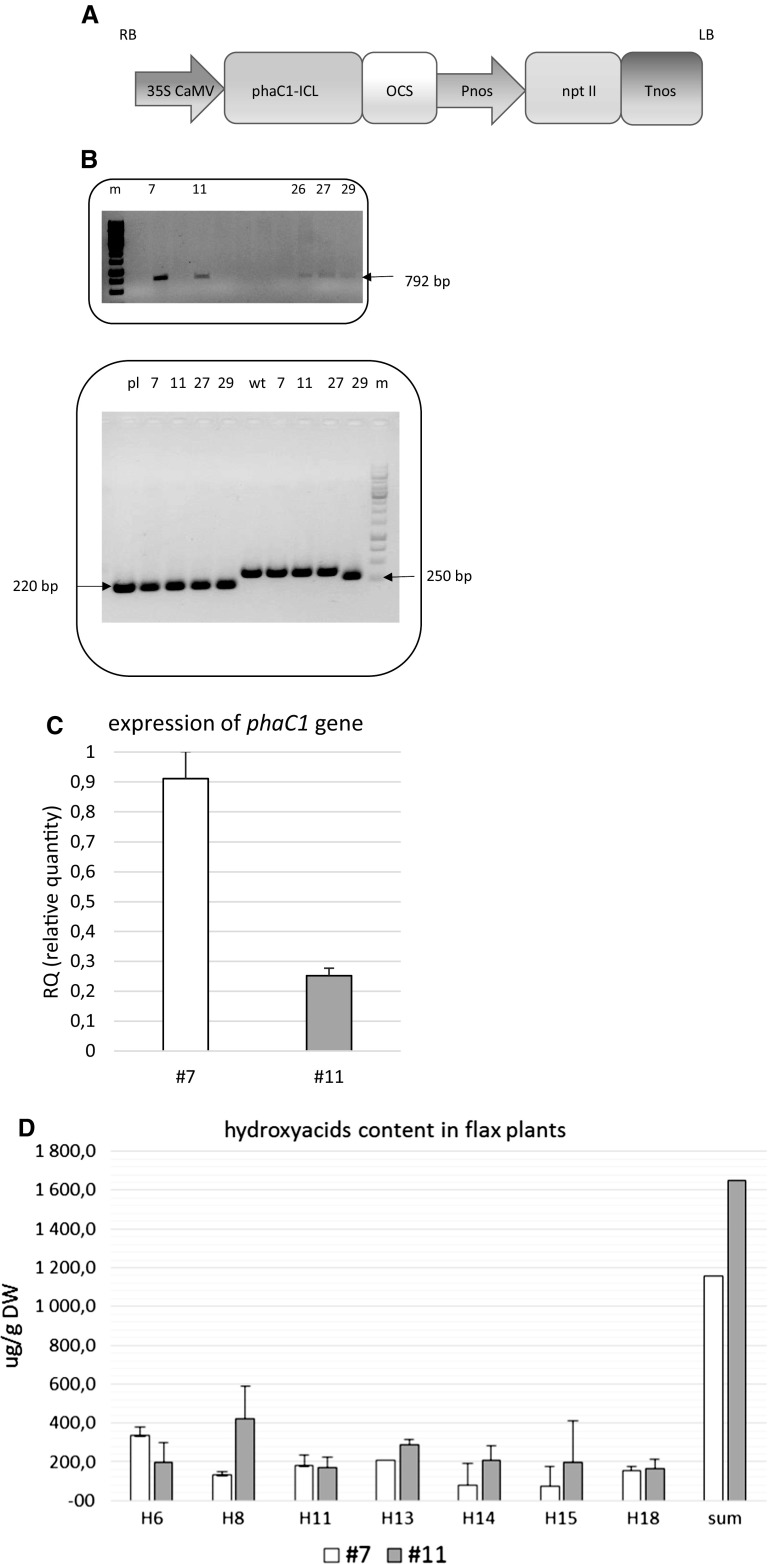
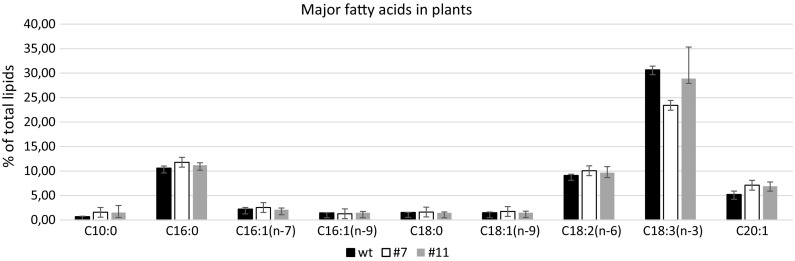
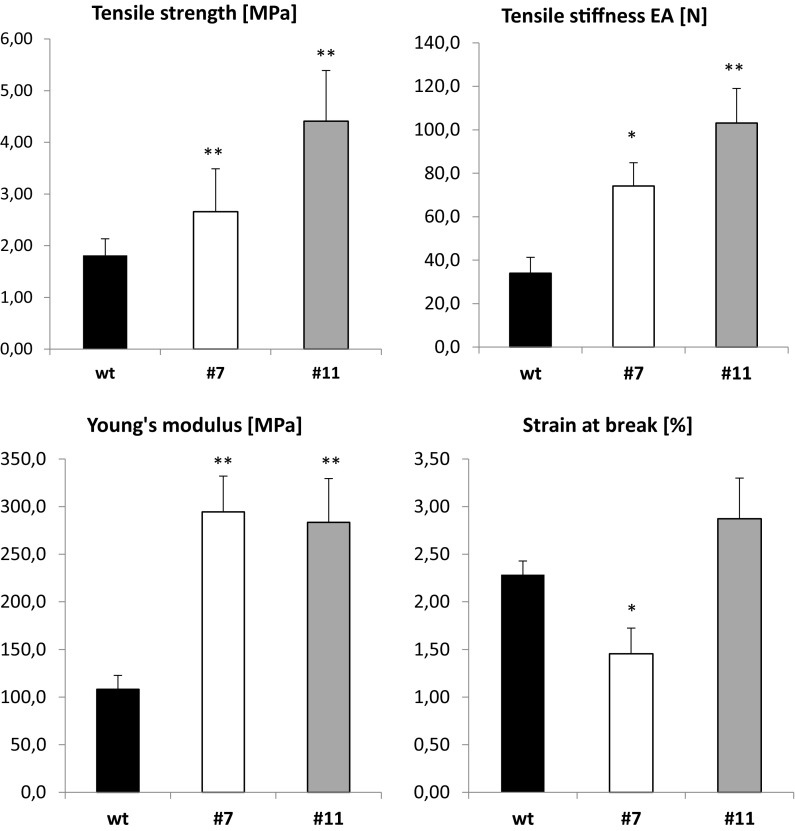
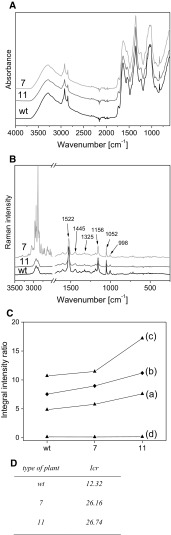
The high demand for new biomaterials makes synthesis of polyhydroxyalkanoates (PHA) in plants an interesting and desirable achievement. Production of polymers in plants is an example of application of biotechnology for improving the properties of plants, e.g. industrial properties, but it can also provide knowledge about plant physiology and metabolism. The subject of the present study was an industrially important plant: flax, Linum usitatissimum L., of a fibre cultivar (cv Nike). In the study the gene encoding PHA synthase from Pseudomonas aeruginosa, fused to a peroxisomal targeting signal, was expressed in flax plants with the aim of modifying the mechanical properties of plants. Medium-chain-length (mcl) hydroxy acids in flax plants from tissue cultures were detected by GC-FID and FTIR method. The introduced changes did not affect fatty acid content and composition in generated flax plants. Since mcl-PHA are known as elastomers, the mechanical properties of created plants were examined. Modified plants showed increases in the values of all measured parameters (except strain at break evaluated for one modified line). The largest increase was noted for tensile stiffness, which was 2- to 3-fold higher than in wild-type plants. The values estimated for another parameter, Young's modulus, was almost at the same level in generated flax plants, and they were about 2.7-fold higher when compared to unmodified plants. The created plants also exhibited up to about 2.4-fold higher tensile strength. The observed changes were accompanied by alterations in the expression of selected genes, related to cell wall metabolism in line with the highest expression of phaC1 gene. Biochemical data were confirmed by spectroscopic methods, which also revealed that crystallinity index values of cellulose in modified flax plants were increased in comparison to wild-type flax plants and correlated with biomechanical properties of plants.
Keywords: FTIR (Fourier transform infrared spectroscopy); Fatty acids; Flax; Mechanical properties; PHA (polyhydroxyalkanoates).
Figures

References
-
- Ali I, Jamil N. Polyhydroxyalkanoates: current applications in the medical field. Front Biol. 2016;11(1):19–27.
-
- Arai Y, Nakashita H, Doi Y, Yamaguchi I. Plastid targeting of polyhydroxybutyrate biosynthetic pathway in tobacco. Plant Biotechnol. 2001;18(4):289–293.
-
- Bikales NM, Segal L. Cellulose and cellulose derivatives. New York: Wiley; 1971.
-
- Boeriu CG, Bravo D, Gosselink RJA, van Dam JEG. Characterisation of structure-dependent functional properties of lignin with infrared spectroscopy. Ind Crops Prod. 2004;20:205–218.
-
- Bohmert K, Balbo I, Kopka J, Mittendorf V, Nawrath C, Poirier Y, Tischendorf G, Trethewey RN, Willmitzer L. Transgenic Arabidopsis plants can accumulate polyhydroxybutyrate to up to 4% of their fresh weight. Planta. 2000;211:841–845. - PubMed
Publication types
MeSH terms
Substances
LinkOut - more resources
Full Text Sources
Molecular Biology Databases
Miscellaneous
