


RNA-Seq transcriptome analysis of breast muscle in Pekin ducks supplemented with the dietary probiotic Clostridium butyricum
- PMID: 30486769
- PMCID: PMC6264624
- DOI: 10.1186/s12864-018-5261-1
RNA-Seq transcriptome analysis of breast muscle in Pekin ducks supplemented with the dietary probiotic Clostridium butyricum
Abstract
Background: Increased attention is being paid to breast muscle yield and meat quality in the duck breeding industry. Our previous report has demonstrated that dietary Clostridium butyricum (C. butyricum) can improve meat quality of Pekin ducks. However, the potential biological processes and molecular mechanisms that are modulated by dietary C. butyricum in the breast muscle of Pekin ducks remain unknown.
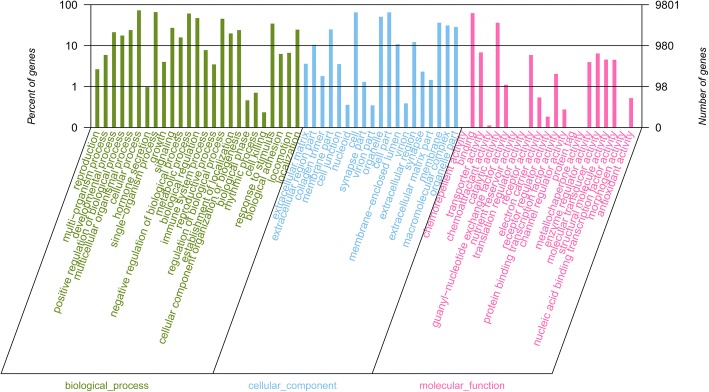
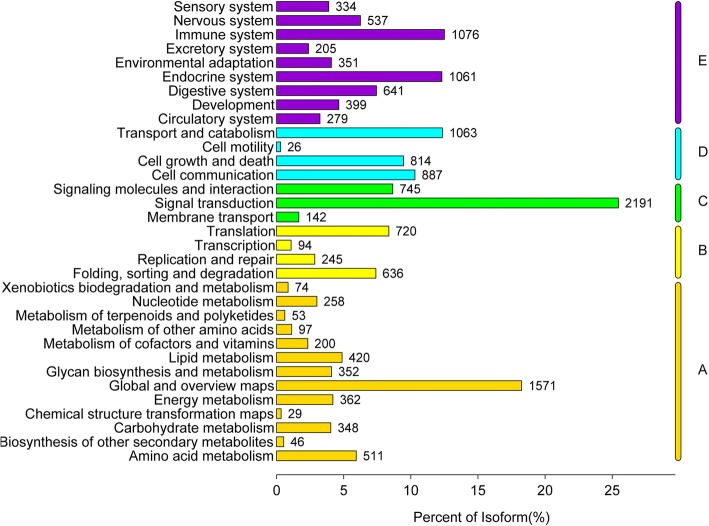
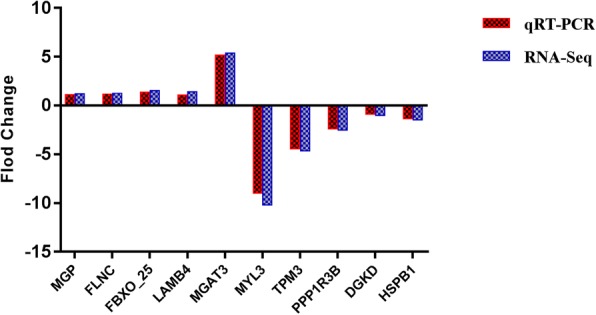
Results: Supplementation with C. butyricum increased growth performance and meat yield. Therefore, we utilized de novo assembly methods to analyze the RNA-Seq transcriptome profiles in breast muscle to explore the differentially expressed genes between C. butyricum-treated and control Pekin ducks. A total of 1119 differentially expressed candidate genes were found of which 403 genes were significantly up-regulated and 716 genes were significantly down-regulated significantly. qRT-PCR analysis was used to confirm the accuracy of the of RNA-Seq results. GO annotations revealed potential genes, processes and pathways that may participate in meat quality and muscle development. KEGG pathway analysis showed that the differentially expressed genes participated in numerous pathways related to muscle development, including ECM-receptor interaction, the MAPK signaling pathway and the TNF signaling pathway.
Conclusions: This study suggests that long-time dietary supplementation with C. butyricum can modulate muscle development and meat quality via altering the expression patterns of genes involved in crucial metabolic pathways. The findings presented here provide unique insights into the molecular mechanisms of muscle development in Pekin ducks in response to dietary C. butyricum.
Keywords: Breast muscle; C. Butyricum; De novo assembly; Pekin duck; RNA-Seq.
Conflict of interest statement
Ethics approval and consent to participate
The present animal study protocol was approved by China Agricultural University Ethics Committee (Permit No. CAU20170505–3) and closely followed the recommendations of the Guidelines for Experimental Animals. Before tissue sampling, all animals were humanely euthanized with sodium pentobarbitone (30 mg/kg BW) anesthesia.
Consent for publication
Not applicable.
Competing interests
The authors declare that they have no competing interests.
Publisher’s Note
Springer Nature remains neutral with regard to jurisdictional claims in published maps and institutional affiliations.
Figures


References
-
- Yang QL, Lou XW, Wang Y, Pan DD, Sun YY, Cao JX. Effect of pH on the interaction of volatile compounds with the myofibrillar proteins of duck meat. Poult Sci. 2017;96(6):1963–1969. - PubMed
-
- Chartrin P, Bernadet MD, Guy G, Mourot J, Hocquette JF, Rideau N, Duclos MJ, Baeza E. Does overfeeding enhance genotype effects on energy metabolism and lipid deposition in breast muscle of ducks? Comp Biochem Physiol A Mol Integr Physiol. 2006;145(4):413–418. doi: 10.1016/j.cbpa.2006.07.024. - DOI - PubMed
MeSH terms
LinkOut - more resources
Full Text Sources
