


The spent culture supernatant of Pseudomonas syringae contains azelaic acid
- PMID: 30486794
- PMCID: PMC6264629
- DOI: 10.1186/s12866-018-1352-z
The spent culture supernatant of Pseudomonas syringae contains azelaic acid
Abstract
Background: Pseudomonas syringae pv. actinidiae (PSA) is an emerging kiwifruit bacterial pathogen which since 2008 has caused considerable losses. No quorum sensing (QS) signaling molecule has yet been reported from PSA and the aim of this study was to identify possible intercellular signals produced by PSA.
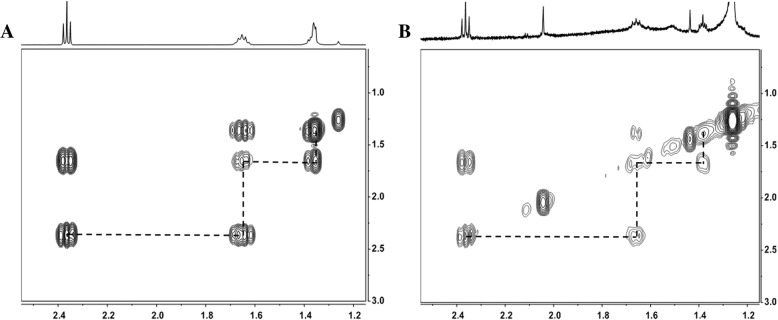
Results: A secreted metabolome analysis resulted in the identification of 83 putative compounds, one of them was the nine carbon saturated dicarboxylic acid called azelaic acid. Azelaic acid, which is a nine-carbon (C9) saturated dicarboxylic acid, has been reported in plants as a mobile signal that primes systemic defenses. In addition, its structure,(which is associated with fatty acid biosynthesis) is similar to other known bacterial QS signals like the Diffusible Signal Facor (DSF). For these reason it could be acting as s signal molecule. Analytical and structural studies by NMR spectroscopy confirmed that in PSA spent supernatants azelaic acid was present. Quantification studies further revealed that 20 μg/L of were present and was also found in the spent supernatants of several other P. syringae pathovars. The RNAseq transcriptome study however did not determine whether azelaic acid could behave as a QS molecule.
Conclusions: This study reports of the possible natural biosynthesis of azelaic acid by bacteria. The production of azelaic acid by P. syringae pathovars can be associated with plant-bacteria signaling.
Keywords: Azelaic acid; Metabolomics; Pseudomonas syringae pv. actinidiae; Quorum sensing.
Conflict of interest statement
Ethics approval and consent to participate
Not applicable.
Consent for publication
Not applicable.
Competing interests
The authors declare that they have no competing interests.
Publisher’s Note
Springer Nature remains neutral with regard to jurisdictional claims in published maps and institutional affiliations.
Figures




References
Publication types
MeSH terms
Substances
LinkOut - more resources
Full Text Sources
Molecular Biology Databases
Research Materials
Miscellaneous
