


Obesity-induced reduction of adipose eosinophils is reversed with low-calorie dietary intervention
- PMID: 30488596
- PMCID: PMC6250927
- DOI: 10.14814/phy2.13919
Obesity-induced reduction of adipose eosinophils is reversed with low-calorie dietary intervention
Abstract
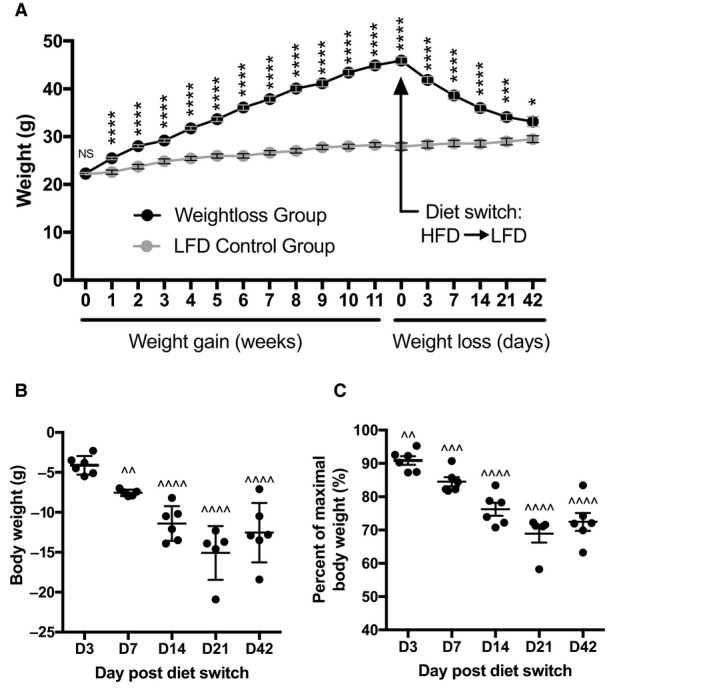
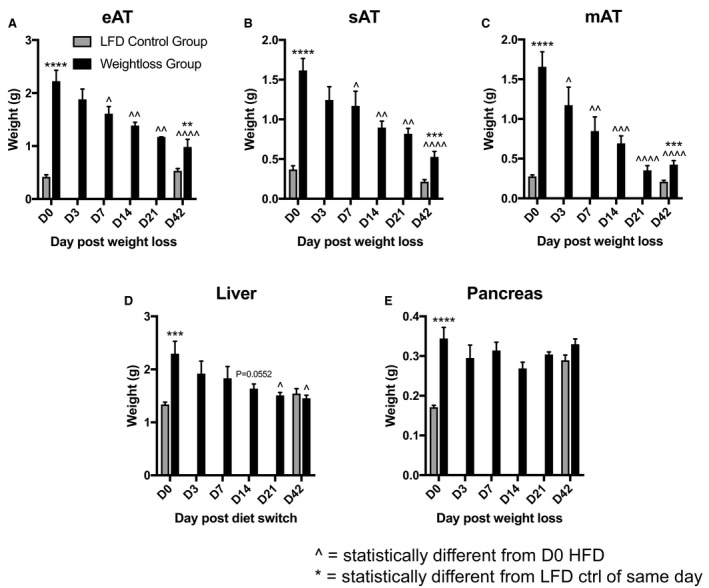
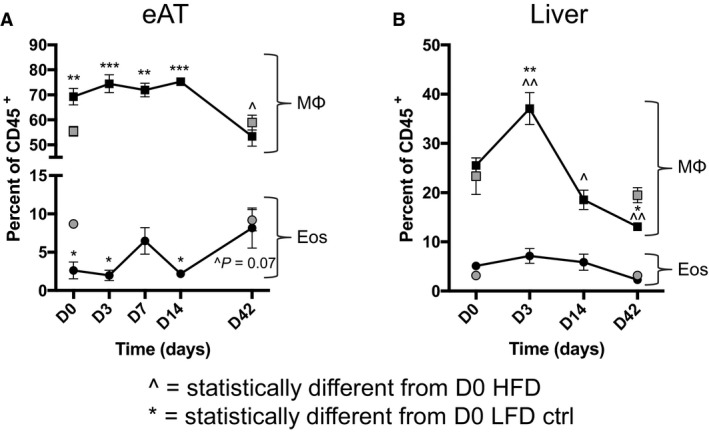
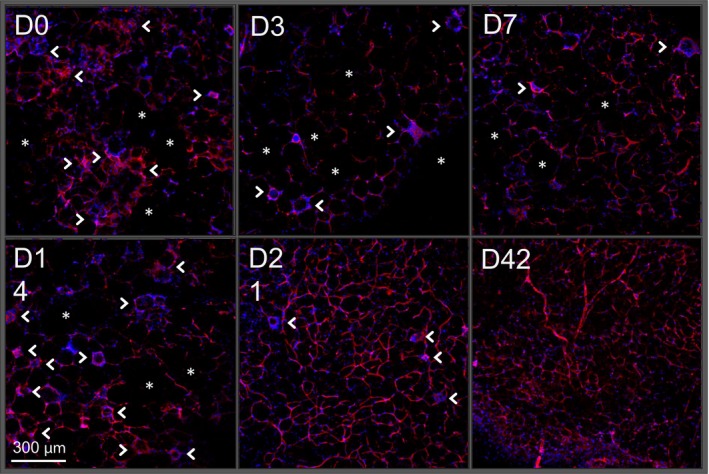
While many studies have characterized the inflammatory disposition of adipose tissue (AT) during obesity, far fewer have dissected how such inflammation resolves during the process of physiological weight loss. In addition, new immune cells, such as the eosinophil, have been discovered as part of the AT immune cell repertoire. We have therefore characterized how AT eosinophils, associated eosinophilic inflammation, and remodeling processes, fluctuate during a dietary intervention in obese mice. Similar to previous reports, we found that obesity induced by high-fat diet feeding reduced the AT eosinophil content. However, upon switching obese mice to a low fat diet, AT eosinophils were restored to lean levels as mice reached the body weight of controls. The rise in AT eosinophils during dietary weight loss was accompanied by reduced macrophage content and inflammatory expression, upregulated tissue remodeling factors, and a more uniformly distributed AT vascular network. Additionally, we show that eosinophils of another metabolically relevant tissue, the liver, did not oscillate with either dietary weight gain or weight loss. This study shows that eosinophil content is differentially regulated among tissues during the onset and resolution of obesity. Furthermore, AT eosinophils correlated with AT remodeling processes during weight loss and thus may play a role in reestablishing AT homeostasis.
Keywords: Adipose tissue; eosinophils; inflammation; macrophages; obesity; weight loss.
© 2018 The Authors. Physiological Reports published by Wiley Periodicals, Inc. on behalf of The Physiological Society and the American Physiological Society.
Figures

References
-
- van den Berg, S. M. , van Dam A. D., Kusters P. J. H., Beckers L., den Toom M., van der Velden S., et al. 2017. Helminth antigens counteract a rapid high‐fat diet‐induced decrease in adipose tissue eosinophils. J. Mol. Endocrinol. 59:245–255. - PubMed
MeSH terms
Grants and funding
- EY08126/EY/NEI NIH HHS/United States
- I01 BX002195/BX/BLRD VA/United States
- DK058404/DK/NIDDK NIH HHS/United States
- P30 DK058404/DK/NIDDK NIH HHS/United States
- U2C DK059637/DK/NIDDK NIH HHS/United States
- CA68485/CA/NCI NIH HHS/United States
- 5I01BX002195/VA/VA/United States
- P30 EY008126/EY/NEI NIH HHS/United States
- P30 DK020593/DK/NIDDK NIH HHS/United States
- P30 CA068485/CA/NCI NIH HHS/United States
- DK20593/DK/NIDDK NIH HHS/United States
- P30-CA68485/CA/NCI NIH HHS/United States
- 12EIA827/AHA/American Heart Association-American Stroke Association/United States
- U24 DK059637/DK/NIDDK NIH HHS/United States
- 15PRE25560126/AHA/American Heart Association-American Stroke Association/United States
- DK59637/DK/NIDDK NIH HHS/United States
LinkOut - more resources
Full Text Sources
Medical
