


Prognostic factors for survival with nab-paclitaxel plus gemcitabine in metastatic pancreatic cancer in real-life practice: the ANICE-PaC study
- PMID: 30497432
- PMCID: PMC6267080
- DOI: 10.1186/s12885-018-5101-3
Prognostic factors for survival with nab-paclitaxel plus gemcitabine in metastatic pancreatic cancer in real-life practice: the ANICE-PaC study
Abstract
Background: Treatment with nab-paclitaxel plus gemcitabine increases survival in patients with metastatic pancreatic cancer. However, the assessment of treatment efficacy and safety in non-selected patients in a real-life setting may provide useful information to support decision-making processes in routine practice.
Methods: Retrospective, multicenter study including patients with metastatic pancreatic cancer, who started first-line treatment with nab-paclitaxel plus gemcitabine between December 2013 and June 2015 according to routine clinical practice. In addition to describing the treatment pattern, overall survival (OS) and progression-free survival (PFS) were assessed for the total sample and the exploratory subgroups based on the treatment and patients' clinical characteristics.
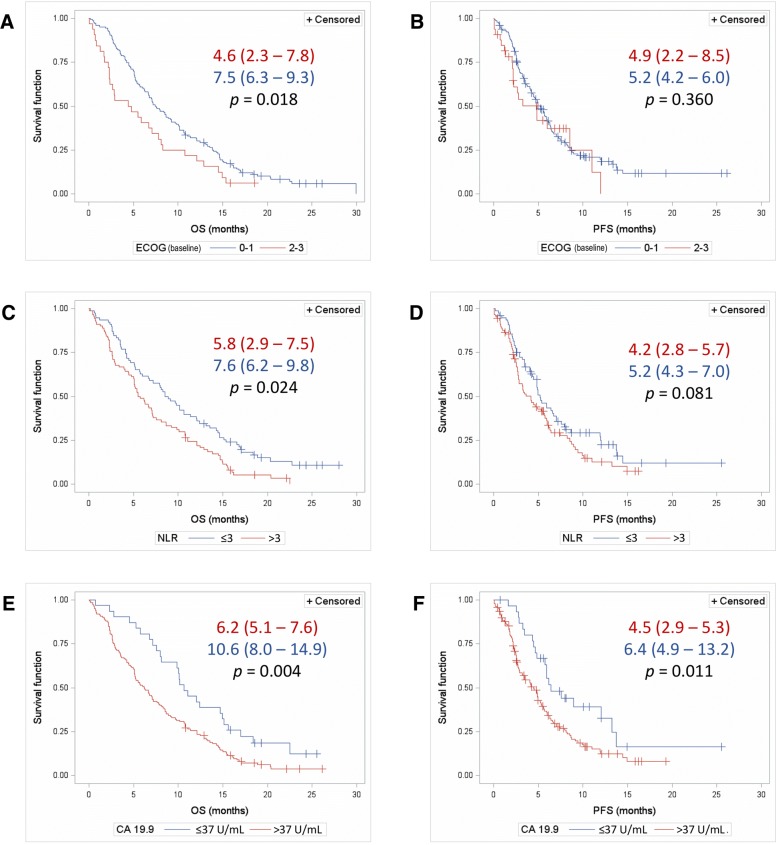
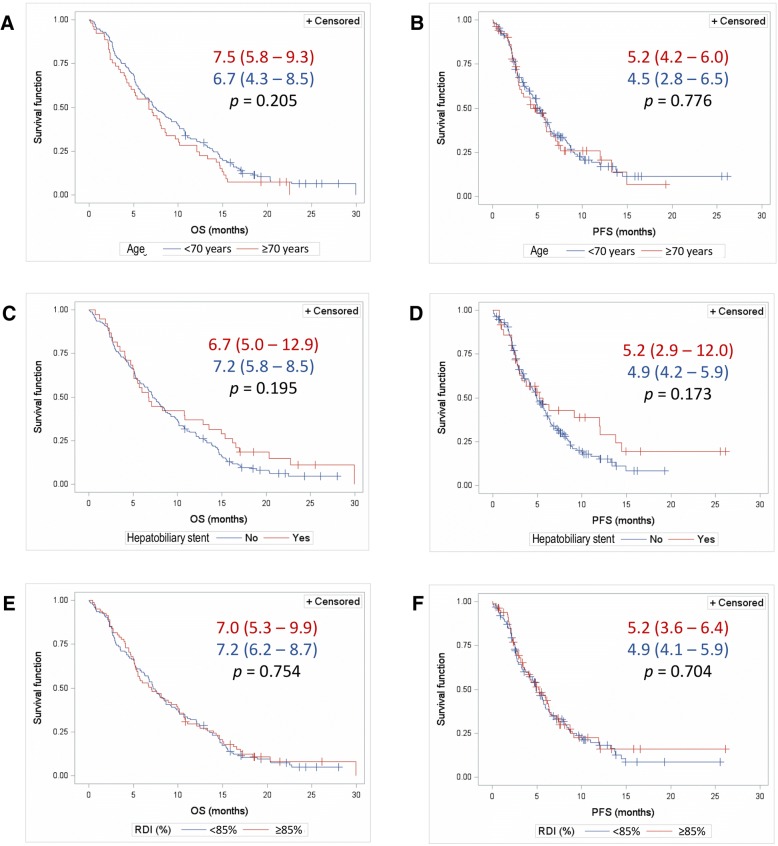
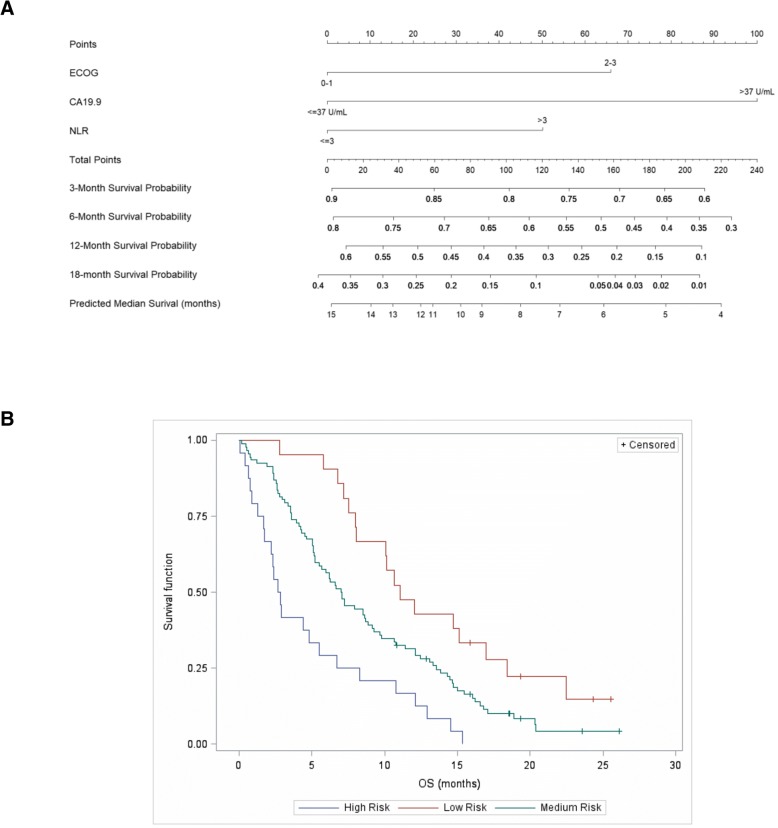
Results: All 210 eligible patients had a median age of 65.0 years (range 37-81). Metastatic pancreatic adenocarcinoma was recurrent in 46 (21.9%) patients and de novo in 164 (78.1%); 38 (18%) patients had a biliary stent. At baseline, 33 (18.1%) patients had an ECOG performance status ≥2. Patients received a median of four cycles of treatment (range 1-21), with a median duration of 3.5 months; 137 (65.2%) patients had a dose reduction of nab-paclitaxel and/or gemcitabine during treatment, and 33 (17.2%) discontinued treatment due to toxicity. Relative dose intensity (RDI) for nab-paclitaxel, gemcitabine, and the combined treatment was 66.7%. Median OS was 7.2 months (95% CI 6.0-8.5), and median PFS was 5.0 months (95% CI 4.3-5.9); 50 patients achieved either a partial or complete response (ORR 24.6%). OS was influenced by baseline ECOG PS, NLR and CA 19.9, but not by age ≥ 70 years and/or the presence of hepatobiliary stent or RDI < 85%. All included variables, computed as dichotomous, showed a significant contribution to the Cox regression model to build a nomogram for predicting survival in these patients: baseline ECOG 0-1 vs. 2-3 (p = 0.030), baseline NLR > 3 vs. ≤ 3 (p = 0.043), and baseline CA 19.9 > 37 U/mL vs. ≤37 U/mL (p = 0.004).
Conclusions: Nab-Paclitaxel plus gemcitabine remain effective in a real-life setting, despite the high burden of dose reductions and poorer performance of these patients. A nomogram to predict survival using baseline ECOG performance status, NLR and CA 19.9 is proposed.
Keywords: First-line chemotherapy; Gemcitabine; Metastatic pancreatic adenocarcinoma; Nab-paclitaxel; Real-life; Survival.
Conflict of interest statement
Ethics approval and consent to participate
The study was approved by the ethics committee of the autonomous community of Galicia (SERGAS) (Spain). All patients provided written informed consent before data collection.
Consent for publication
Not applicable.
Competing interests
AG has received a grant for attending an international oncology congress and fees as scientific consultant from Celgene. AM has received research support grants and fees as consultant from Celgene, and fees as speaker from Shire. CL2 has received fees as speaker and consultant from Celgene. AF, MS, EB, RV, JA, PJ, GQ, CL1, LJL, PR, PG, MR, EG, MSC, AC, JG, CG, NR, VN, JC, IA, RAP declare that they have no conflicts of interest regarding the content of this manuscript.
Publisher’s Note
Springer Nature remains neutral with regard to jurisdictional claims in published maps and institutional affiliations.
Figures
References
-
- De Felice F, Musio D, Raffetto N, Tombolini V. Neoadjuvant strategy as initial treatment in resectable pancreatic cancer: concrete evidence of benefit. Anticancer Res. 2014;34(9):4673–4676. - PubMed
