. 2018 Nov 29;51(1):54.
doi: 10.1186/s40659-018-0204-5.

Effect of urea-extracted sericin on melanogenesis: potential applications in post-inflammatory hyperpigmentation

Affiliations

Effect of urea-extracted sericin on melanogenesis: potential applications in post-inflammatory hyperpigmentation

Pornanong Aramwit et al. Biol Res. .

Abstract

Background: Hyperpigmentation disorders such as post-inflammatory hyperpigmentation are major concerns not only in light-skinned people but also in Asian populations with darker skin. The anti-tyrosinase and immunomodulatory effects of sericin have been known for decades. However, the therapeutic effects of sericin on hyperpigmentation disorders have not been well documented.

Methods: In this study, we used an in vitro model to study the anti-tyrosinase, tolerogenic, and anti-melanogenic effects of sericin on Staphylococcus aureus peptidoglycan (PEG)-stimulated melanocytes, dendritic cells (DCs), and artificial skin (MelanoDerm™). Enzyme-linked immunosorbent assay, conventional and immunolabeled electron microscopy, and histopathological studies were performed.

Results: The results revealed that urea-extracted sericin has strong anti-tyrosinase properties as shown by a reduction of tyrosinase activity in melanin pigments both 48 h and 10 days after allergic induction with PEG. Anti-inflammatory cytokines including interleukin (IL)-4, IL-10, and transforming growth factor-β were upregulated upon sericin treatment (10, 20, and 50 µg/mL), whereas production of allergic chemokines, CCL8 and CCL18, by DCs was diminished 48 h after allergic induction with PEG. Moreover, sericin lowered the expression of micropthalmia-associated transcription factor (MITF), a marker of melanogenesis regulation, in melanocytes and keratinocytes, which contributed to the reduction of melanin size and the magnitude of melanin deposition. However, sericin had no effect on melanin transport between melanocytes and keratinocytes, as demonstrated by a high retention of cytoskeletal components.

Conclusion: In summary, sericin suppresses melanogenesis by inhibition of tyrosinase activity, reduction of inflammation and allergy, and modulation of MITF function.

Keywords: Antityrosinase; MITF; Melanogenesis; Post inflammatory hyperpigmentation; Sericin.


Figures
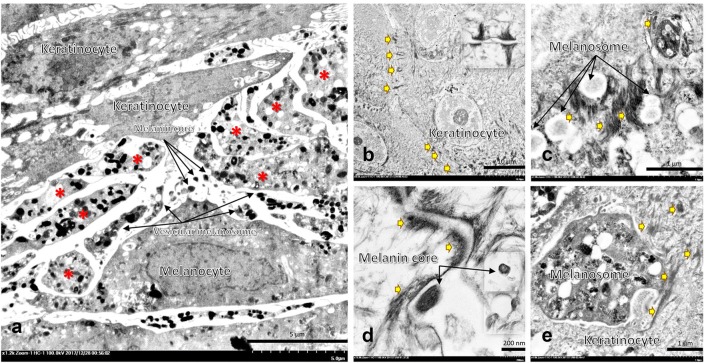
Fig. 1
Fig. 1
Electron micrographs of artificial skin 10 days after treatment; At the artificial skin bottom layer, melanocytes extended multiple dendritic extensions (a: *) acting as a pipe for transport of mature melanosomes to neighboring keratinocytes, which bore cell-to-cell connections via desmosomes (b: arrow and inset picture and d: arrow). Immature melanin is transferred from the perinuclear region to dendritic tips, a maturation site, via the cytoskeletal system (c, e: thick arrow). Four mechanisms of melanin transport have been postulated: (i) direct fusion of melanocytes and keratinocytes and (ii–iv) keratinocyte phagocytosis (c: inset picture, e) of (ii) membrane-bound vesiculate melanosomes (a) (iii) exocytosis of melanin cores from dendritic tips (a, d), and (iv) dendritic tips
Fig. 2
Fig. 2
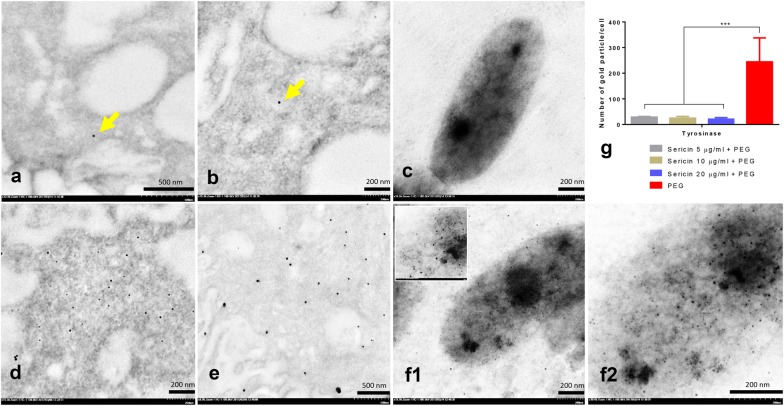
Tyrosinase gold labeling on melanocytes; Immunogold labeling electron microscopy showing the 10 nm diameter gold particles conjugated to tyrosinase molecules on melanocytes both in the cytoplasm (arrow in a, b and d, e) and melanosomes (c and f-1, low magnification, -2, higher magnification). The quantity of tyrosinase between sericin-treated (ac) and non-treated (PEG) (df) groups was compared via the numbers of tyrosinase-positive fields in melanocytic cells as shown in bar graph (g)
Fig. 3
Fig. 3
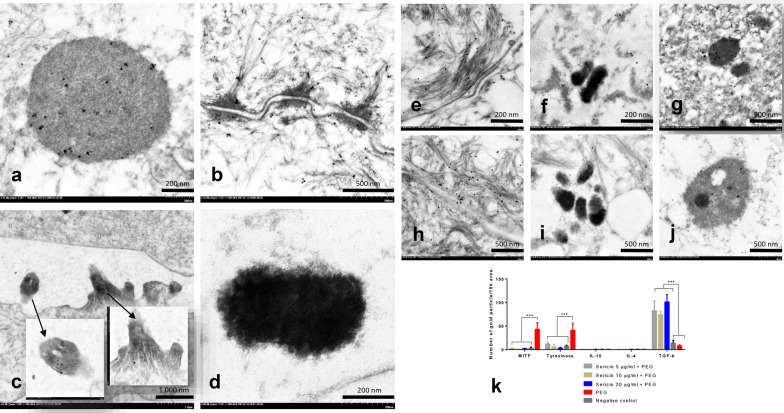
Immunogold labeling of tyrosinase, MITF, IL-4, IL-10, and TGF-β in artificial skin 10 days after treatment; Tyrosinase was thoroughly labeled in melanocytes and keratinocytes, especially on immature melanosomes (a), keratinocytic desmosomes and the cytoskeletal system (b), and cortical actin in the melanocyte dendritic tip (c), but not in mature melanin (d). Like tyrosinase, TGF-β (eg) and MITF (hj) were labeled on the cytoskeletal system and melanin was labeled in the melanocyte and keratinocyte. All sericin doses downregulated MITF and tyrosinase expression, upregulated TGF-β expression but did not affect expression of IL-4 and IL-10 (k)
Fig. 4
Fig. 4
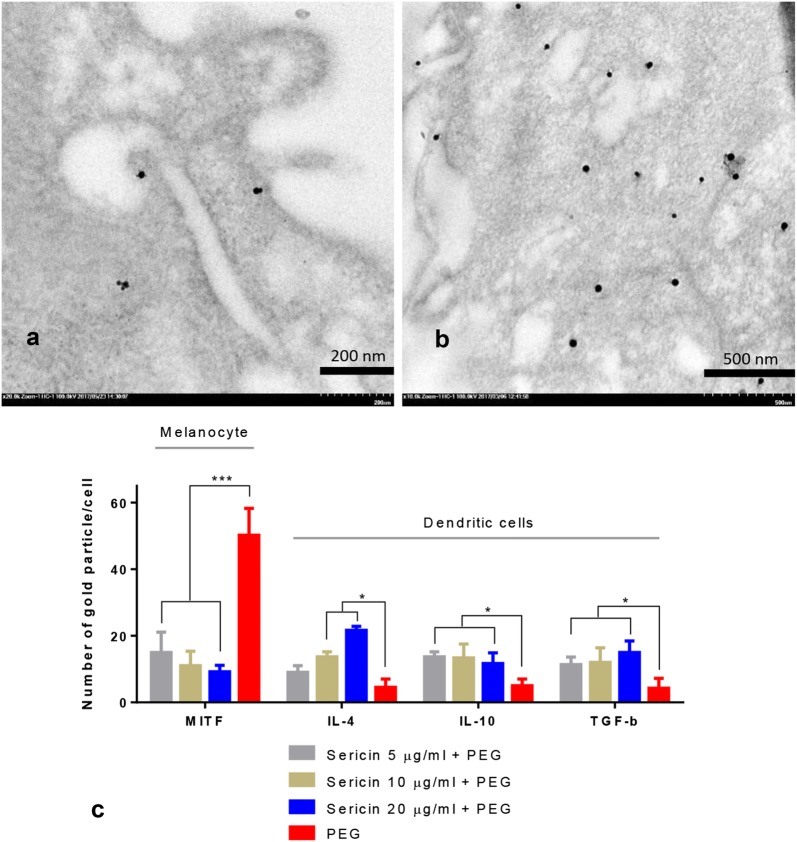
MITF, IL-4, IL-10, and TGF-β gold labeling on melanocytes and DCs 48 h after allergic induction; Electron micrograph of MITF immunogold labeling on melanocytes with (a) or without (b) sericin treatment indicated significant downregulation of MITF by all sericin doses when compared with non-treated cells as presented in bar graph (c). Conversely, expression of IL-4, IL-10 and TGF-β on DCs were significantly upregulated by all sericin doses (c). The results revealed that sericin has anti-melanogenic and immunomodulatory effects on epidermal cells during the 48 h after allergic stimulation
Fig. 5
Fig. 5
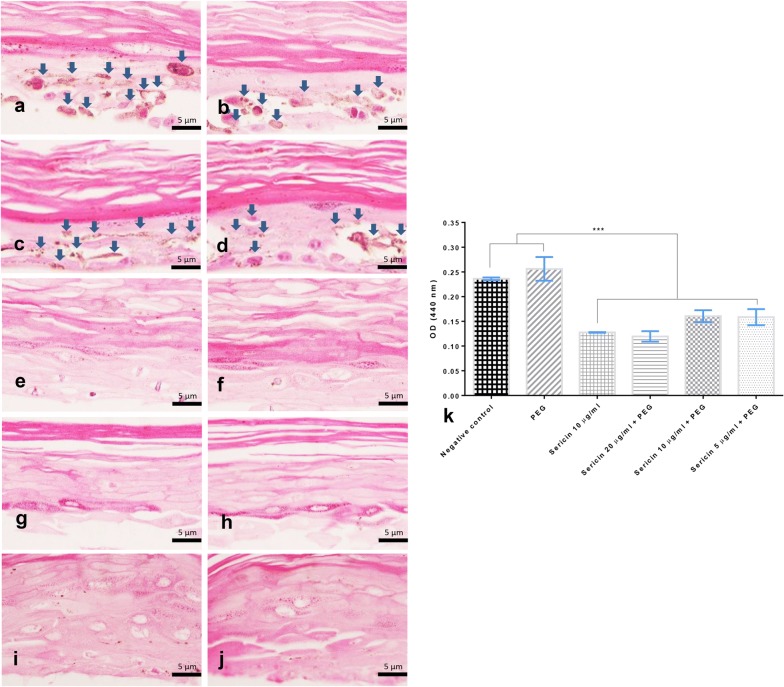
Melanin deposition in artificial skin 10 days after treatment; Histopathological appearance of the artificial skin indicating the epidermal layer (stratum corneum, granulosum, spinosum, and stratum basale) which is mainly composed of keratinization, keratinocytes and melanocytes with melanin (golden brown pigment) deposition (ad; arrow). The melanin deposition level in the artificial skin both treated with sericin (ef, gh, and ij; 5, 10, and 20 µg/mL, respectively) and untreated (a, b non-allergic and c, d allergic inductions, respectively) was compared in the bar graph (k)
Fig. 6
Fig. 6
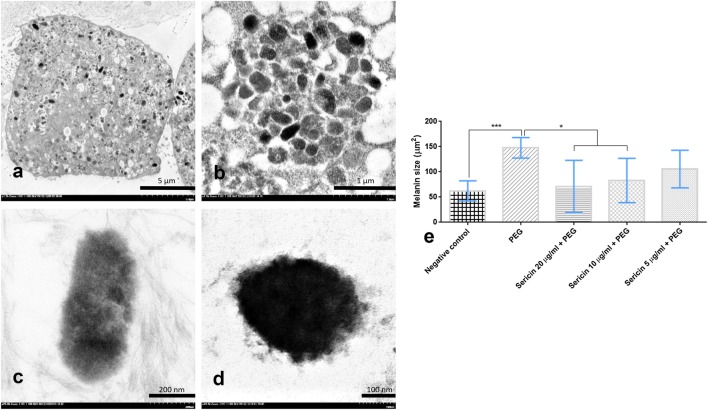
Melanin pigment size among sericin-treated groups compared with negative control and non-treated groups; Melanocyte laden melanin pigment (a) showed a number of melanin depositions in its cytoplasm with difference stages (b): immature (c) or mature (d) melanin pigments. Size comparison of melanin pigments is shown in the bar graph (e)
Fig. 7
Fig. 7
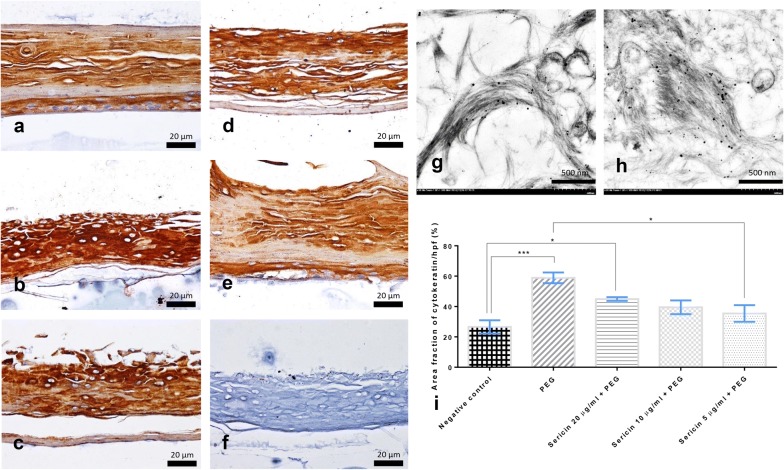
Cytokeratin expression in artificial skin 10 days after treatment; Immunohistochemical staining of cytokeratin indicating the distribution of keratin expression in keratinocytes and melanocytes from the indicated experimental group; negative control (a), non-treated group (b), sericin-treated with doses of 5 (c), 10 (d), and 20 (e) μg/mL comparing to non-immunostained skin (f). Tyrosinase was mainly labeled on the cytoskeletal components that are characterized by numerous of gold particles (g, h). Cytokeratin level was compared as shown in the bar graph (i)
Fig. 8
Fig. 8
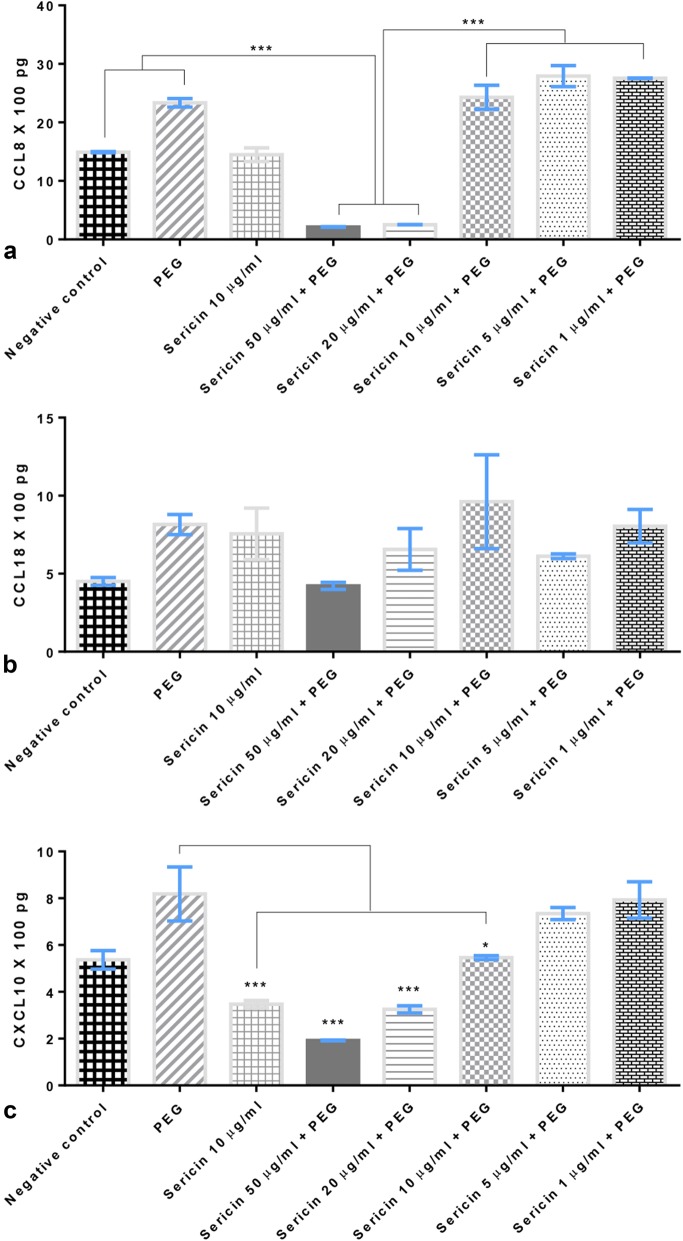
Chemokine production by dendritic cells 10 days after treatment; CCL8 (a), CCL18 (b) and CXCL10 (c) productions from allergic-induced DCs with or without sericin treatment

References

    1. Aramwit P, Kanokpanont S, De-Eknamkul W, Kamei K, Srichana T. The effect of sericin with variable amino-acid content from different silk strains on the production of collagen and nitric oxide. J Biomater Sci Polym Ed. 2009;20(9):1295–1306. doi: 10.1163/156856209X453006. - DOI - PubMed
    1. Aramwit P, Sangcakul A. The effects of sericin cream on wound healing in rats. Biosci Biotechnol Biochem. 2007;71(10):2473–2477. doi: 10.1271/bbb.70243. - DOI - PubMed
    1. Aramwit P, Siritienthong T, Srichana T, Ratanavaraporn J. Accelerated healing of full-thickness wounds by genipin-crosslinked silk sericin/PVA scaffolds. Cells Tissues Organs. 2013;197(3):224–238. doi: 10.1159/000345600. - DOI - PubMed
    1. Kanokpanont S, Damrongsakkul S, Ratanavaraporn J, Aramwit P. An innovative bi-layered wound dressing made of silk and gelatin for accelerated wound healing. Int J Pharm. 2012;436(1–2):141–153. doi: 10.1016/j.ijpharm.2012.06.046. - DOI - PubMed
    1. Siritienthong T, Ratanavaraporn J, Aramwit P. Development of ethyl alcohol-precipitated silk sericin/polyvinyl alcohol scaffolds for accelerated healing of full-thickness wounds. Int J Pharm. 2012;439(1–2):175–186. doi: 10.1016/j.ijpharm.2012.09.043. - DOI - PubMed

MeSH terms

Substances

LinkOut - more resources