


Monthly variation in the probability of presence of adult Culicoides populations in nine European countries and the implications for targeted surveillance
- PMID: 30497537
- PMCID: PMC6267925
- DOI: 10.1186/s13071-018-3182-0
Monthly variation in the probability of presence of adult Culicoides populations in nine European countries and the implications for targeted surveillance
Abstract
Background: Biting midges of the genus Culicoides (Diptera: Ceratopogonidae) are small hematophagous insects responsible for the transmission of bluetongue virus, Schmallenberg virus and African horse sickness virus to wild and domestic ruminants and equids. Outbreaks of these viruses have caused economic damage within the European Union. The spatio-temporal distribution of biting midges is a key factor in identifying areas with the potential for disease spread. The aim of this study was to identify and map areas of neglectable adult activity for each month in an average year. Average monthly risk maps can be used as a tool when allocating resources for surveillance and control programs within Europe.
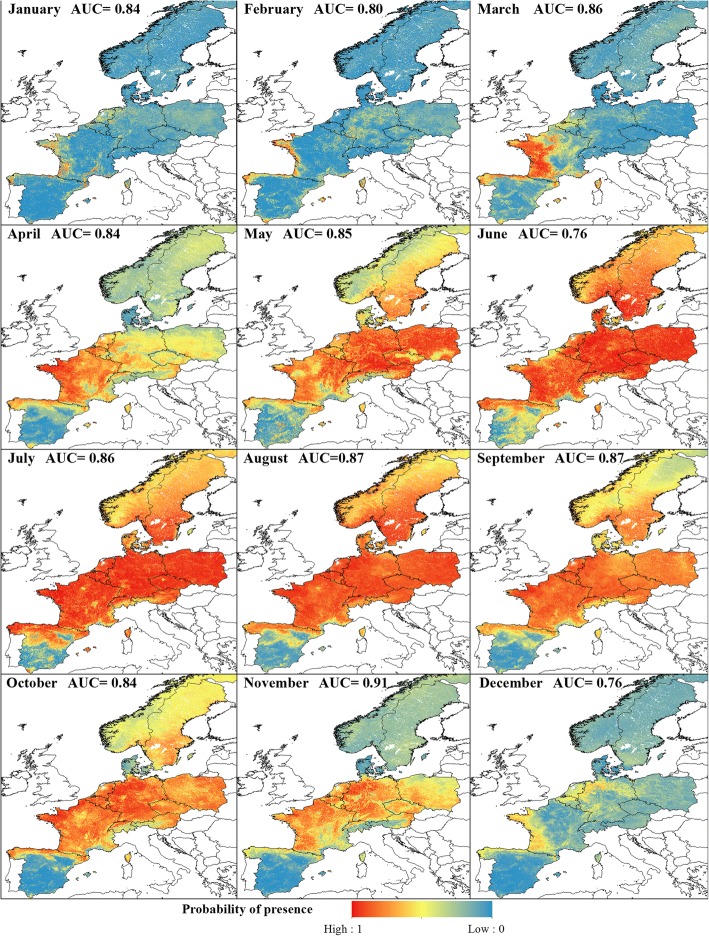
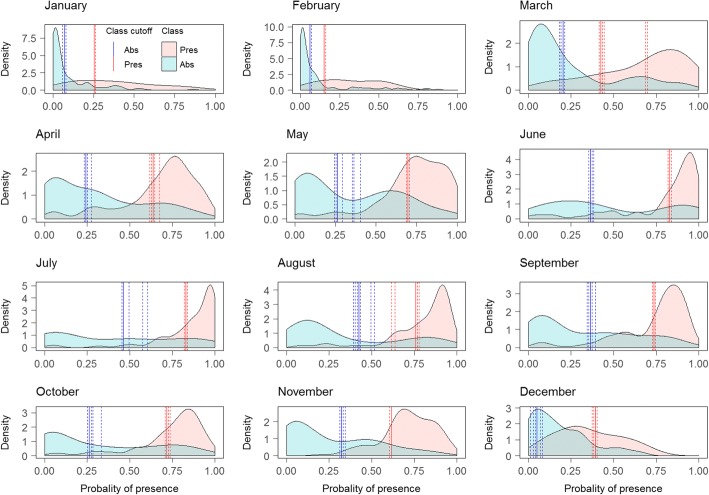
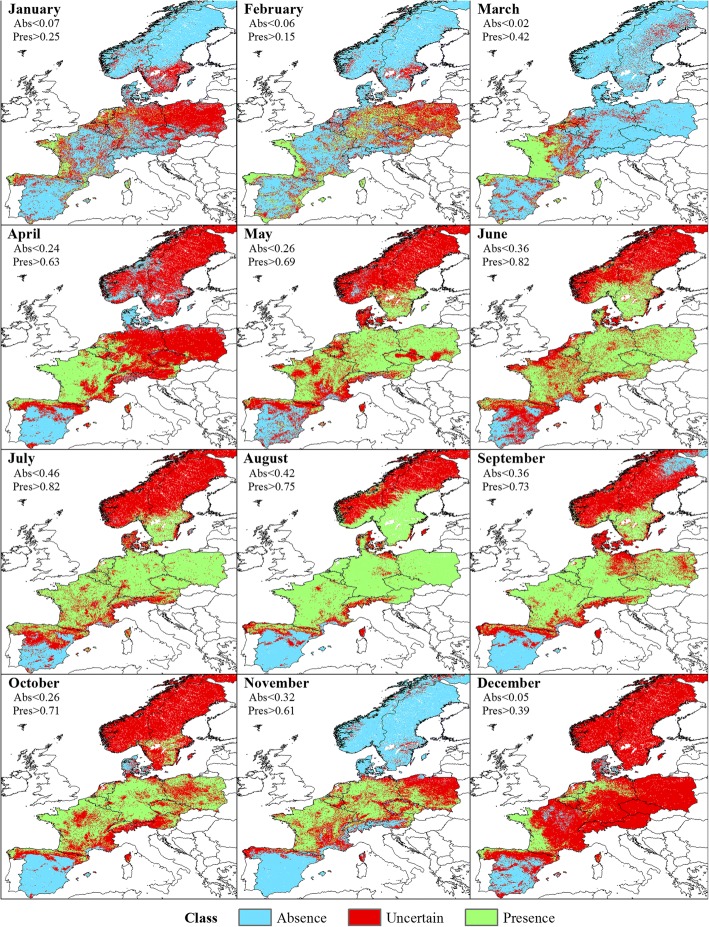
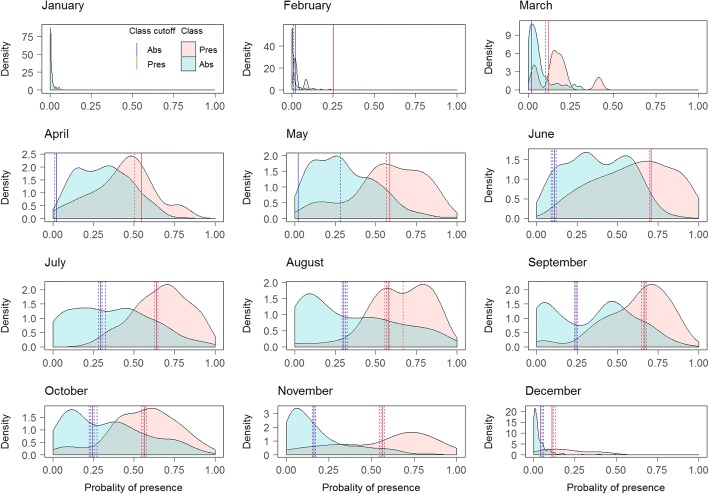
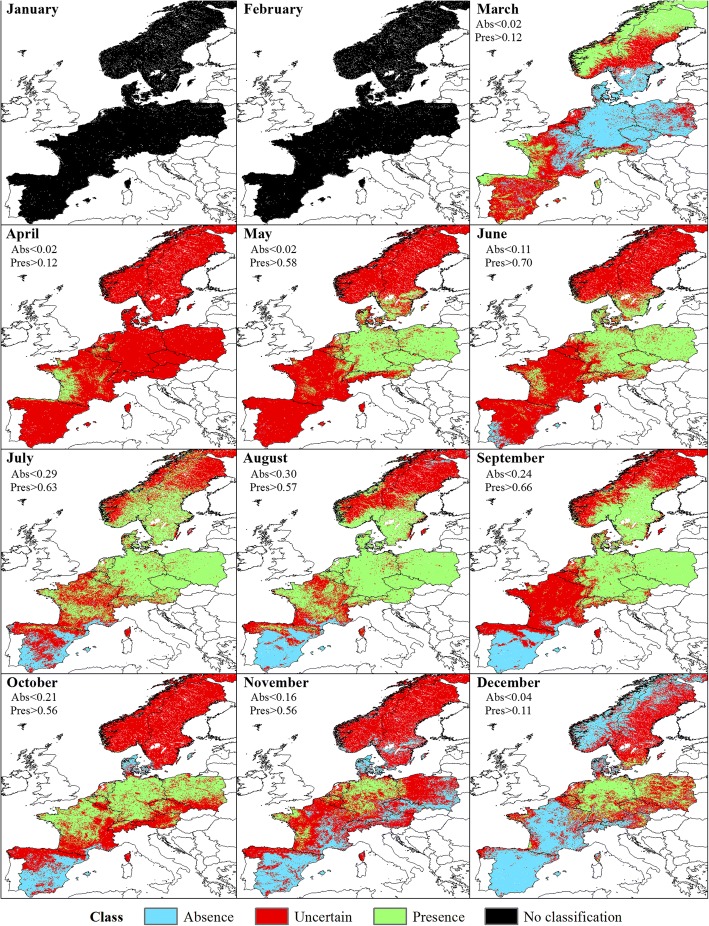
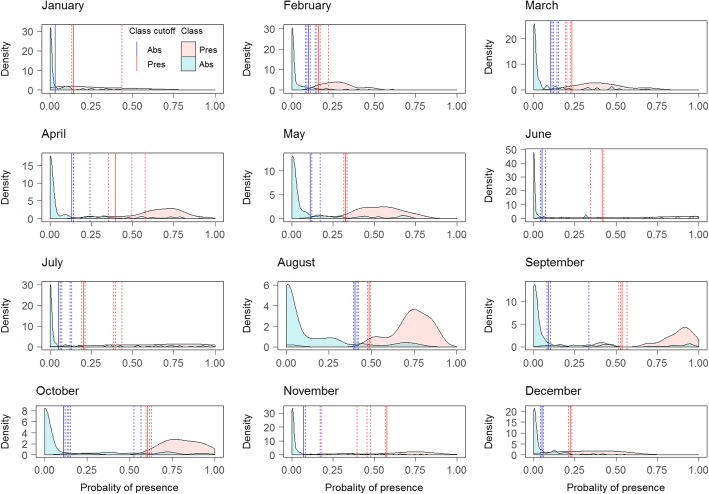
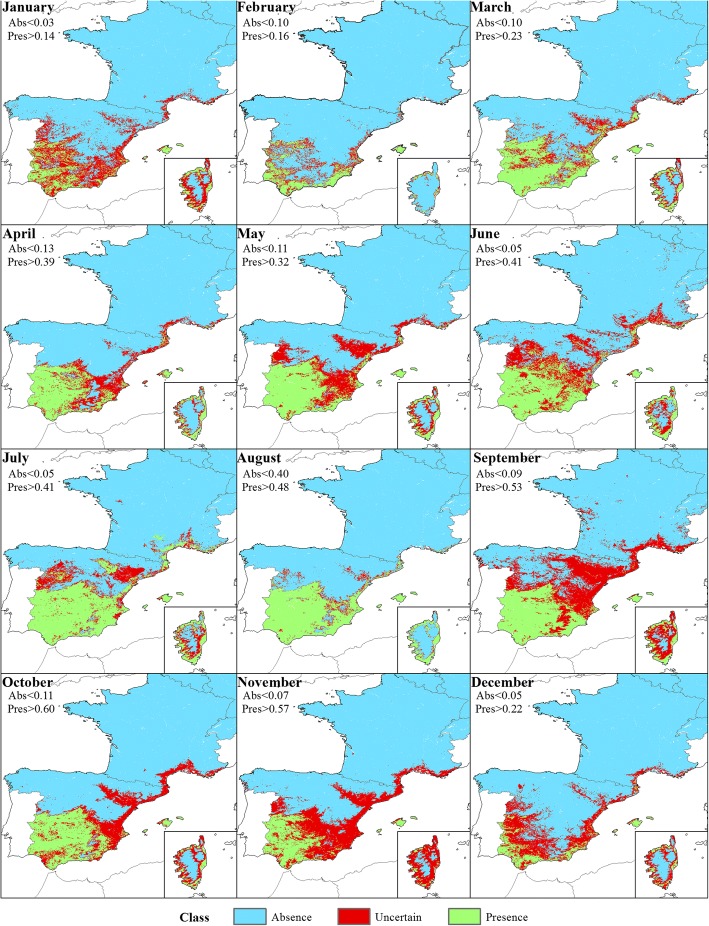
Methods: We modelled the occurrence of C. imicola and the Obsoletus and Pulicaris ensembles using existing entomological surveillance data from Spain, France, Germany, Switzerland, Austria, Denmark, Sweden, Norway and Poland. The monthly probability of each vector species and ensembles being present in Europe based on climatic and environmental input variables was estimated with the machine learning technique Random Forest. Subsequently, the monthly probability was classified into three classes: Absence, Presence and Uncertain status. These three classes are useful for mapping areas of no risk, areas of high-risk targeted for animal movement restrictions, and areas with an uncertain status that need active entomological surveillance to determine whether or not vectors are present.
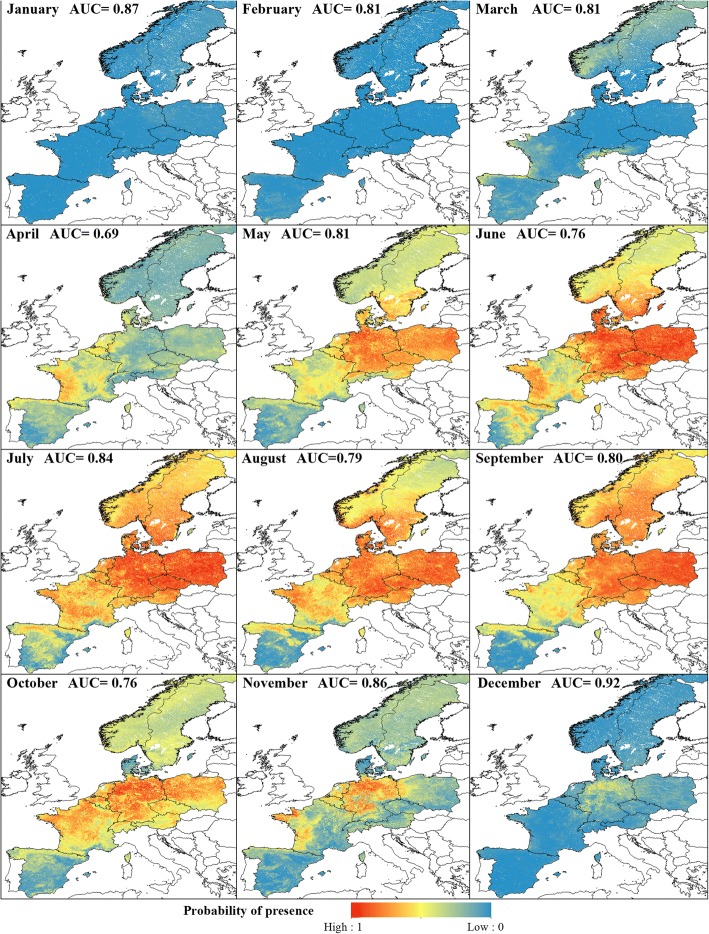
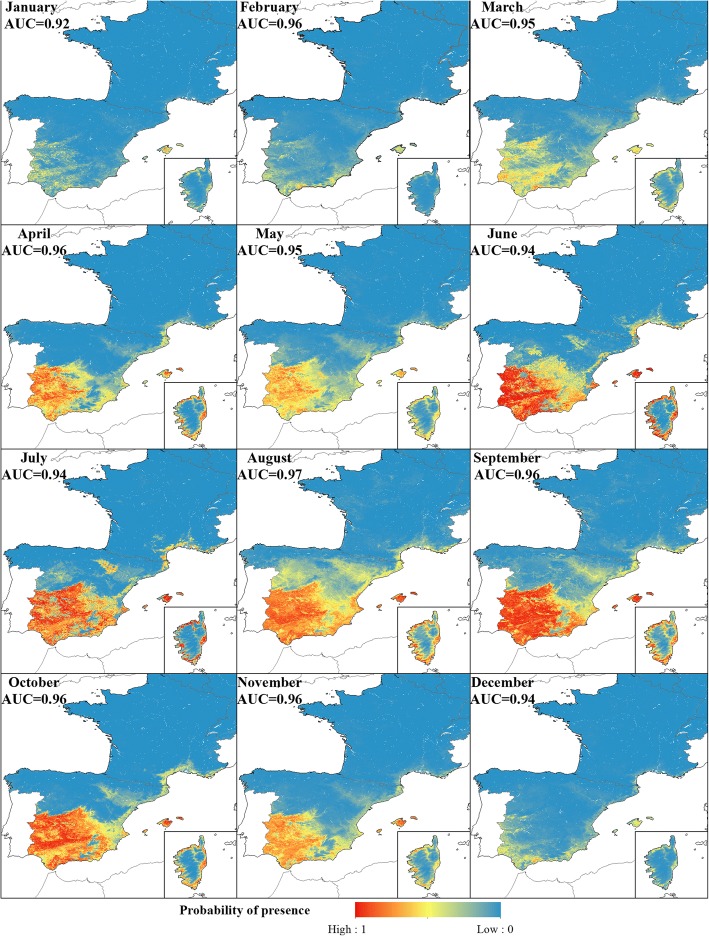
Results: The distribution of Culicoides species ensembles were in agreement with their previously reported distribution in Europe. The Random Forest models were very accurate in predicting the probability of presence for C. imicola (mean AUC = 0.95), less accurate for the Obsoletus ensemble (mean AUC = 0.84), while the lowest accuracy was found for the Pulicaris ensemble (mean AUC = 0.71). The most important environmental variables in the models were related to temperature and precipitation for all three groups.
Conclusions: The duration periods with low or null adult activity can be derived from the associated monthly distribution maps, and it was also possible to identify and map areas with uncertain predictions. In the absence of ongoing vector surveillance, these maps can be used by veterinary authorities to classify areas as likely vector-free or as likely risk areas from southern Spain to northern Sweden with acceptable precision. The maps can also focus costly entomological surveillance to seasons and areas where the predictions and vector-free status remain uncertain.
Keywords: Culicoides; Europe; Machine Learning; Monthly distribution; Presence-absence data; Random Forest; Spatial distribution; Targeted surveillance.
Conflict of interest statement
Ethics approval and consent to participate
Not applicable.
Consent for publication
Not applicable.
Competing interests
The authors declare that they have no competing interests.
Publisher’s Note
Springer Nature remains neutral with regard to jurisdictional claims in published maps and institutional affiliations.
Figures
References
-
- Du Toit RM. The transmission of blue-tongue and horse-sickness by Culicoides. Onderstepoort J Vet Sci Anim Ind. 1944;19:7–16.
MeSH terms
LinkOut - more resources
Full Text Sources
