. 2019 Jan;21(1):76-82.
doi: 10.1016/j.jcyt.2018.10.009. Epub 2018 Nov 27.

Closed loop bioreactor system for the ex vivo expansion of human T cells

Affiliations

Closed loop bioreactor system for the ex vivo expansion of human T cells

Matthew Li et al. Cytotherapy. 2019 Jan.

Abstract

Background aim: Translation of therapeutic cell therapies to clinical-scale products is critical to realizing widespread success. Currently, however, there are limited tools that are accessible at the research level and readily scalable to clinical-scale needs.

Methods: We herein developed and assessed a closed loop bioreactor system in which (i) a highly gas-permeable silicone material was used to fabricate cell culture bags and (ii) dynamic flow was introduced to allow for dissociation of activated T-cell aggregates.

Results: Using this system, we find superior T-cell proliferation compared with conventional bag materials and flasks, especially at later time points. Furthermore, intermittent dynamic flow could easily break apart T-cell clusters.

Conclusions: Our novel closed loop bioreactor system is amenable to enhanced T-cell proliferation and has broader implications for being easily scaled for use in larger need settings.

Keywords: T cells; biomanufacturing; bioreactors; immunotherapy.


Figures

Figure 1.
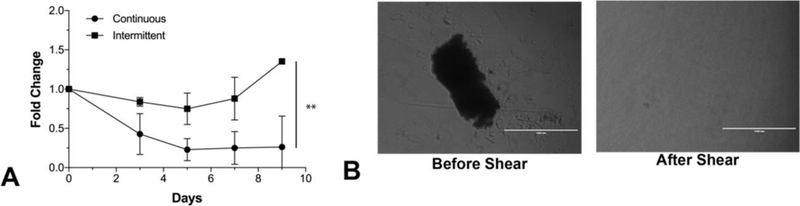
Figure 1.. Comparison between continuous and intermittent fluidic cell culture conditions.
The proliferative capacity of primary T-cells was compared in a continuous perfusion setup and intermittent perfusion setup. Continuous perfusion was performed at 100mL/min using a magnetically actuated pump while intermittent perfusion was performed every other day (starting at Day 3) at 100mL/min for 5 minutes. A) We observe a 0.25× change in the continuous group, 1.3× in intermittent, and 13× in flask culture. It is clear that continuous perfusion is detrimental to T-cell proliferation. Interestingly, intermittent perfusion is only modestly better and significantly worse than standard T-flask culture – this difference may arise due to the material properties of the different culture vessels. ** = P<0.001 B) We observe the ability of shearing action to dissociate T-cell blast clusters. We were able to visually and microscopically identify clusters, whereby after 5 minutes of continuous flow, we find a near homogenous single cell suspension.
Figure 2.
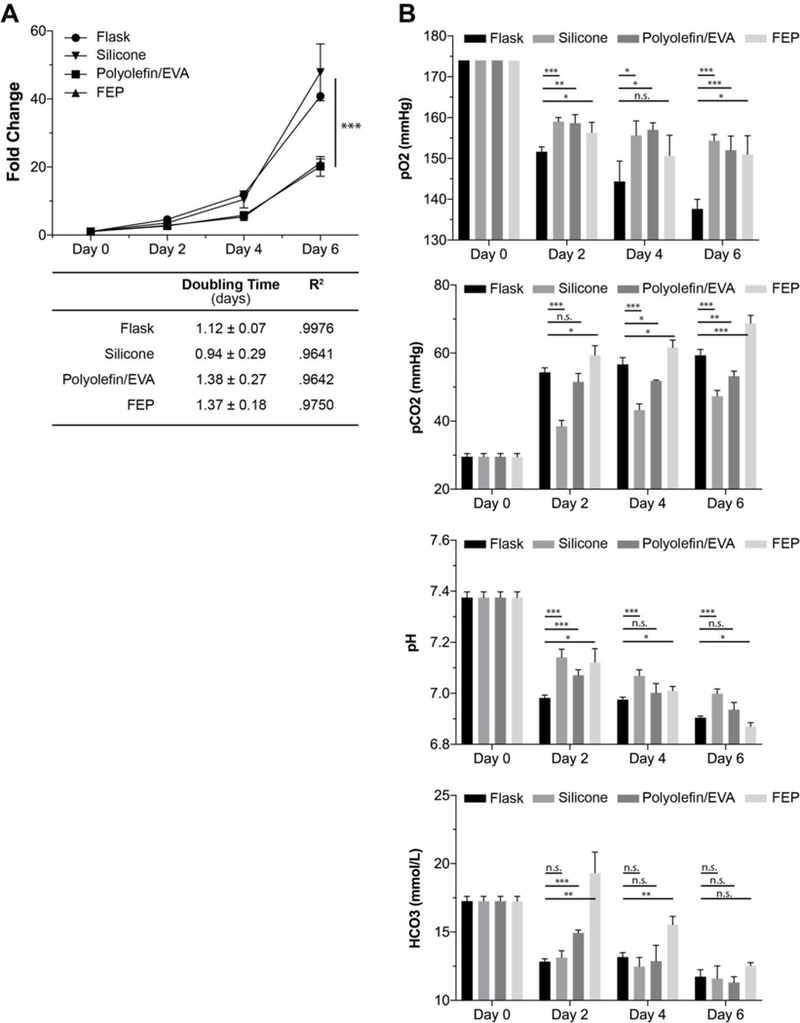
Figure 2.. Comparison of cell culture vessels using a Jurkat T cell line
We herein assessed the growth characteristics and media properties in a standard tissue culture flask and silicone, polyolefin/EVA, and FEP cell culture bags. A) Comparability between flask/silicone and polyolefin/FEP is observed wherein the flask/silicone has significantly improved cell proliferative capacity. Both flasks and silicone bags were significantly different compared to polyolefin/EVA and FEP (*** = P<0.001). B) Comparison of several media characteristics including: dissolved O2, CO2, pH, and HCO3. Comparability is seen in O2, with the flask being overall lower across all days. CO2 demonstrates an advantage to silicone with overall lower values across the experiment. pH values show comparability with an overall downward trend likely due to increased cell burden. HCO3 demonstrates drastic difference at early time points but normalizes by the end of the culture. * = P<0.05, ** = P<0.01, *** = P<0.005.
Figure 3.
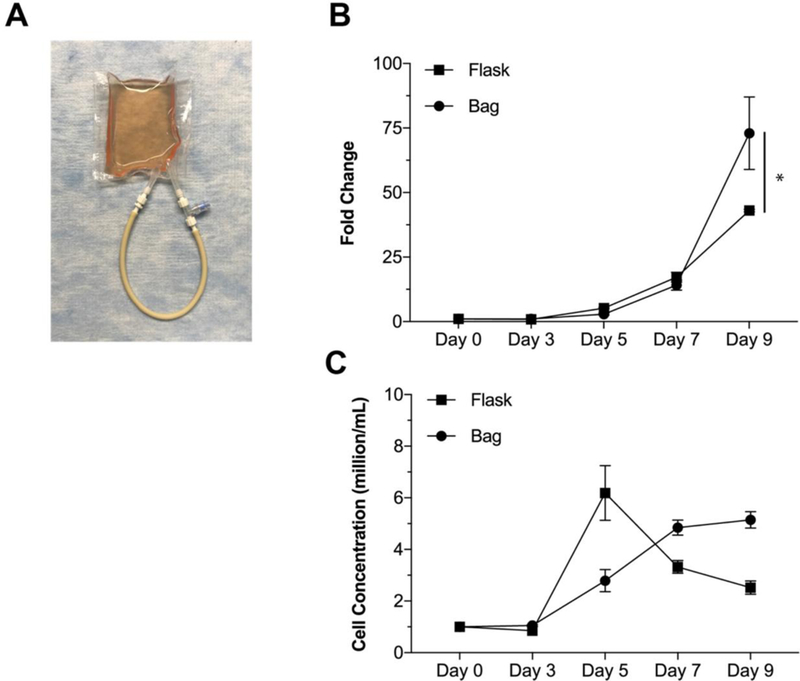
Figure 3.. Growth comparison of primary human T-cells
Proliferative comparison of flask versus silicone bag for the growth of healthy, primary T-cells. A) Picture depicting the custom designed and manufactured silicone bag. Tan loop represents the portion interfacing with the peristaltic pump for flowing action. Medium introduction and sampling were accomplished through a needleless syringe port. B) Growth comparison over a 9-day culture. Medium and fresh IL-2 was added on the days 3, 5, 7, and 9. Flask growth holds an advantage at early time points, however, silicone systems show a drastic increase in cell yield by the latest time point. * = P<0.05. C) Growth comparison over a 9day culture as measured by cell concentration. We observe that the bag has an increasing cell concentration at each time point whereas flask conditions spike and decrease. Note that cell concentration was normalized to 1M/mL on days 3, 5, 7, and 9.

References

    1. Barrett DM, Singh N, Porter DL, Grupp SA, June CH. Chimeric Antigen Receptor Therapy for Cancer. Annu Rev Med 2014;65: 333–347. doi: 10.1146/annurev-med-060512-150254 - DOI - PMC - PubMed
    1. Newick K, O’Brien S, Moon E, Albelda SM. CAR T Cell Therapy for Solid Tumors. Annu Rev Med 2017;68: 139–152. doi: 10.1146/annurev-med-062315-120245 - DOI - PubMed
    1. Sadelain M Chimeric Antigen Receptors: A Paradigm Shift in Immunotherapy. Annu Rev Cancer Biol 2017;1: 447–466. doi: 10.1146/annurev-cancerbio-050216-034351 - DOI
    1. Levine BL, Miskin J, Wonnacott K, Keir C. Global Manufacturing of CAR T Cell Therapy. Mol Ther -Methods Clin Dev 2017;4: 92–101. doi: 10.1016/j.omtm.2016.12.006 - DOI - PMC - PubMed
    1. Vormittag P, Gunn R, Ghorashian S, Veraitch FS. A guide to manufacturing CAR T cell therapies. Curr Opin Biotechnol 2018;53: 164–181. doi: 10.1016/j.copbio.2018.01.025 - DOI - PubMed

Publication types