


The association between insulin therapy and depression in patients with type 2 diabetes mellitus: a meta-analysis
- PMID: 30498035
- PMCID: PMC6278799
- DOI: 10.1136/bmjopen-2017-020062
The association between insulin therapy and depression in patients with type 2 diabetes mellitus: a meta-analysis
Abstract
Objectives: Several patients with type 2 diabetes mellitus (T2DM) have depressive disorders. Whether insulin treatment was associated with increased risk of depression remains controversial. We performed a meta-analysis to evaluate the association of insulin therapy and depression.
Design: A meta-analysis.
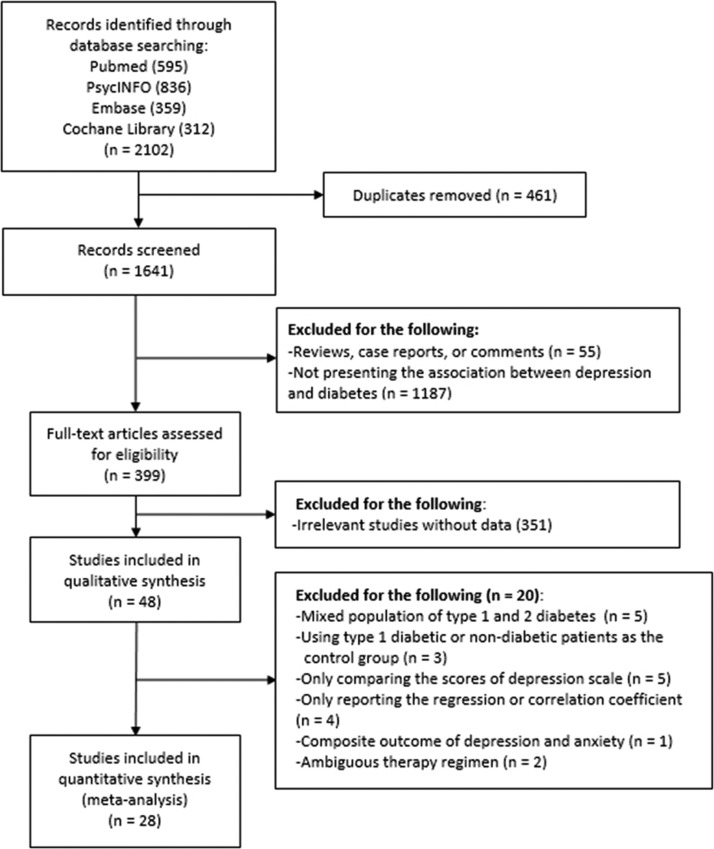
Methods: We conducted a systematic search of PubMed, PsycINFO, Embase and the Cochrane Library from their inception to April 2016. Epidemiological studies comparing the prevalence of depression between insulin users and non-insulin users were included. A random-effects model was used for meta-analysis. The adjusted and crude data were analysed.
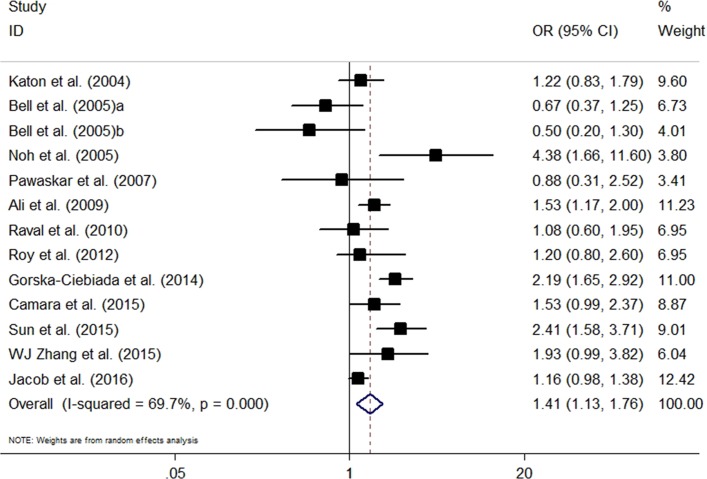
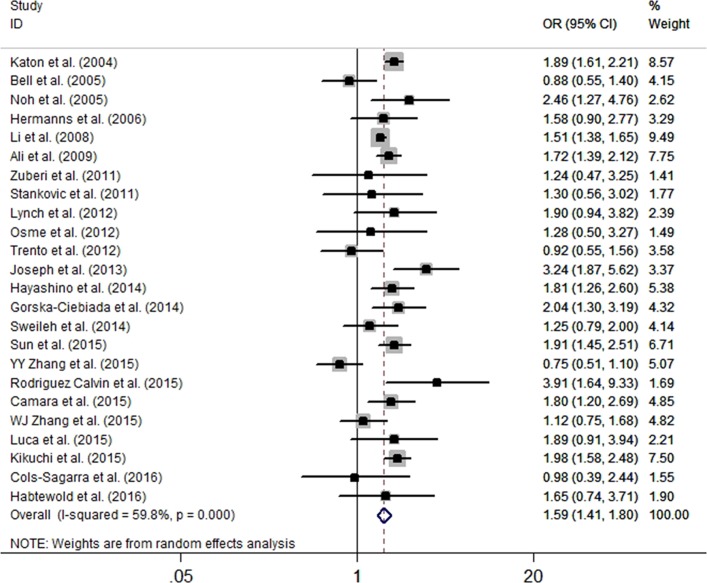
Results: Twenty-eight studies were included. Of these, 12 studies presented with adjusted ORs. Insulin therapy was significantly associated with increased risk of depression (OR=1.41, 95% CI 1.13 to 1.76, p=0.003). Twenty-four studies provided crude data. Insulin therapy was also associated with an odds for developing depression (OR=1.59, 95% CI 1.41 to 1.80, p<0.001). When comparing insulin therapy with oral antidiabetic drugs, significant association was observed for adjusted (OR=1.42, 95% CI 1.08 to 1.86, p=0.008) and crude (OR=1.61, 95% CI 1.35 to 1.93, p<0.001) data.
Conclusions: Our meta-analysis confirmed that patients on insulin therapy were significantly associated with the risk of depressive symptoms.
Keywords: depression; insulin; meta-analysis; risk factor; type 2 diabetes mellitus.
© Author(s) (or their employer(s)) 2018. Re-use permitted under CC BY-NC. No commercial re-use. See rights and permissions. Published by BMJ.
Conflict of interest statement
Competing interests: None declared.
Figures
References
-
- Type 2 Diabetes in Adults: Management. National Institute for Health and Care Excellence: Clinical Guidelines. London, 2015. - PubMed
Publication types
MeSH terms
Substances
LinkOut - more resources
Full Text Sources
Medical
Miscellaneous
