Report from a Consensus Conference on the treatment of Ménière's disease with betahistine: rationale, methodology and results
- PMID: 30498275
- PMCID: PMC6265668
- DOI: 10.14639/0392-100X-2035
Report from a Consensus Conference on the treatment of Ménière's disease with betahistine: rationale, methodology and results
Abstract
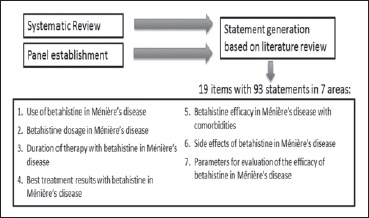
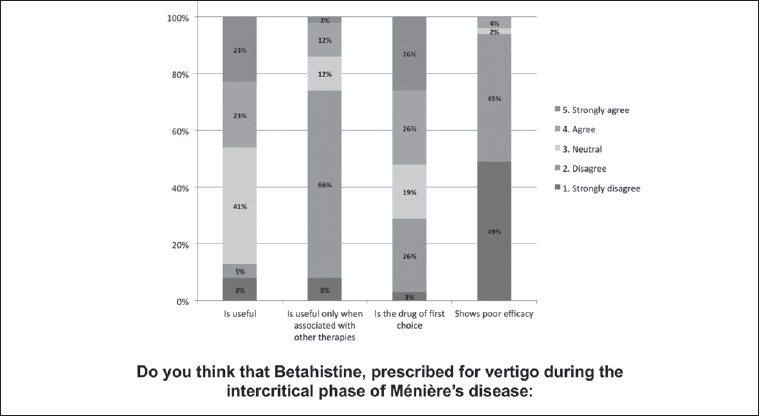
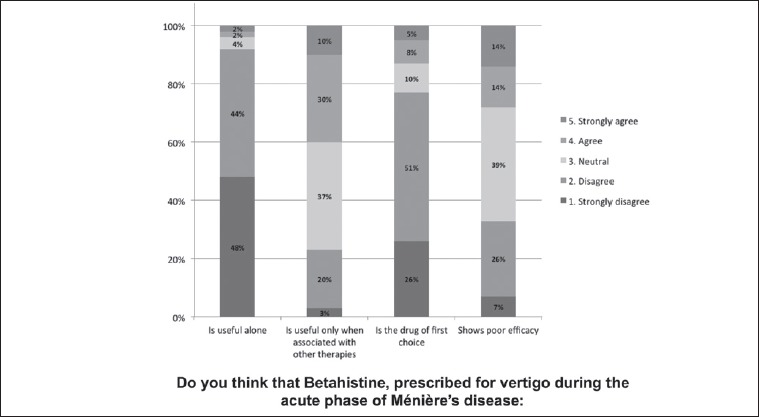
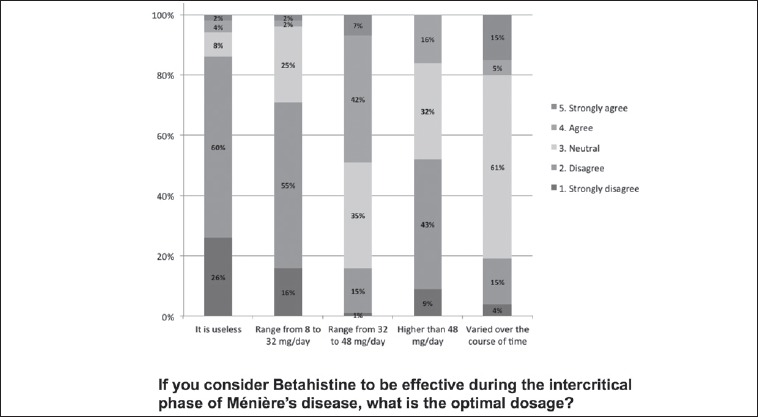
Ménière's disease is a disorder of the inner ear that causes vertigo, tinnitus, fullness and hearing loss. Although several treatments are available, the success rate is reported to be around 70%, similar to placebo. Betahistine, a weak H1 receptor agonist and an effective H3 receptor antagonist, is frequently prescribed for Ménière's disease, especially to reduce recurrent vertigo attacks. The effects of this drug on hearing and other audiological symptoms remains unclear. Given the inconclusive reports in the literature, we proposed a consensus conference on the use of betahistine in Ménière's disease. The aim was to define best practice criteria for therapy for Ménière's disease, improve clinical suitability and reduce heterogeneity of the therapeutic approach. The consensus conference on betahistine for Ménière's disease involved a group of Italian experts in vestibular disorders who were asked a series of questions prepared by opinion leaders. The Delphi method, an iterative investigation method, was used to increase consensus. Via a tele-voting system, each participant anonymously evaluated all statements using a Likert 5-point scale. Betahistine was considered useful for the treatment of dizziness and vertigo during the intercritical phase of the disease (87% agreeing answers). However, during the acute phase of the disease betahistine was considered less effective and useful only when associated with other drugs (71% agreement). Similarly, the efficacy of the drug was considered low when used to reduce progressive hearing loss, tinnitus, and ear fullness. The experts advocated the use of betahistine during the intercritical phase of Ménière's disease to reduce the number and severity of vertigo attacks. Its use seems to be at low risk of major side effects.
Risultati di una Consensus Conference sul trattamento della malattia di Ménière con betaistina.
Riassunto: La malattia di Ménière è una patologia dell’orecchio interno che causa acufene, sensazione di ovattamento auricolare, ipoacusia e vertigini. Sebbene siano disponibili numerosi tipi di trattamento, il successo terapeutico è stimato intorno al 70%, percentuale simile a quella riscontrata con l’utilizzo di placebo. La betaistina, un debole agonista dei recettori H1 e un effettivo antagonista degli H3, è frequentemente prescritta nella malattia di Ménière. Non è chiaro di quanto la betaistina sia in grado di migliorare la sintomatologia nella Ménière. Data l’inconsistenza dei report presenti in letteratura, abbiamo proposto una Consensus Conference sull’utilizzo della betaistina nella malattia di Ménière. Lo scopo è stato definire i migliori criteri clinici dell’approccio terapeutico alla malattia di Menière, migliorarne l’appropriatezza clinica e ridurre l’eterogeneità delle prescrizioni. La Consensus Conference sull’utilizzo della betaistina ha coinvolto un gruppo di esperti italiani nelle problematiche dell’apparato vestibolare, a cui è stato chiesto di rispondere ad una serie di domande preparate da opinion leaders del settore. Allo scopo di aumentare la significatività del Consensus è stato utilizzato il metodo Delphi, una modalità d’indagine interattiva. Attraverso un sistema di televoto, ogni partecipante ha valutato in maniera anonima ciascun punto secondo una scala Likert a 5 punti. La betaistina è stata considerata utile nel trattamento dei capogiri e della vertigine durante la fase intercritica della malattia (87% di concordanza nelle risposte). Tuttavia, durante la fase acuta della malattia la betaistina è stata considerata meno efficace e utile solo se associata ad altri farmaci (71% di concordanza nelle risposte). Allo stesso modo, l’efficacia del farmaco è considerata bassa quando utilizzata per contrastare la perdita progressiva dell’udito, l’acufene e la sensazione di ovattamento auricolare. In conclusione, gli esperti hanno concordato nel supportare l’uso della betaistina durante la fase intercritica della malattia di Ménière allo scopo di ridurre il numero e la severità delle crisi vertiginose.
Keywords: Betahistine; Consensus Conference; Delphi method; Ménière’s disease.
Copyright © 2018 Società Italiana di Otorinolaringologia e Chirurgia Cervico-Facciale, Rome, Italy.
Figures
References
-
- Alexander TH, Harris JP. Current epidemiology of Ménière’s syndrome. Otolaryngol Clin North Am 2010;43:965-70. - PubMed
-
- Watanabe I. Ménière’s disease in males and females. Acta Otolaryngol 1981;91:511-4. - PubMed
-
- Wladislavosky-Waserman P, Facer GW, Mokri B, et al. Ménière’s disease: a 30-year epidemiologic and clinical study in Rochester, Mn, 1951-1980. Laryngoscope 1984;94:1098-102. - PubMed
-
- House JW, Doherty JK, Fisher LM, et al. Ménière’s disease: prevalence of contralateral ear involvement. Otol Neurotol 2006;27:355-61. - PubMed
Publication types
MeSH terms
Substances
LinkOut - more resources
Full Text Sources
Medical