


Clinical and Demographic Features of Basal Cell Carcinoma in North Jordan
- PMID: 30498602
- PMCID: PMC6220741
- DOI: 10.1155/2018/2624054
Clinical and Demographic Features of Basal Cell Carcinoma in North Jordan
Abstract
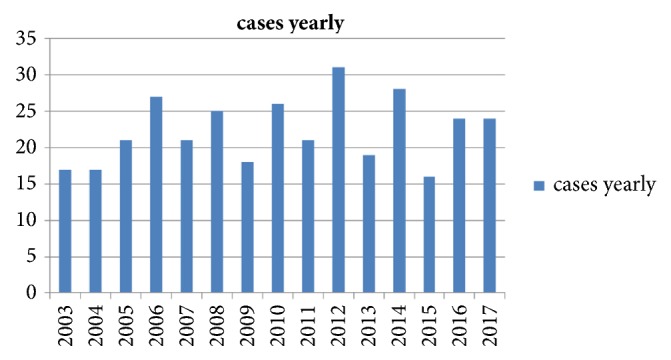
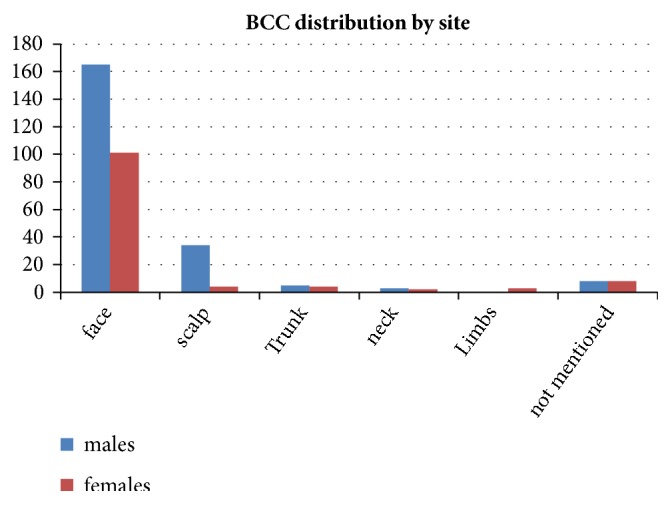
Basal cell carcinoma (BCC) is the most common cancer affecting humans. It almost has no tendency for metastasis; however it can be destructive to surrounding tissue. Patients with darker skin colors have lower risk of developing skin cancers and the clinical characteristics may differ from populations with lighter skin colors. Methods. This is a retrospective clinical study (2003-2017). Data on age, gender, and location of tumor were collected and analyzed. Results. 335 cases were identified. Males tend to get BCC at a younger age than females. Face was the most common site in both males and females. Cheeks and nose were the most likely areas of the face to be involved. Scalp was the most common extrafacial site to be involved in males; however in females scalp was much less likely to be involved. Conclusion. BCC is less common in populations with darker skin. Males were more affected and at an earlier age compared to females. Facial skin followed by scalp was the most common site affected. Skin phototype, cultural and religious dress type, and different sun exposure behavior may explain many of the clinical and demographic findings related to BCC in patients with darker skin tones.
Figures
References
LinkOut - more resources
Full Text Sources
