


Evolutionary engineered Candida intermedia exhibits improved xylose utilization and robustness to lignocellulose-derived inhibitors and ethanol
- PMID: 30498977
- PMCID: PMC6394480
- DOI: 10.1007/s00253-018-9528-x
Evolutionary engineered Candida intermedia exhibits improved xylose utilization and robustness to lignocellulose-derived inhibitors and ethanol
Abstract
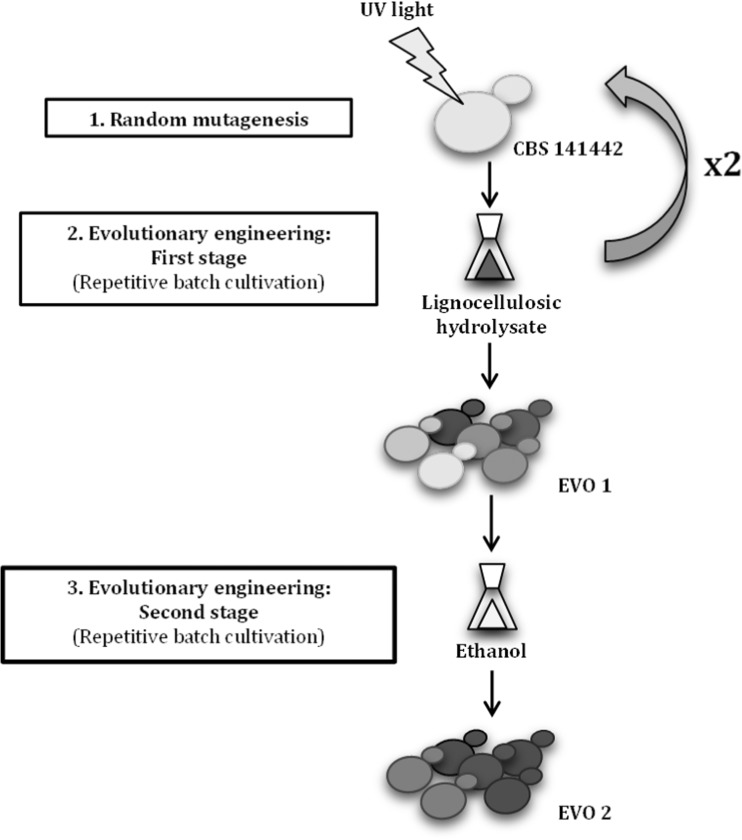
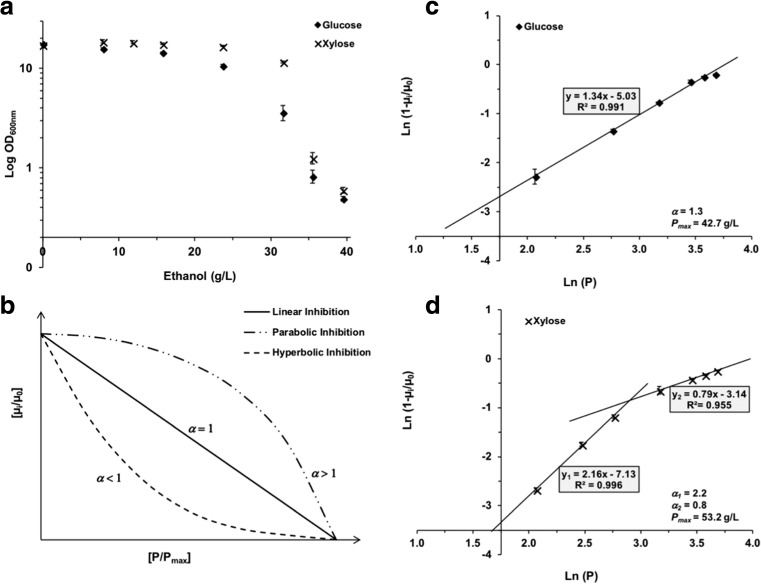
The development of robust microorganisms that can efficiently ferment both glucose and xylose represents one of the major challenges in achieving a cost-effective lignocellulosic bioethanol production. Candida intermedia is a non-conventional, xylose-utilizing yeast species with a high-capacity xylose transport system. The natural ability of C. intermedia to produce ethanol from xylose makes it attractive as a non-GMO alternative for lignocellulosic biomass conversion in biorefineries. We have evaluated the fermentation capacity and the tolerance to lignocellulose-derived inhibitors and the end product, ethanol, of the C. intermedia strain CBS 141442 isolated from steam-exploded wheat straw hydrolysate. In a mixed sugar fermentation medium, C. intermedia CBS 141442 co-fermented glucose and xylose, although with a preference for glucose over xylose. The strain was clearly more sensitive to inhibitors and ethanol when consuming xylose than glucose. C. intermedia CBS 141442 was also subjected to evolutionary engineering with the aim of increasing its tolerance to inhibitors and ethanol, and thus improving its fermentation capacity under harsh conditions. The resulting evolved population was able to ferment a 50% (v/v) steam-exploded wheat straw hydrolysate (which was completely inhibitory to the parental strain), improving the sugar consumption and the final ethanol concentration. The evolved population also exhibited a better tolerance to ethanol when growing in a xylose medium supplemented with 35.5 g/L ethanol. These results highlight the potential of C. intermedia CBS 141442 to become a robust yeast for the conversion of lignocellulose to ethanol.
Keywords: Lignocellulosic bioethanol; Microbial robustness; Non-conventional yeast; Xylose fermentation.
Conflict of interest statement
Conflicts of interest
The authors declare that they have no conflict of interest.
Research involving human participants and/or animals
This article does not contain any studies with human participants or animals performed by any of the authors.
Figures



References
-
- Alvira P, Tomás-Pejó E, Ballesteros M, Negro MJ. Pretreatment technologies for an efficient bioethanol production process based on enzymatic hydrolysis: a review. Bioresour Technol. 2010;101:4851–4861. - PubMed
-
- Alvira P, Moreno AD, Ibarra D, Sáez F, Ballesteros M. Improving the fermentation performance of Saccharomyces cerevisiae by laccase during ethanol production from steam-exploded wheat straw at high-substrate loadings. Biotechnol Prog. 2013;29:74–82. - PubMed
MeSH terms
Substances
Grants and funding
LinkOut - more resources
Full Text Sources
