


p62/SQSTM1: 'Jack of all trades' in health and cancer
- PMID: 30499183
- PMCID: PMC7379270
- DOI: 10.1111/febs.14712
p62/SQSTM1: 'Jack of all trades' in health and cancer
Abstract
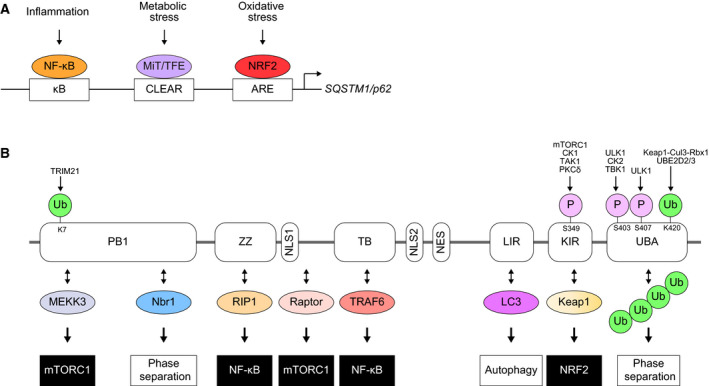
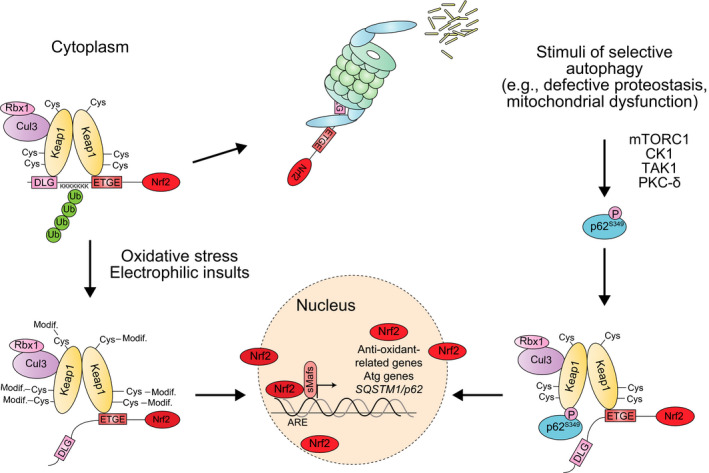
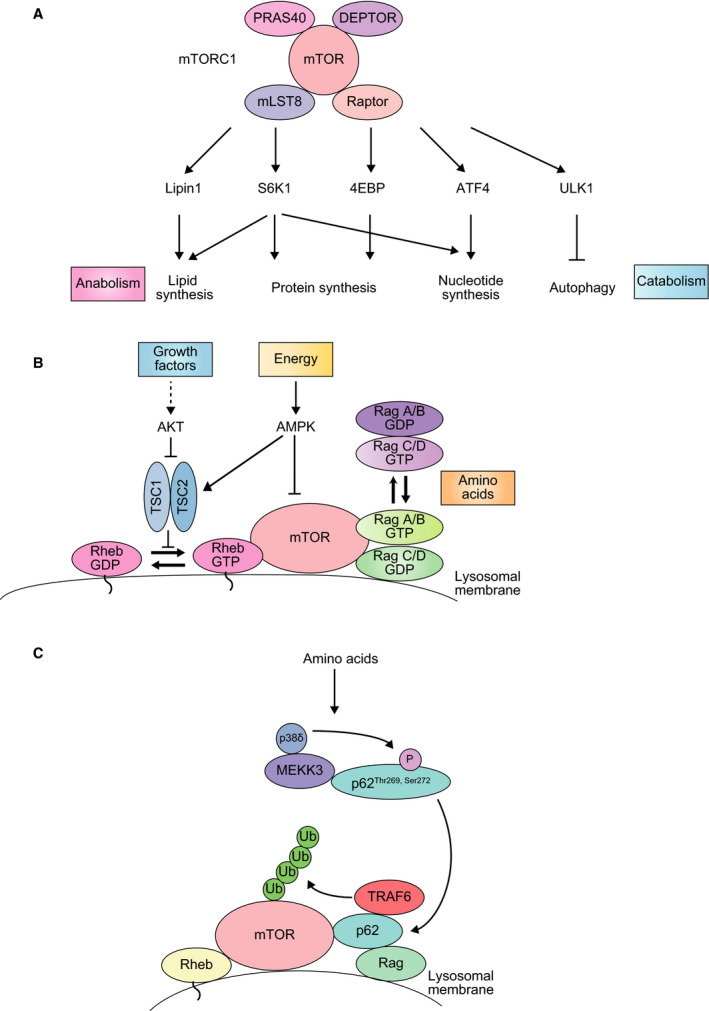
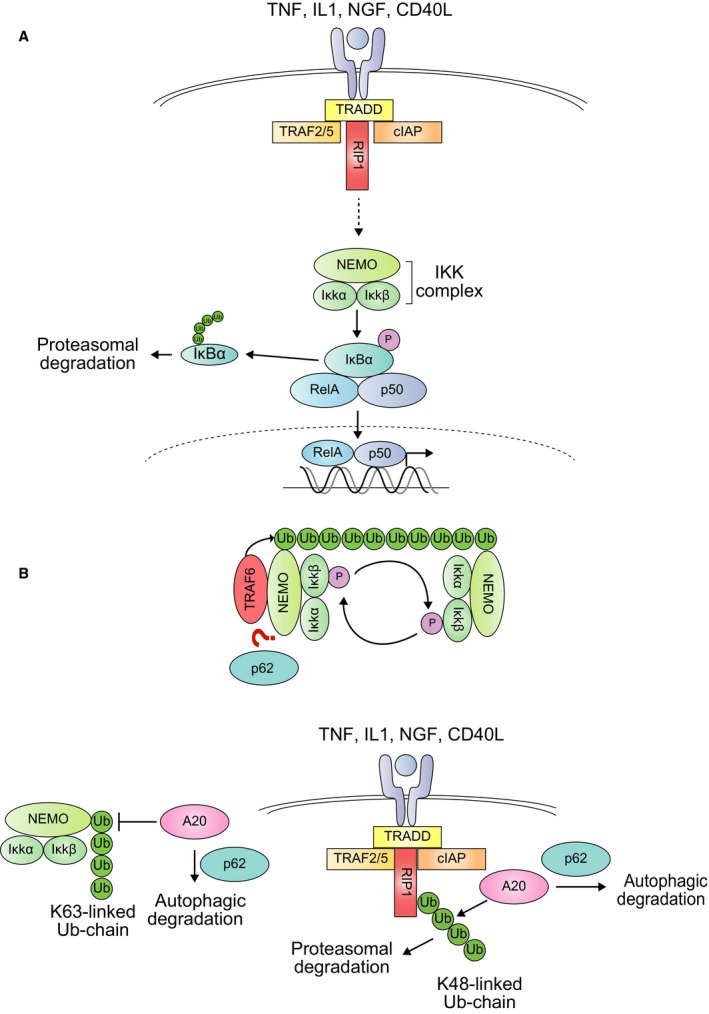
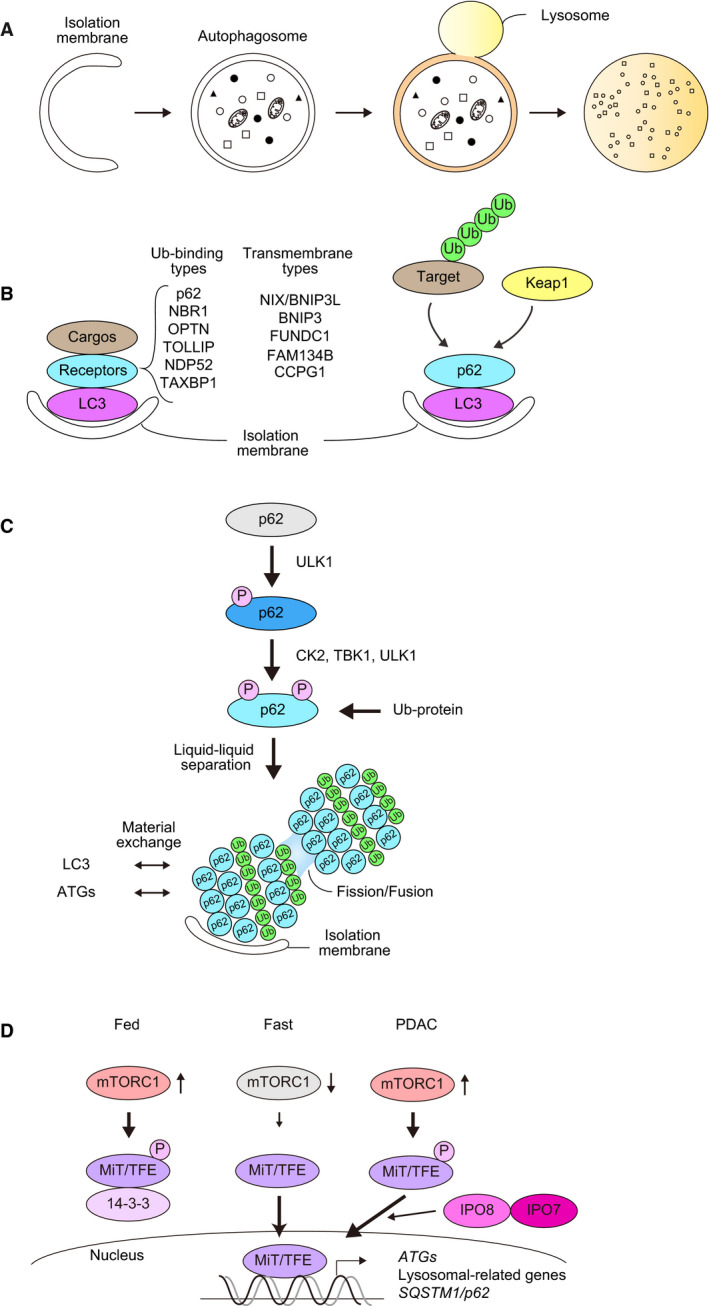
p62 is a stress-inducible protein able to change among binding partners, cellular localizations and form liquid droplet structures in a context-dependent manner. This protein is mainly defined as a cargo receptor for selective autophagy, a process that allows the degradation of detrimental and unnecessary components through the lysosome. Besides this role, its ability to interact with multiple binding partners allows p62 to act as a main regulator of the activation of the Nrf2, mTORC1, and NF-κB signaling pathways, linking p62 to the oxidative defense system, nutrient sensing, and inflammation, respectively. In the present review, we will present the molecular mechanisms behind the control p62 exerts over these pathways, their interconnection and how their deregulation contributes to cancer progression.
Keywords: Keap1; NF-κB; Nrf2; autophagy; cancer; mTORC1; p62/SQSTM1.
© 2018 The Authors. The FEBS Journal published by John Wiley & Sons Ltd on behalf of Federation of European Biochemical Societies.
Figures
References
-
- Jain A, Lamark T, Sjottem E, Larsen KB, Awuh JA, Overvatn A, McMahon M, Hayes JD & Johansen T (2010) p62/SQSTM1 is a target gene for transcription factor NRF2 and creates a positive feedback loop by inducing antioxidant response element‐driven gene transcription. J Biol Chem 285, 22576–22591. - PMC - PubMed
-
- Rea SL, Majcher V, Searle MS & Layfield R (2014) SQSTM1 mutations–bridging Paget disease of bone and ALS/FTLD. Exp Cell Res 325, 27–37. - PubMed
Publication types
MeSH terms
Substances
LinkOut - more resources
Full Text Sources
