


Are acceptance and mindfulness-based interventions 'value for money'? Evidence from a systematic literature review
- PMID: 30499217
- PMCID: PMC6588093
- DOI: 10.1111/bjc.12208
Are acceptance and mindfulness-based interventions 'value for money'? Evidence from a systematic literature review
Abstract
Objectives: Acceptance and mindfulness-based interventions (A/MBIs) are recommended for people with mental health conditions. Although there is a growing evidence base supporting the effectiveness of different A/MBIs for mental health conditions, the economic case for these interventions has not been fully explored. The aim of this systematic review was to identify and appraise all available economic evidence of A/MBIs for the management of mental health conditions.
Methods: Eight electronic bibliographic databases (MEDLINE, MEDLINE In-Process & Other Non-Indexed Citations, EMBASE, Web of Science, NHS Economic Evaluation Database (EED), Database of Abstracts of Reviews of Effects (DARE), Health Technology Assessment (HTA) database, and EconLit) were searched for relevant economic evaluations published from each database's inception date until November 2017. Study selection, quality assessment, and data extraction were carried out according to published guidelines.
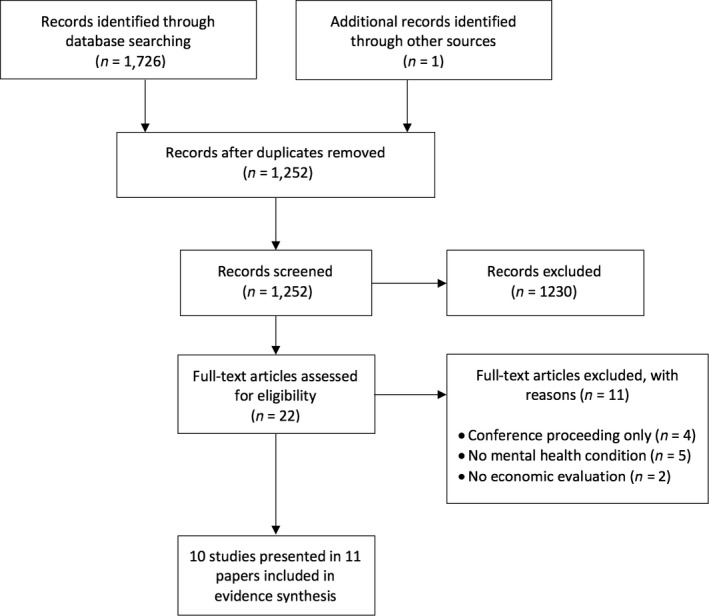
Results: Ten relevant economic evaluations presented in 11 papers were identified. Seven of the included studies were full economic evaluations (i.e., costs and effects assessed), and three studies were partial economic evaluations (i.e., only costs were considered in the analysis). The A/MBIs that had been subjected to economic evaluation were acceptance and commitment therapy (ACT), dialectical behaviour therapy (DBT), mindfulness-based cognitive therapy (MBCT), and mindfulness-based stress reduction (MBSR). In terms of clinical presentations, the evaluation of cost-effectiveness of A/MBIs has been more focused on depression and emotional unstable personality disorder with three and four economic evaluations, respectively. Three out of seven full economic evaluations observed that A/MBIs were cost-effective for the management of mental health conditions. Nevertheless, the heterogeneity of included populations, interventions, and economic evaluation study types limits the extent to which firm conclusions can currently be made.
Conclusion: This first substantive review of economic evaluations of A/MBIs indicates that more research is needed before firm conclusions can be reached on the cost-effectiveness of A/MBIs for mental health conditions.
Practitioner points: The findings of the review provide information that may be relevant to mental health service commissioners and decision-makers as all economic evidence available on acceptance and mindfulness-based interventions for mental health conditions is summarized. Evidence relating to the cost-effectiveness and cost-saving potential of acceptance and mindfulness-based interventions is focused mainly on depression and emotional unstable personality disorder to date. Heterogeneity in the specific forms of acceptance and mindfulness-based interventions may limit generalizability of the findings. The number of health economic evaluations relating to acceptance and mindfulness-based interventions remains relatively small. Further research in this area is required.
Keywords: acceptance and mindfulness-based interventions; cost-effectiveness; economic evaluations; mental health; mindfulness; systematic review.
© 2018 The Authors. British Journal of Clinical Psychology published by John Wiley & Sons Ltd on behalf of British Psychological Society.
Figures
References
-
- American Psychiatric Association (2013). Diagnostic and statistical manual of mental disorders (5th ed.). Washington, DC: Author.
-
- Amner, K. (2012). The effect of DBT provision in reducing the cost of adults displaying the symptoms of BPD. British Journal of Psychotherapy, 28, 336–352. 10.1111/j.1752-0118.2012.01286.x - DOI
-
- Anālayo, B. (2016). Early Buddhist mindfulness and memory, the body, and pain. Mindfulness, 7, 1271–1280. 10.1007/s12671-016-0573-1 - DOI
-
- A‐tjak, J. G. , Davis, M. L. , Morina, N. , Powers, M. B. , Smits, J. A. , & Emmelkamp, P. M. (2015). A meta‐analysis of the efficacy of acceptance and commitment therapy for clinically relevant mental and physical health problems. Psychotherapy and Psychosomatics, 84, 30–36. 10.1159/000365764 - DOI - PubMed
-
- Baer, R. A. (2003). Mindfulness training as a clinical intervention: A conceptual and empirical review. Clinical Psychology: Science and Practice, 10, 125–143. 10.1093/clipsy.bpg015 - DOI
Publication types
MeSH terms
LinkOut - more resources
Full Text Sources
