


Recent and occult hepatitis B virus infections among blood donors in the United States
- PMID: 30499591
- PMCID: PMC8190636
- DOI: 10.1111/trf.15057
Recent and occult hepatitis B virus infections among blood donors in the United States
Abstract
Background: Characteristics of US blood donors with recent (RBI) or occult (OBI) hepatitis B virus (HBV) infection are not well defined.
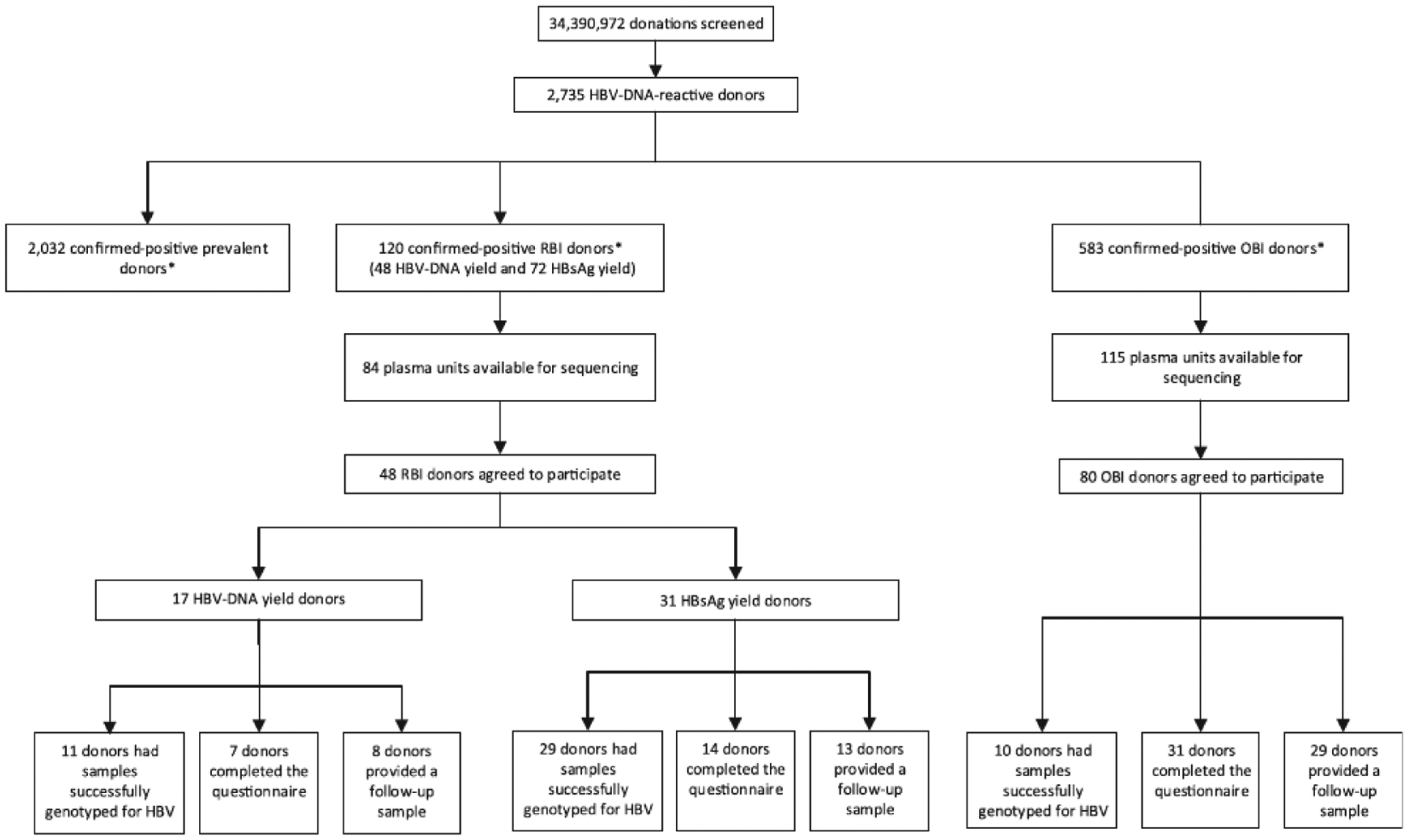
Methods: Donors with RBI and OBI were identified by nucleic acid and serologic testing among 34.4 million donations during 2009-2015. Consenting donors were interviewed and their HBV S-gene sequenced.
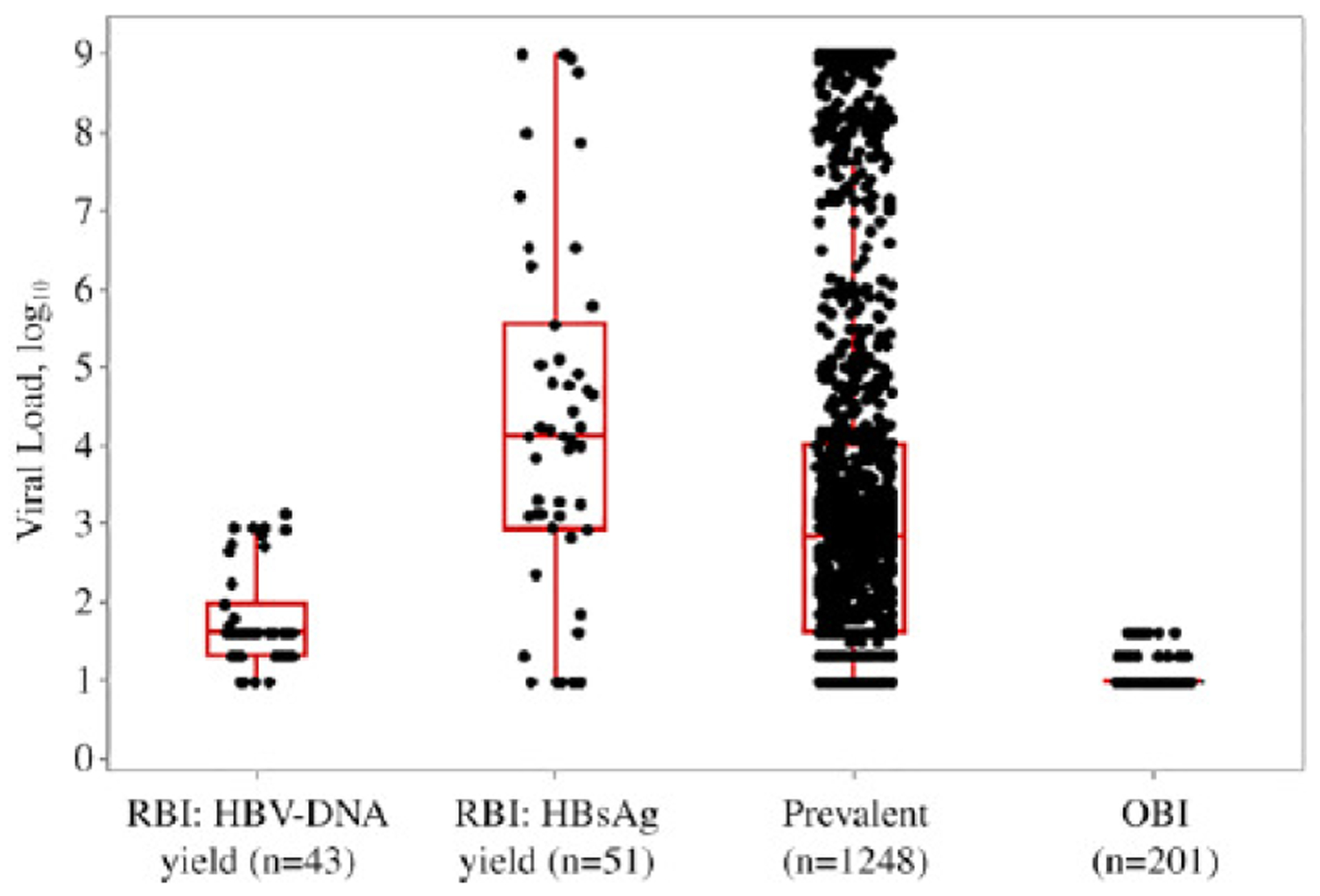
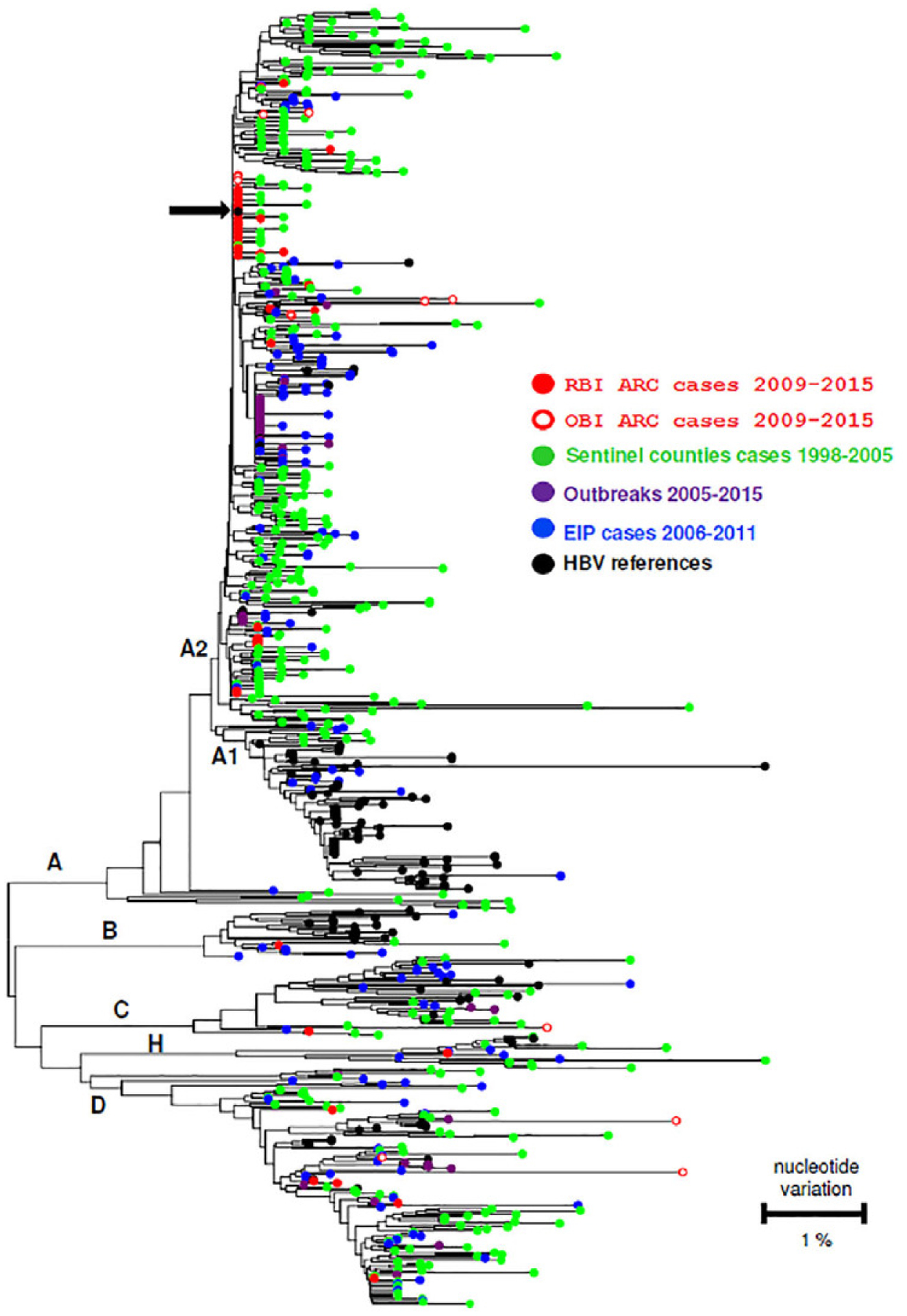
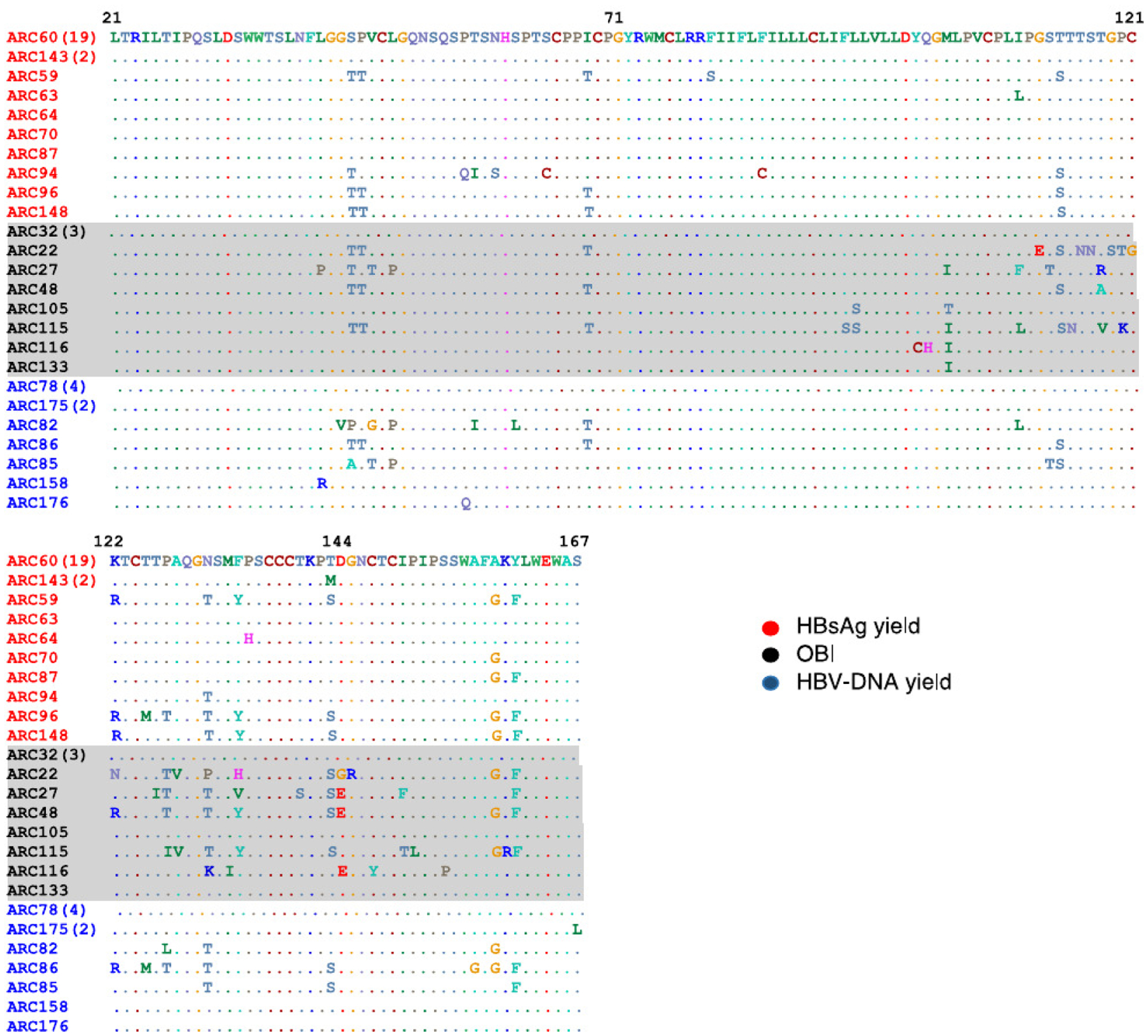
Results: The overall rate of HBV-infected donors was 7.95 per 100,000; of these, 0.35 per 100,000 and 1.70 per 100,000 were RBI and OBI, respectively. RBI (n = 120) and OBI (n = 583) donors constituted 26% of all HBV-infected (n = 2735) donors. Detection of HBV DNA in 92% of OBI donors required individual donation nucleic acid testing. Donors with OBI compared to RBI were older (mean age, 48 vs 39 years; p < 0.0001) with lower median viral loads (9 vs. 529 IU/mL; p < 0.0001). A higher proportion of OBI than RBI donors were born or resided in an endemic country (39% vs. 5%; p = 0.0078). Seventy-seven percent of all RBI and OBI donors had multiple sex partners, an HBV-risk factor. Of 40 RBI and 10 OBI donors whose S gene was sequenced, 33 (83%) and 6 (60%), respectively, carried HBV subgenotype A2; 18 (55%) and 2 (33%), respectively, shared an identical sequence. Infection with 1 or more putative HBV-immune-escape mutants was identified in 5 (50%) of OBI but no RBI donors.
Conclusion: RBI and OBI continue to be identified at low rates, confirming the importance of comprehensive HBV DNA screening of US blood donations. HBV-infected donors require referral for care and evaluation and contact tracing; their HBV strains may provide important information on emergent genotypes.
© 2018 AABB.
Conflict of interest statement
CONFLICT OF INTEREST
The authors have disclosed no conflicts of interest
Figures
References
-
- Whitaker B, Rajbhandary S, Weinman S, et al. Trends in United States blood collection and transfusion: results from the 2013 AABB blood collection, utilization, and patient blood management survey. Transfusion 2016;56:2173–83. - PubMed
-
- Dorsey KA, Moritz ED, Steele WR, et al. A comparison of human immunodeficiency virus, hepatitis C virus, hepatitis B virus, and human T-lymphotropic virus marker rates for directed versus volunteer blood donations to the American Red Cross during 2005 to 2010. Transfusion 2013;53:1250–6. - PubMed
-
- Dodd RY, Notari EP, Nelson D, et al. Development of a multisystem surveillance database for transfusion-transmitted infections among blood donors in the United States. Transfusion 2016;56:2731–9. - PubMed
-
- Stramer SL, Notari EP, Krysztof DE, et al. Hepatitis B virus testing by minipool nucleic acid testing does it improve blood safety? Transfusion 2013;53:2449–58. - PubMed
-
- Zou S, Stramer SL, Notari EP, et al. Current incidence and residual risk of hepatitis B infection among blood donors in the United States. Transfusion 2009;49:1609–20. - PubMed
Publication types
MeSH terms
Substances
Grants and funding
LinkOut - more resources
Full Text Sources
Medical
