Review
. 2018 Nov 30;2018(1):493-506.
doi: 10.1182/asheducation-2018.1.493.

New insights into the pathophysiology and development of novel therapies for sickle cell disease

Affiliations
Review

New insights into the pathophysiology and development of novel therapies for sickle cell disease

Scott Moerdler et al. Hematology Am Soc Hematol Educ Program. .

Abstract

Although the seminal event in sickle cell disease is the polymerization of abnormal hemoglobin, the downstream pathophysiology of vasoocclusion results from heterotypic interactions between the altered, adhesive sickle cell red blood cells, neutrophils, endothelium, and platelets. Ischemia reperfusion injury, hemolysis, and oxidant damage all contribute to heightened inflammation and activation of the hemostatic system. These various pathways are the focus of emerging treatments with potential to ameliorate disease manifestations. This review summarizes the considerable progress in development of these agents despite challenges in selection of study end points and complex pathophysiology.


Conflict of interest statement

Conflict-of-interest disclosure: The authors declare no competing financial interests.

Figures
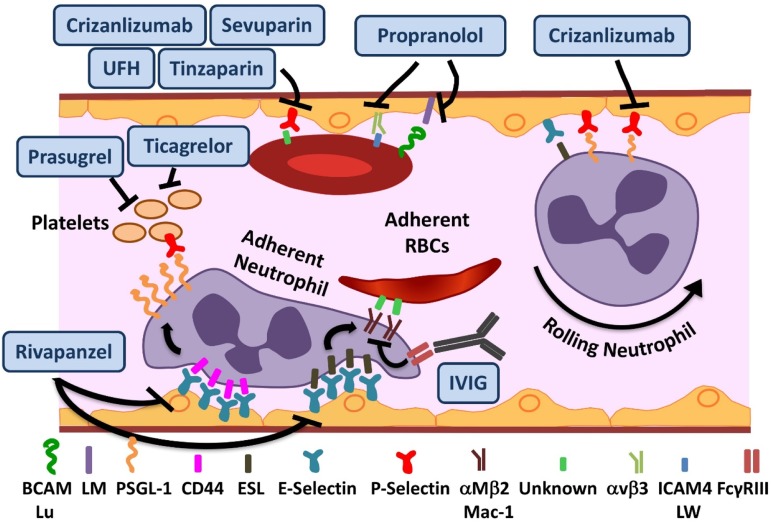
Figure 1.
Figure 1.
Novel agents targeting adhesion and coagulation in SCD. Numerous adhesive interactions among sRBCs, neutrophils, and endothelial cells contribute to sickle cell vasoocclusion. Activation of endothelial cells leads to the recruitment of neutrophils, which is initiated by rolling of neutrophils on endothelial selectins, followed by adhesion. Adherent neutrophils receive a secondary wave of signals transduced through E-selectin, leading to the activation of αMβ2 (Mac-1) integrin on the leading edge. Activated Mac-1 on adherent neutrophils mediates the capture of circulating sRBCs. In addition, sRBCs express multiple adhesion molecules that interact with ligands on endothelial cells or the subendothelial matrix either directly or via bridging molecules in the plasma. Rivipansel targets E-selectin predominantly, whereas crizanlizumab and sevuparin inhibit P-selectin–mediated adhesive interactions. IV immunoglobulin (IVIG) interferes with neutrophil-mediated sRBC capture. Propranol blocks various sRBC-endothelial interactions that are stimulated by β-adrenergic signaling, such as LW (ICAM4)-αVβ3 and BCAM/lu-laminin (LM). Unfractionated heparin (UFH) and tinzaparin, in addition to their anticoagulant effects, target P-selectin. ESL, E-selectin ligand; PSGL-1, P-selectin ligand 1. Adapted from Morrone et al with permission.
Figure 2.
Figure 2.
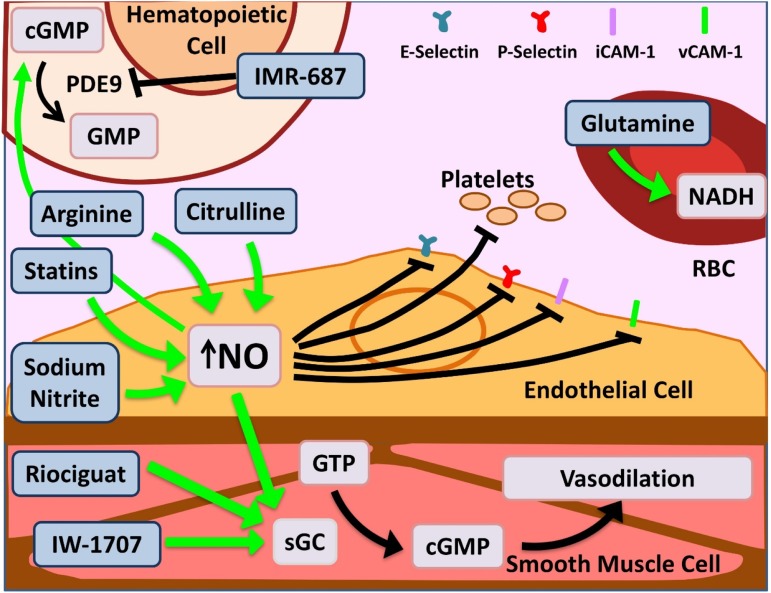
Novel agents targeting inflammation and NO bioavailability. Hemolysis in SCD and the resultant cell-free Hb leads to NO scavenging. Increased bioavailability of NO and its downstream target cyclic guanosine monophosphate (cGMP) lead to salutary effects in the endothelium, smooth muscles, leukocytes, platelets, and increased γ-globin. Therapeutic agents enhancing NO bioavailability by various mechanisms are depicted here. Of note, PDE9 has restricted tissue expression in the hematopoietic cells and brain with the potential for reduced off-target effects as opposed to PDE5, which is more widely expressed. Glutamine increases NADH within RBCs, thus reducing effects of oxidative stress. Dietary glutamine also serves as a precursor for the de novo production of arginine through the citrulline-arginine pathway, contributing to increased NO production. PDE, phosphodiesterase; sGC, soluble guanylate cyclase. Adapted from Morrone et al with permission.
Figure 3.
Figure 3.
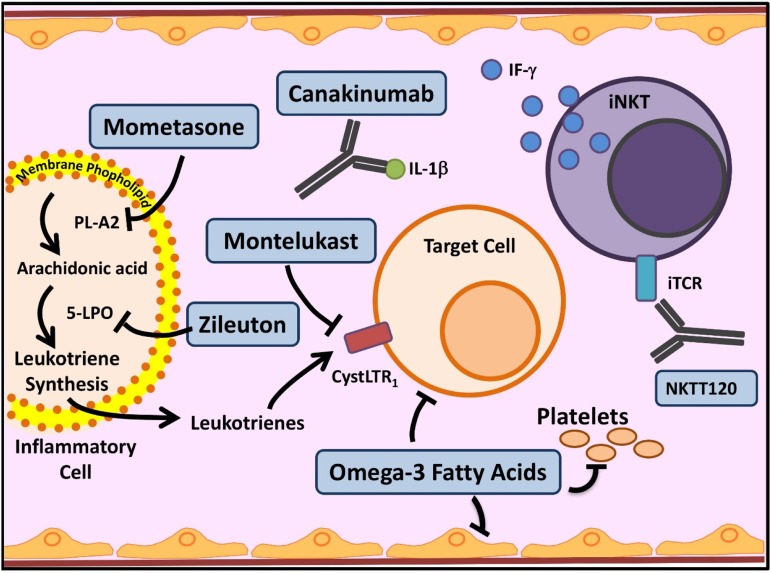
Novel agents targeting inflammation in SCD. Multiple cell types, molecules, and pathways contribute to the chronic inflammatory state in SCD. In SCD, as in asthma, leukocyte membrane phospholipids are hydrolyzed into arachidonic acid (AA), which is metabolized via the 5-lipoxygenase (5-LPO) pathway, leading to formation of inflammatory leukotrienes. Inhibition of this pathway by several agents currently used in asthma (mometasone, zileuton, and monteleukast) is being investigated in SCD. Activated leukocytes also produce various proinflammatory cytokines including IL-1β. Canakinumab in a monoclonal antibody that targets IL-1β. Invariant natural killer T cells (iNKTs) exhibit an activated phenotype and amplify the inflammatory response to hypoxia/reperfusion injury in SCD by producing IFN-ϒ. NKTT120 is a humanized monoclonal antibody that specifically depletes iNKTs. Platelets contribute to inflammation. Omega-3 fatty acids, in addition to favorably altering sRBC fatty acid membrane composition, have a myriad of anti-inflammatory effects and target included leukocytes, platelets, and endothelial cells. iTCR, invariant T-cell receptor; PLA2, secretory phospholipase A2. Adapted from Morrone et al with permission.
Figure 4.
Figure 4.
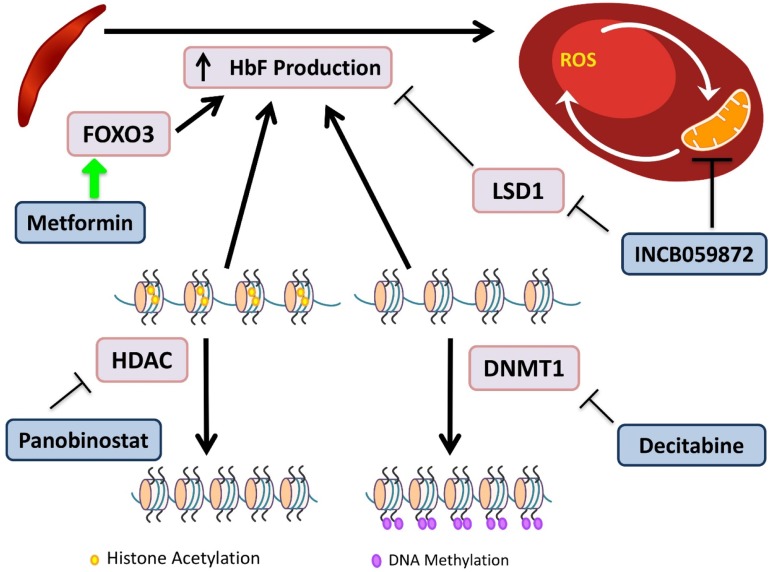
Novel agents targeting HbF induction. HbF has the ability to interfere with HbS polymerization. DNA methyltransferases (DMNTs) modify DNA by methylation of its cytidine residues, resulting in transcriptional silencing. Decitabine inactivates DNMT1, allowing for decreased methylation of the γ-globin promoter and increased gene expression. Histone deacetylators (HDACs) remove acetyl groups, primarily from histone lysine residues, leading to a more closed chromatin configuration, which represses gene expression by reducing access to interacting regulatory proteins. Panobinostat inhibits HDACs, maintaining an open acetylated chromatin configuration of the γ-globin promoter, allowing for gene expression. INCB059872 inhibits LSD1, an inhibitor of HbF production, as well as prevents ROS accumulation in RBCs. Metformin induces FOXO3, a transcription factor that upregulates HbF production, although the precise mechanism of the effect of metformin on HbF induction is still being elucidated.
Figure 5.
Figure 5.
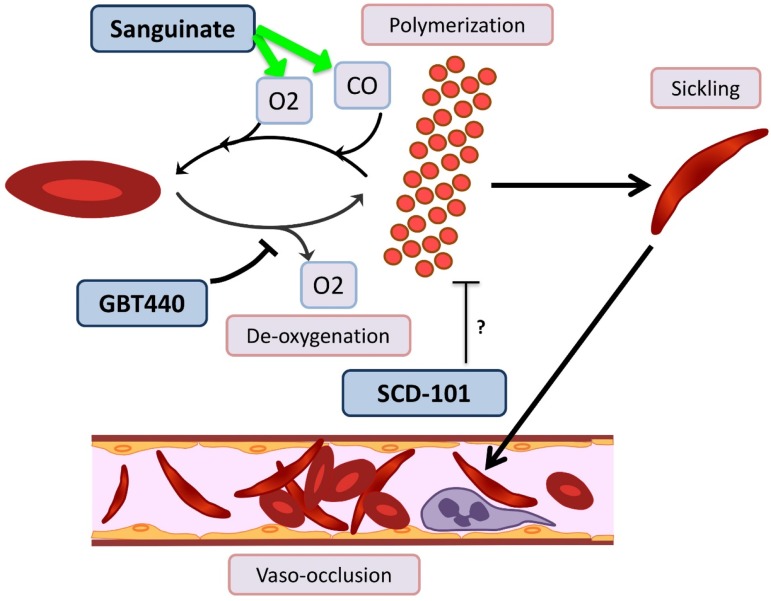
Novel agents targeting RBC sickling in SCD. GBT440 binds Hb and increases its affinity for oxygen (O2), thereby hindering polymerization. Sanguinate helps reverse polymerization and sickling by delivering carbon monoxide (CO) and oxygen to RBCs. The mechanism by which SCD-101 acts to improve sickling remains unknown.
Figure 6.
Figure 6.
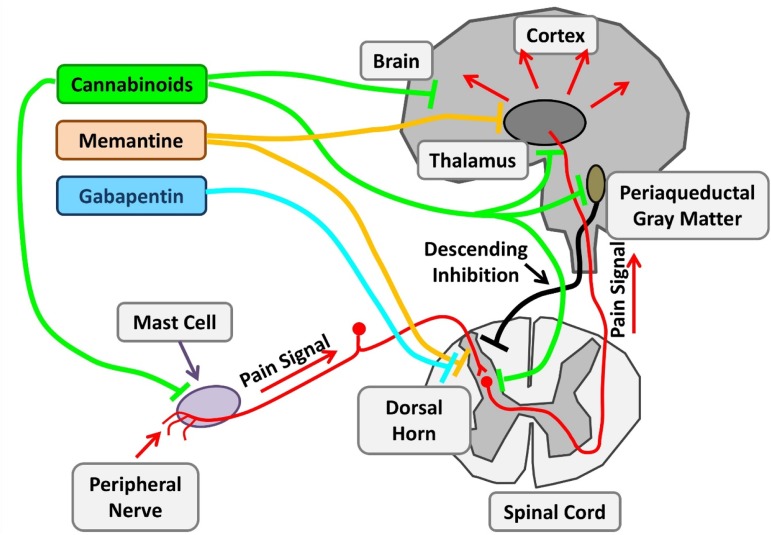
Therapeutic targets investigating chronic pain in SCD. Chronic pain in SCD is likely multifactorial and results from various mechanisms, such as mast cell activation and neurogenic inflammation, peripheral nociceptor sensitization, and central sensitization. Nonopioid agents with established benefits in non-SCD chronic pain are being investigated. Cannabinoids decrease chronic pain by their central effects as well as stabilization of mast cells and reduced neurogenic inflammation. Memantine is an NMDA receptor antagonist, and gabapentin binds to voltage-gated calcium channels in neurons. Adapted from Morrone et al with permission.

References

    1. Piel FB, Steinberg MH, Rees DC. Sickle cell disease. N Engl J Med. 2017;376(16):1561-1573. - PubMed
    1. Lanzkron S, Carroll CP, Haywood C Jr. Mortality rates and age at death from sickle cell disease: U.S., 1979-2005. Public Health Rep. 2013;128(2):110-116. - PMC - PubMed
    1. Smith WR, Penberthy LT, Bovbjerg VE, et al. Daily assessment of pain in adults with sickle cell disease. Ann Intern Med. 2008;148(2):94-101. - PubMed
    1. Browne P, Shalev O, Hebbel RP. The molecular pathobiology of cell membrane iron: the sickle red cell as a model. Free Radic Biol Med. 1998;24(6):1040-1048. - PubMed
    1. Hebbel RP. Adhesion of sickle red cells to endothelium: myths and future directions. Transfus Clin Biol. 2008;15(1-2):14-18. - PubMed

Publication types

MeSH terms