


Effects of B-cell directed therapy on the preclinical stage of rheumatoid arthritis: the PRAIRI study
- PMID: 30504445
- PMCID: PMC6352407
- DOI: 10.1136/annrheumdis-2017-212763
Effects of B-cell directed therapy on the preclinical stage of rheumatoid arthritis: the PRAIRI study
Abstract
Objectives: We explored the effects of B-cell directed therapy in subjects at risk of developing autoantibodypositive rheumatoid arthritis (RA), who never experienced inflammatory arthritis before, and explored biomarkers predictive of arthritis development.
Methods: Individuals positive for both anti-citrullinated peptide antibodies and rheumatoid factor but without arthritis were included in a randomised, double-blind, placebo-controlled study to receive a single infusion of 1000 mg rituximab or placebo.
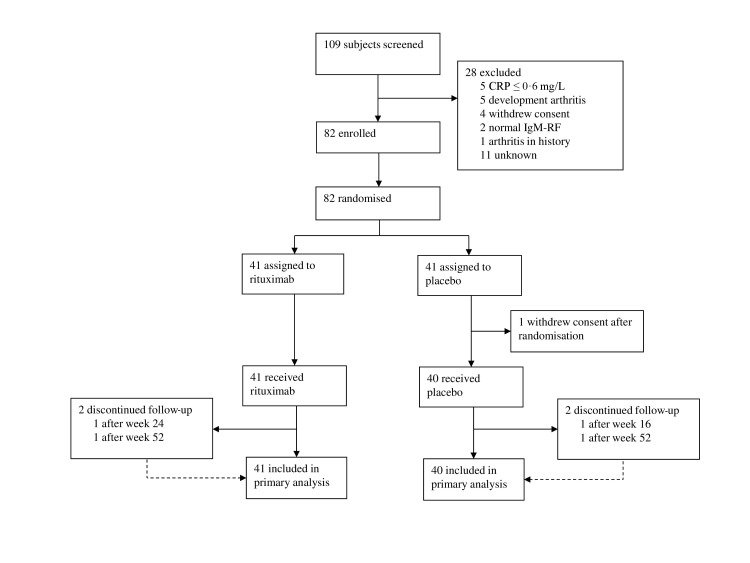
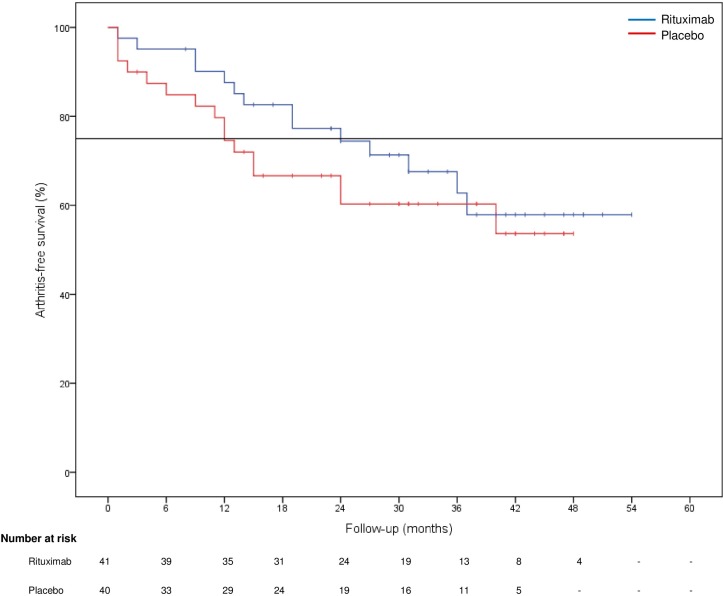
Results: Eighty-one individuals received treatment and were followed up for a mean of 29.0 (0-54) months, during which 30/81 (37%) individuals developed arthritis. The observed risk of developing arthritis in the placebo-treated group was 40%, which was decreased by 55% (HR 0.45, 95% CI 0.154 to 1.322) in the rituximab-treated group at 12 months. Rituximab treatment caused a delay in arthritis development of 12 months compared with placebo treatment at the point when 25% of the subjects had developed arthritis (p<0.0001). Erythrocyte sedimentation rate and the presence of anti-citrullinated α-enolase peptide 1 at baseline were significant predictors of arthritis development.
Conclusions: A single infusion of 1000 mg rituximab significantly delays the development of arthritis in subjects at risk of developing RA, providing evidence for the pathogenetic role of B cells in the earliest, prearthritis stage of autoantibody positive RA.
Keywords: cure; pre-rheumatoid arthritis; prevention; rheumatoid arthritis; rituximab.
© Author(s) (or their employer(s)) 2019. Re-use permitted under CC BY-NC. No commercial re-use. See rights and permissions. Published by BMJ.
Conflict of interest statement
Competing interests: PPT is a former employee and DMG a current employee of GlaxoSmithKline, UK. GlaxoSmithKline was not involved in the design and/or execution of the study. NdV reports grants from AbbVie, Janssen Biologics, Ergomed Clinical Research, GlaxoSmithKline, Pfizer, Boehringer Ingelheim, and Roche, as well as personal fees from MSD, UCB, Janssen, non-financial support from Roche, personal fees and non-financial support from Pfizer, all outside the submitted work. In addition, NdV has a patent method for determining the risk of developing arthritis pending. MS reports a research grant from AstraZeneca (received in August 2015). AstraZeneca was not involved in this study.
Figures
References
Publication types
MeSH terms
Substances
LinkOut - more resources
Full Text Sources
Other Literature Sources
Medical
Miscellaneous
