


Optical remote sensing for monitoring flying mosquitoes, gender identification and discussion on species identification
- PMID: 30505073
- PMCID: PMC6269144
- DOI: 10.1007/s00340-018-6917-x
Optical remote sensing for monitoring flying mosquitoes, gender identification and discussion on species identification
Abstract
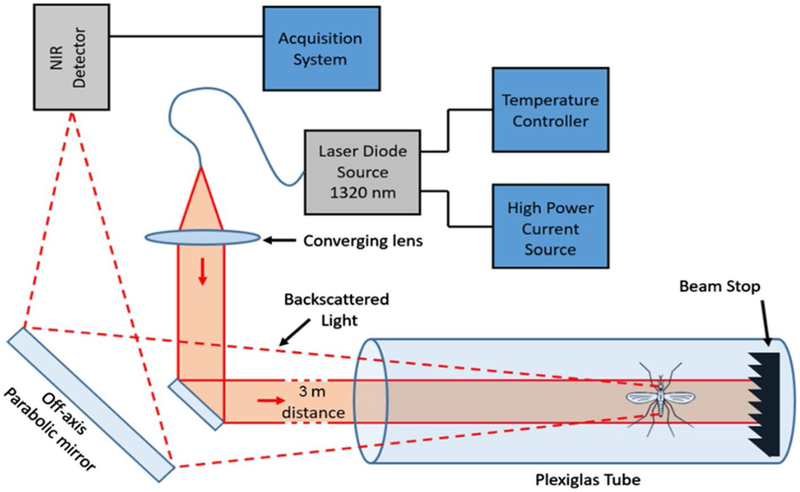
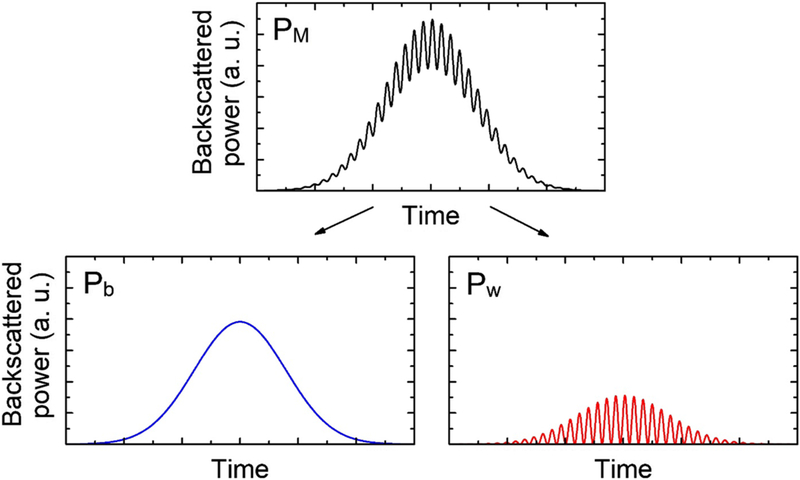
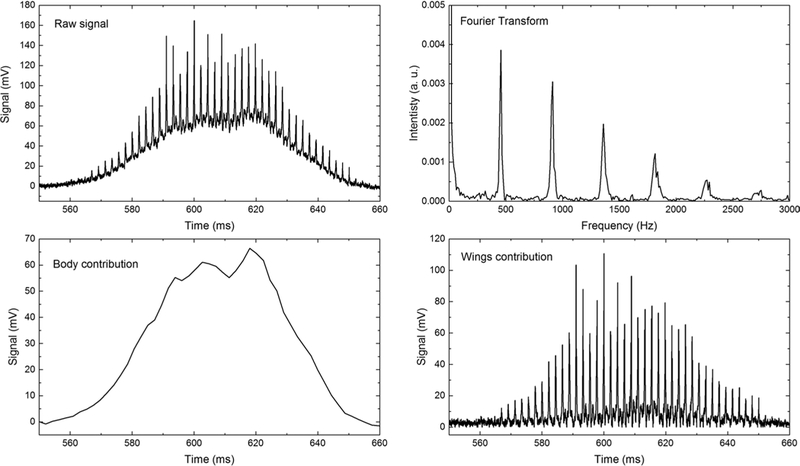
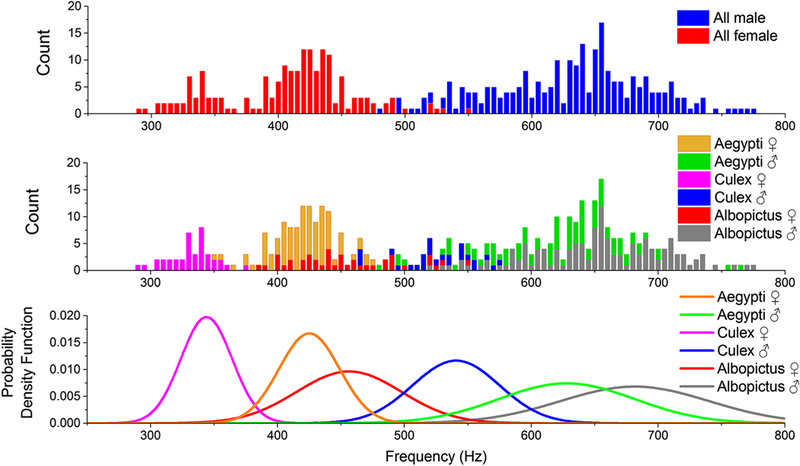
Mosquito-borne diseases are a major challenge for Human health as they affect nearly 700 million people every year and result in over 1 million deaths. Reliable information on the evolution of population and spatial distribution of key insects species is of major importance in the development of eco-epidemiologic models. This paper reports on the remote characterization of flying mosquitoes using a continuous-wave infrared optical remote sensing system. The system is setup in a controlled environment to mimic long-range lidars, mosquitoes are free flying at a distance of ~ 4 m from the collecting optics. The wing beat frequency is retrieved from the backscattered light from mosquitoes transiting through the laser beam. A total of 427 transit signals have been recorded from three mosquito species, males and females. Since the mosquito species and gender are known a priori, we investigate the use of wing beat frequency as the sole predictor variable for two Bayesian classifications: gender alone (two classes) and species/gender (six classes). The gender of each mosquito is retrieved with a 96.5% accuracy while the species/gender of mosquitoes is retrieved with a 62.3% accuracy. Known to be an efficient mean to identify insect family, we discuss the limitations of using wing beat frequency alone to identify insect species.
Figures
References
Grants and funding
LinkOut - more resources
Full Text Sources
Other Literature Sources
Molecular Biology Databases