


Mitochondria-targeting drug conjugates for cytotoxic, anti-oxidizing and sensing purposes: current strategies and future perspectives
- PMID: 30505656
- PMCID: PMC6251809
- DOI: 10.1016/j.apsb.2018.05.006
Mitochondria-targeting drug conjugates for cytotoxic, anti-oxidizing and sensing purposes: current strategies and future perspectives
Abstract
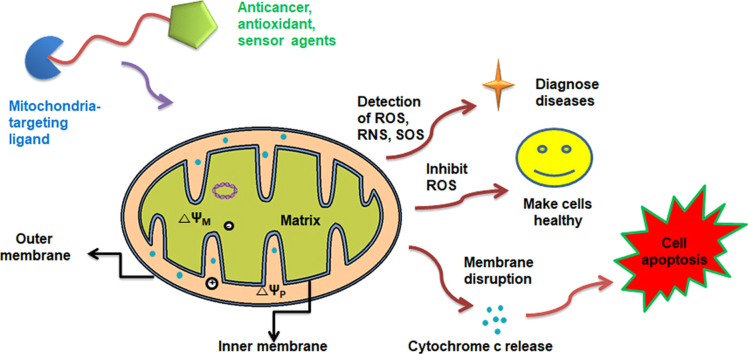
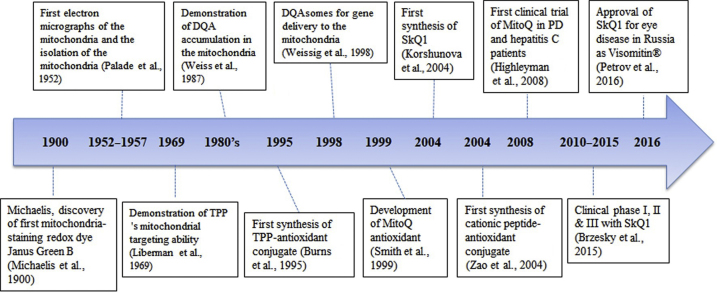
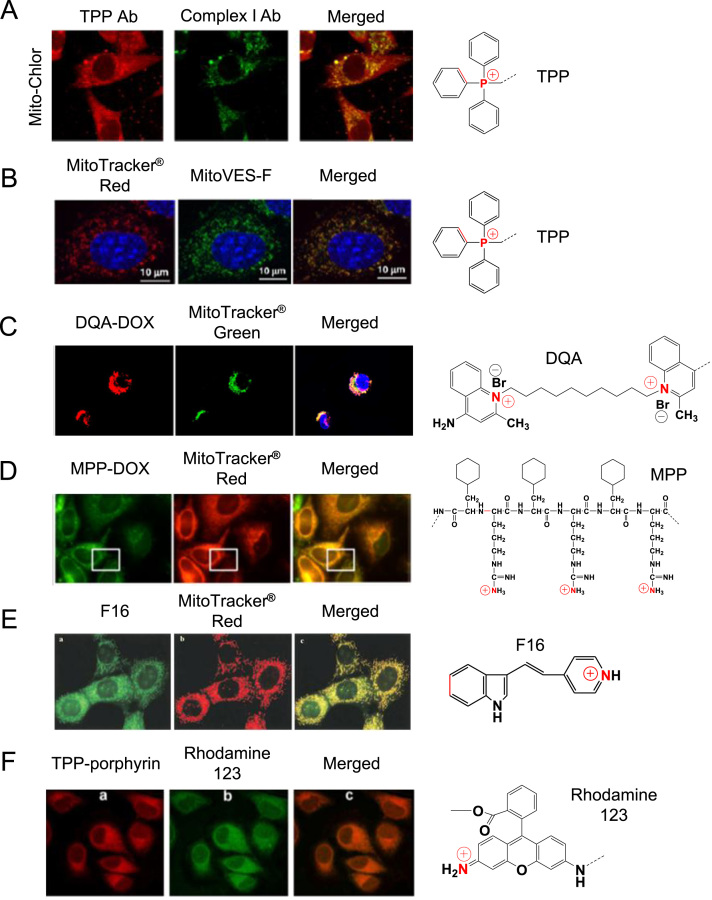
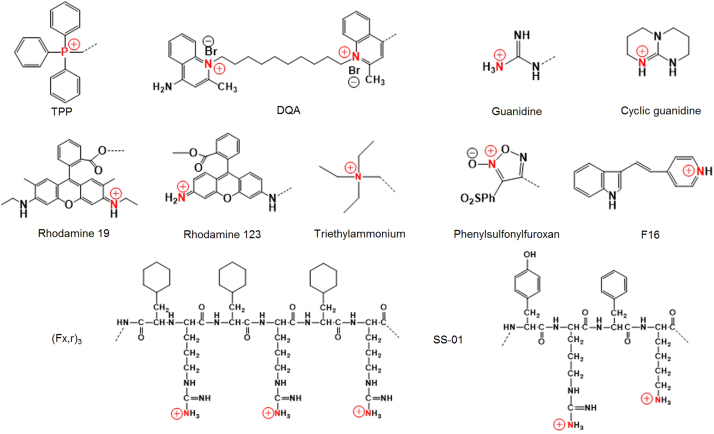
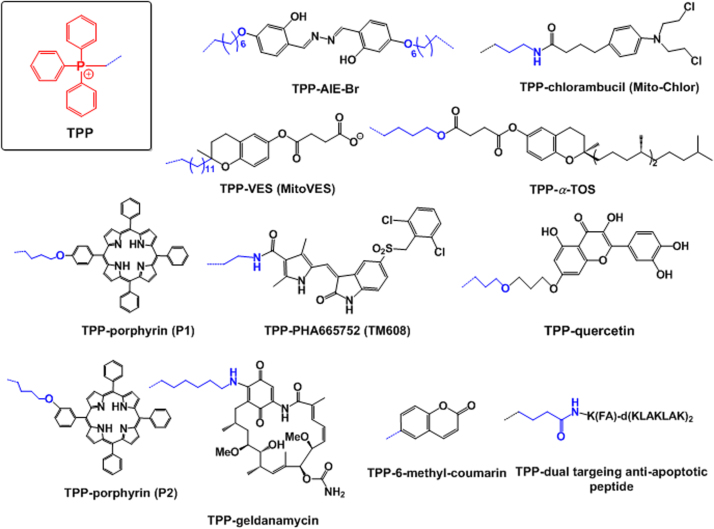
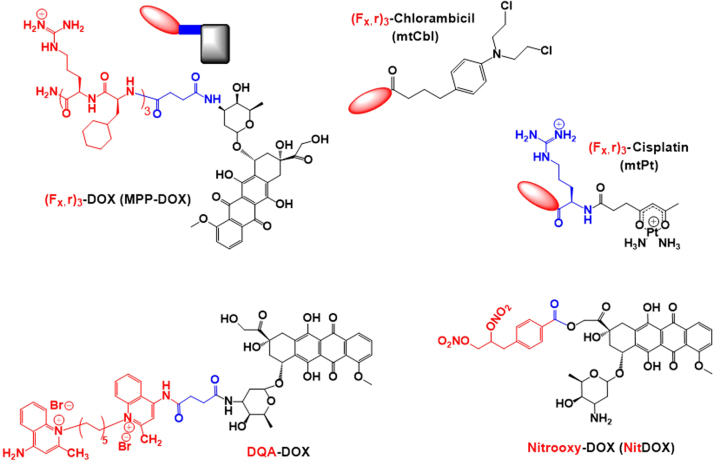
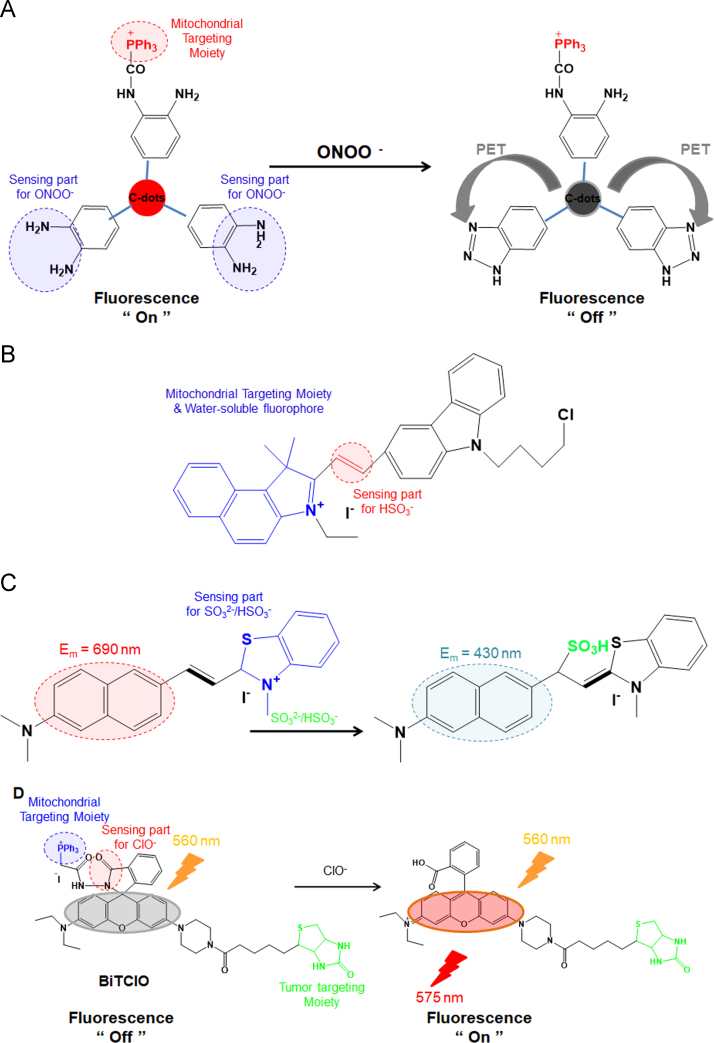
Mitochondrial targeting is a promising approach for solving current issues in clinical application of chemotherapy and diagnosis of several disorders. Here, we discuss direct conjugation of mitochondrial-targeting moieties to anticancer drugs, antioxidants and sensor molecules. Among them, the most widely applied mitochondrial targeting moiety is triphenylphosphonium (TPP), which is a delocalized cationic lipid that readily accumulates and penetrates through the mitochondrial membrane due to the highly negative mitochondrial membrane potential. Other moieties, including short peptides, dequalinium, guanidine, rhodamine, and F16, are also known to be promising mitochondrial targeting agents. Direct conjugation of mitochondrial targeting moieties to anticancer drugs, antioxidants and sensors results in increased cytotoxicity, anti-oxidizing activity and sensing activity, respectively, compared with their non-targeting counterparts, especially in drug-resistant cells. Although many mitochondria-targeted anticancer drug conjugates have been investigated in vitro and in vivo, further clinical studies are still needed. On the other hand, several mitochondria-targeting antioxidants have been analyzed in clinical phases I, II and III trials, and one conjugate has been approved for treating eye disease in Russia. There are numerous ongoing studies of mitochondria-targeted sensors.
Keywords: (Fx, r)3, (l-cyclohexyl alanine-d-arginine)3; 4-AT, 4-amino-TEMPO; 5-FU, 5-Fluorouracil; AD, Alzheimer׳s disease; AIE, aggregation-induced emission; ATP, adenosine triphosphate; Anticancer agents; Antioxidants; Arg, arginine; Aβ, beta amyloid; BODIPY, boron-dipyrromethene; C-dots, carbon dots; CAT, catalase; COX, cytochrome c oxidase; CZBI, carbazole and benzo[e]indolium; CoA, coenzyme A; DDS, drug delivery system; DEPMPO, 5-(diethylphosphono)-5-methyl-1-pyrroline N-oxide; DIPPMPO, 5-(diisopropoxyphosphoryl)-5-methyl-1-pyrroline-N-oxide; DQA, dequalinium; Direct conjugation; Dmt, dimethyltyrosine; EPR, enhanced permeability and retention; F16, (E)-4-(1H-indol-3-ylvinyl)-N-methylpyridinium iodide; GPX, glutathione peroxidase; GS, gramicidin S; HTPP, 5-(4-hydroxy-phenyl)-10,15,20-triphenylporphyrin; IMM, inner mitochondrial membrane; IMS, intermembrane space; IOA, imidazole-substituted oleic acid; LA, lipoic acid; LAH2, dihydrolipoic acid; Lys, lysine; MET, mesenchymal-epithelial transition; MLS, mitochondria localization sequences; MPO, myeloperoxidase; MPP, mitochondria-penetrating peptides; MitoChlor, TPP-chlorambucil; MitoE, TPP-vitamin E; MitoLA, TPP-lipoic acid; MitoQ, TPP-ubiquinone; MitoVES, TPP-vitamin E succinate; Mitochondria-targeting; Nit, nitrooxy; NitDOX, nitrooxy-DOX; OMM, outer mitochondrial membrane; OXPHOS, oxidative phosphorylation; PD, Parkinson׳s disease; PDT, photodynamic therapy; PET, photoinduced electron transfer; PS, photosensitizer; PTPC, permeability transition pore complex; Phe, phenylalanine; RNS, reactive nitrogen species; ROS, reactive oxygen species; SOD, superoxide dismutase; SS peptide, Szeto-Schiller peptides; Sensing agents; SkQ1, Skulachev ion-quinone; TEMPOL, 4-hydroxy-2,2,6,6-tetramethylpiperidine-N-oxyl; TPEY-TEMPO, [2-(1-oxyl-2,2,6,6-tetramethylpiperidin-4-ylimino)-ethyl]-triphenyl-phosphonium; TPP, triphenylphosphonium; Tyr, tyrosine; VDAC/ANT, voltage-dependent anion channel/adenine nucleotide translocase; VES, vitamin E succinate; XO, xanthine oxidase; mitoTEMPO, (2-(2,2,6,6-tetramethylpiperidin-1-oxyl-4-ylamino)-2-oxoethyl)triphenylphosphonium); mtCbl, (Fx,r)3-chlorambucil; mtDNA, mitochondrial DNA; mtPt, mitochondria-targeting (Fx,r)3-platinum(II); nDNA, nuclear DNA; αTOS, alpha-tocopheryl succinate..
Figures
References
-
- Fulda S., Galluzzi L., Kroemer G. Targeting mitochondria for cancer therapy. Nat Rev Drug Discov. 2010;9:447–464. - PubMed
-
- Chipuk J.E., Bouchier-Hayes L., Green D.R. Mitochondrial outer membrane permeabilization during apoptosis: the innocent bystander scenario. Cell Death Differ. 2006;13:1396–1402. - PubMed
-
- Modica-Napolitano J.S., Singh K.K. Mitochondrial dysfunction in cancer. Mitochondrion. 2004;4:755–762. - PubMed
Publication types
LinkOut - more resources
Full Text Sources
Other Literature Sources
Research Materials
Miscellaneous
