


Induction Effects of Bacteroides fragilis Derived Outer Membrane Vesicles on Toll Like Receptor 2, Toll Like Receptor 4 Genes Expression and Cytokines Concentration in Human Intestinal Epithelial Cells
- PMID: 30507089
- PMCID: PMC6275420
- DOI: 10.22074/cellj.2019.5750
Induction Effects of Bacteroides fragilis Derived Outer Membrane Vesicles on Toll Like Receptor 2, Toll Like Receptor 4 Genes Expression and Cytokines Concentration in Human Intestinal Epithelial Cells
Abstract
Objective: Gastrointestinal (GI) tract, like other mucosal surface, is colonized with a microbial population known as gut microbiota. Outer membrane vesicles (OMVs) which are produced by gram negative bacteria could be sensed by Toll like receptors (TLRs). The interaction between gut microbiota and TLRs affects homeostasis and immune responses. In this study, we evaluated TLR2, TLR4 genes expression and cytokines concentration in Caco-2 cell line treated with Bacteroides fragilis (B. fragilis) and its OMVs.
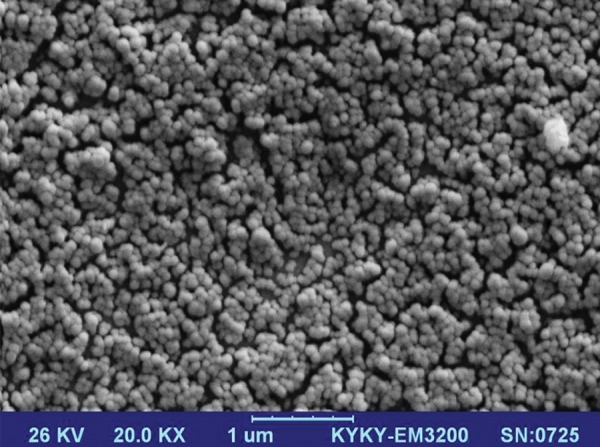
Materials and methods: In this experimental study, OMVs were extracted using sequential centrifugation and their physicochemical properties were evaluated as part of quality control assessment. Caco-2 cells were treated with B. fragilis and its OMVs (180 and 350 μg/ml). Quantitative reverse transcriptase-polymerase chain reaction (qRT-PCR) was performed to assess TLR2 and TLR4 mRNA expression levels. Pro-inflammatory (IFNᵧ) and anti-inflammatory (IL- 4 and IL-10) cytokines were evaluated by ELISA.
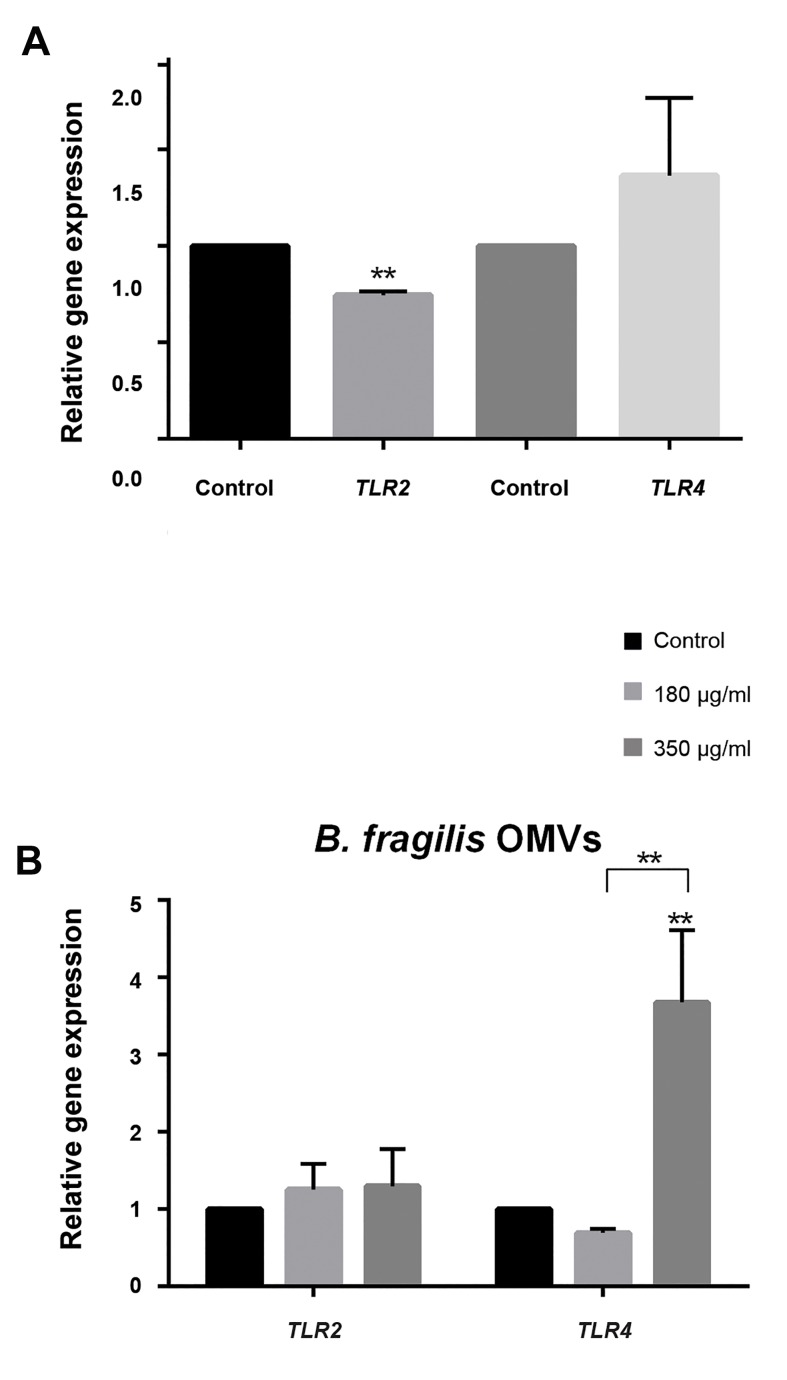
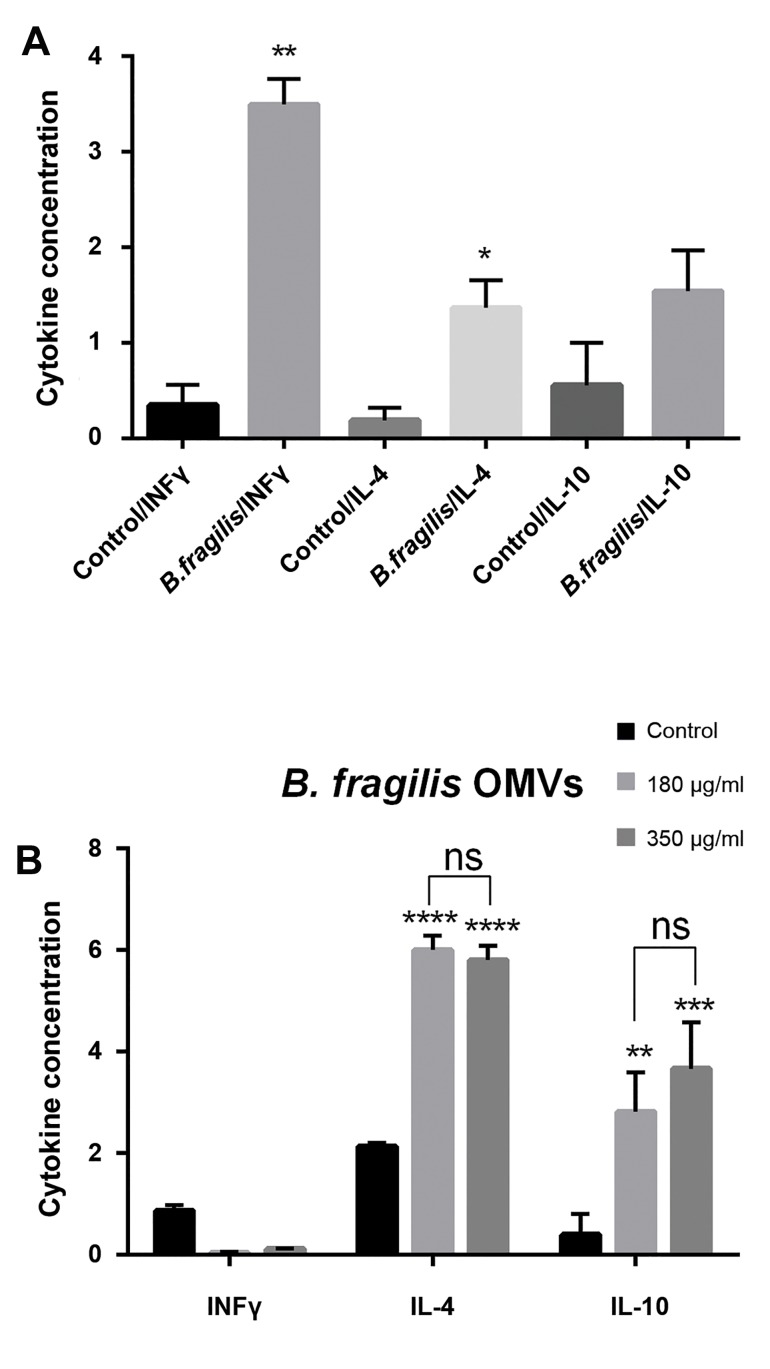
Results: B. fragilis significantly decreased TLR2 and slightly increased TLR4 mRNA levels in Caco-2 cell line. The TLR2 mRNA level was slightly increased at 180 and 350 μg/ml of OMVs. Conversely, the TLR4 mRNA level was decreased at 180 μg/ml of OMVs, while it was significantly increased at 350 μg/ml of OMVs. Furthermore, B. fragilis and its OMVs significantly increased and decreased IFNᵧ concentration, respectively. Anti-inflammatory cytokines were increased by B. fragilis and its OMVs.
Conclusion: B. fragilis and its OMVs have pivotal role in the cross talk between gut microbiota and the host especially in the modulation of the immune system. Based on the last studies on immunomodulatory effect of B. fragilis derived OMVs on immune cells and our results, we postulate that B. fragilis derived OMVs could be possible candidates for the reduction of immune responses.
Keywords: Bacteroides fragilis; Gut Microbiota; Membrane Vesicles; Toll Like Receptors.
Copyright© by Royan Institute. All rights reserved.
Conflict of interest statement
There is no conflict of interest in this study.
Figures
References
-
- Sekirov I, Russell SL, Antunes LC, Finlay BB. Gut microbiota in health and disease. Physiol Rev. 2010;90(3):859–904. - PubMed
-
- Muraca M, Putignani L, Fierabracci A, Teti A, Perilongo G. Gut microbiota-derived outer membrane vesicles: under-recognized major players in health and disease. Discov Med. 2015;19(106):343–348. - PubMed
LinkOut - more resources
Full Text Sources