


Recent advances in site-selective functionalization of carbohydrates mediated by organocatalysts
- PMID: 30508658
- PMCID: PMC6743478
- DOI: 10.1016/j.carres.2018.11.012
Recent advances in site-selective functionalization of carbohydrates mediated by organocatalysts
Abstract
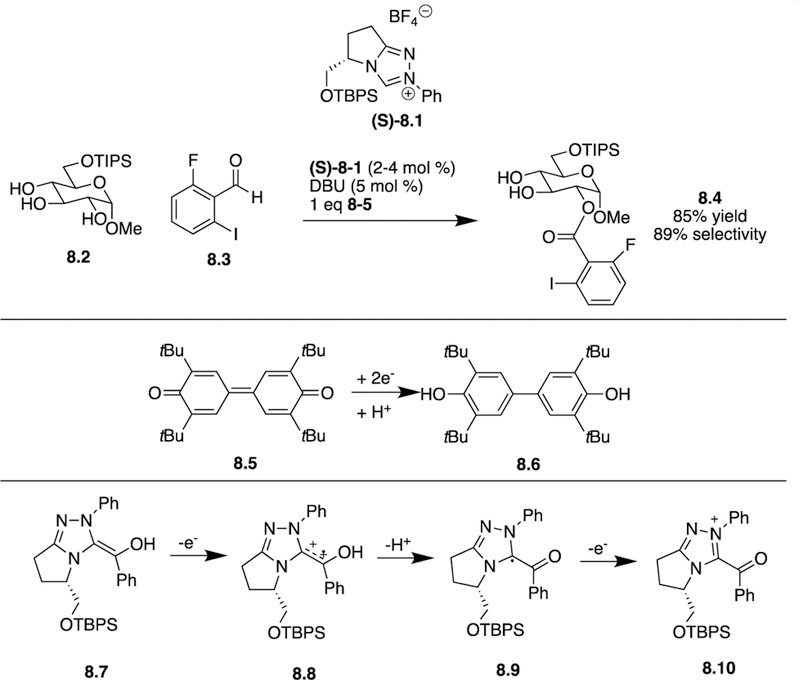
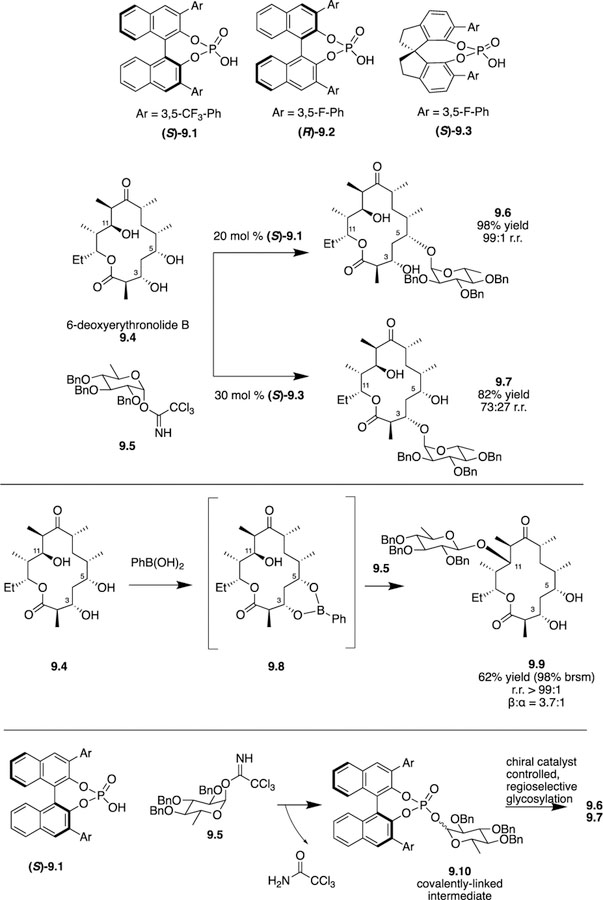
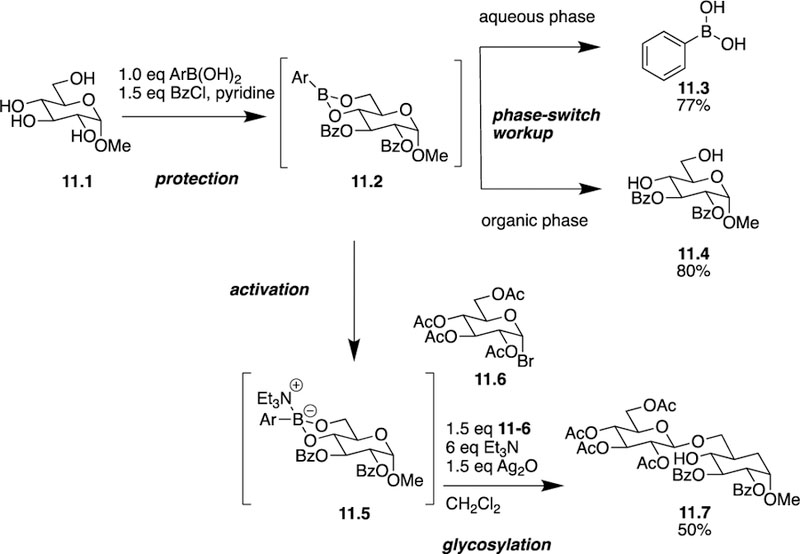
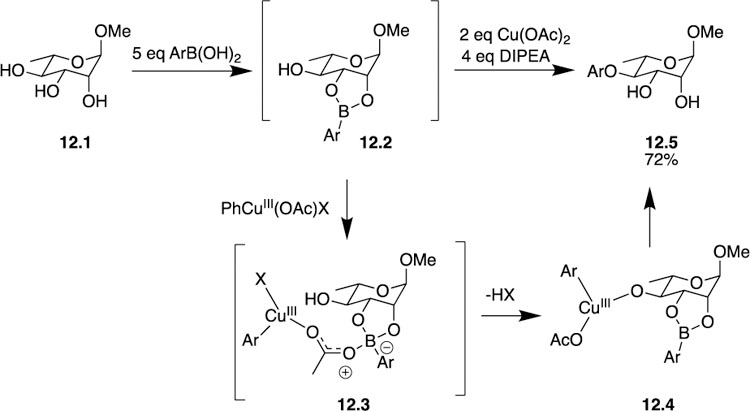
As one of the four fundamental building blocks of life, carbohydrates assume varied and expansive roles in biological contexts. More in-depth understanding of carbohydrates and their interactions, however, is often restricted by our inability to synthesize and subsequently functionalize them in a site-selective manner. This review will summarize recent advances in the site-selective functionalization of carbohydrates using organocatalysts, including achiral catalysts, chiral nucleophilic bases, chiral N-heterocyclic carbenes, and chiral phosphoric acids, with an emphasis on the catalytic nature in each case. As in many endeavors, taking an alternative approach can often lead to success, and selected examples of these achievements will be highlighted as well.
Keywords: Carbohydrate; Organocatalysis; Site-selective functionalization.
Copyright © 2018 Elsevier Ltd. All rights reserved.
Figures





References
-
- Wang H-Y, Blaszczyk SA, Xiao G, Tang W, Chiral reagents in glycosylation and modification of carbohydrates, Chem. Soc. Rev 47 (2017) 681–701. - PubMed
-
- Seeberger PH, Automated synthesis of oligosaccharides as a basis for drug discovery, Nat. Rev. Drug Discov 4 (2005) 751–763. - PubMed
-
- Panza M, Pistorio SG, Stine KJ, Demchenko AV, Automated chemical oligosaccharide synthesis: novel approach to traditional challenges, Chem. Rev 118 (17) (2018) 8105–8150. - PMC - PubMed
- Hsu CH, Hung S-C, Wu C-Y, Wong C-H, Toward automated oligosaccharide synthesis, Angew. Chem. Int. Ed 50 (2011) 11872–11939. - PubMed
- Seeberger PH, Automated oligosaccharide synthesis, Chem. Soc. Rev 37 (2008) 19–28. - PubMed
-
- Wen L, Edmunds G, Gibbons C, Zhang J, Gadi MR, Zhu H, Fang J, Liu X, Kong Y, Wang PG, Towards automatic enzymatic synthesis of oligosaccharides, Chem. Rev 118 (17) (2018) 8151–8187. - PubMed
-
- Lawandi J, Rocheleau S, Moitessier N, Regioselective acylation, acylation, silylation, and glycosylation of monosaccharides, Tetrahedron 72 (2016) 6283–6319.
Publication types
MeSH terms
Substances
Grants and funding
LinkOut - more resources
Full Text Sources
Other Literature Sources
