


Effect of Tinnitus and Duration of Deafness on Sound Localization and Speech Recognition in Noise in Patients With Single-Sided Deafness
- PMID: 30509148
- PMCID: PMC6291880
- DOI: 10.1177/2331216518813802
Effect of Tinnitus and Duration of Deafness on Sound Localization and Speech Recognition in Noise in Patients With Single-Sided Deafness
Abstract
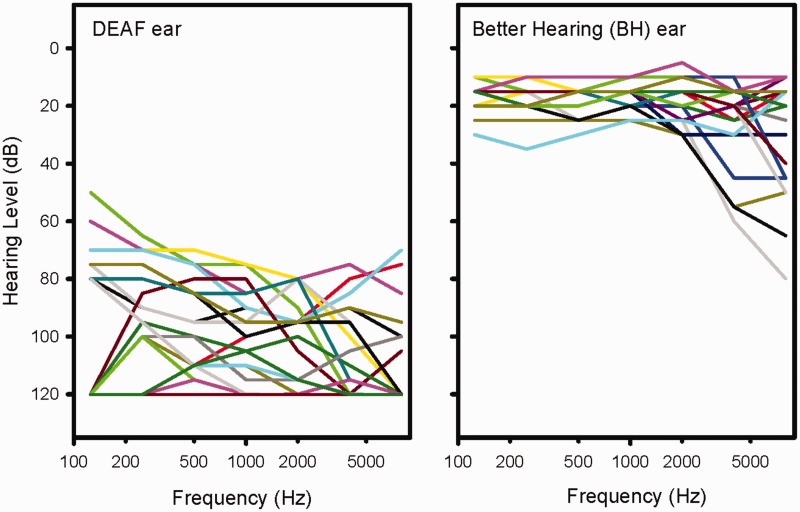
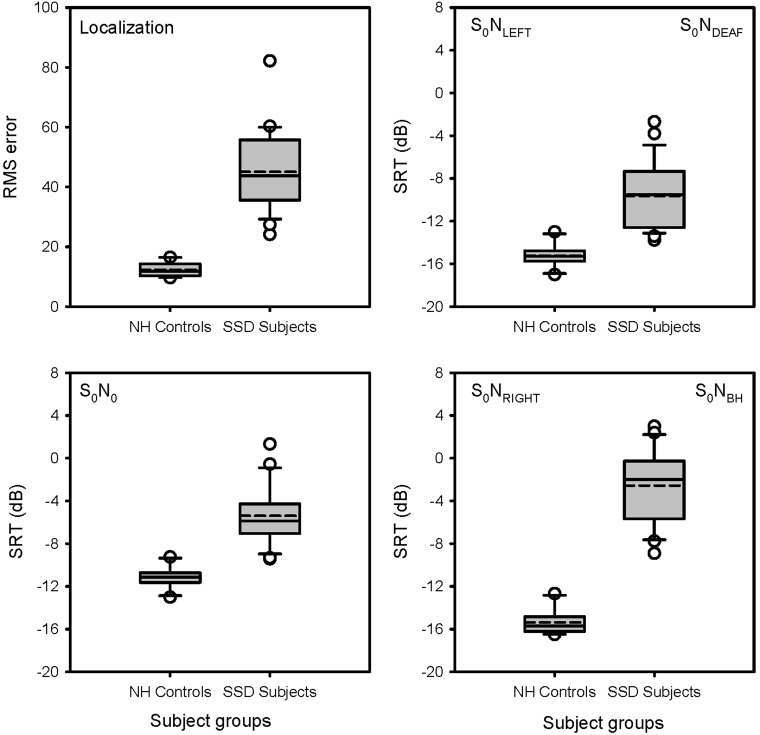
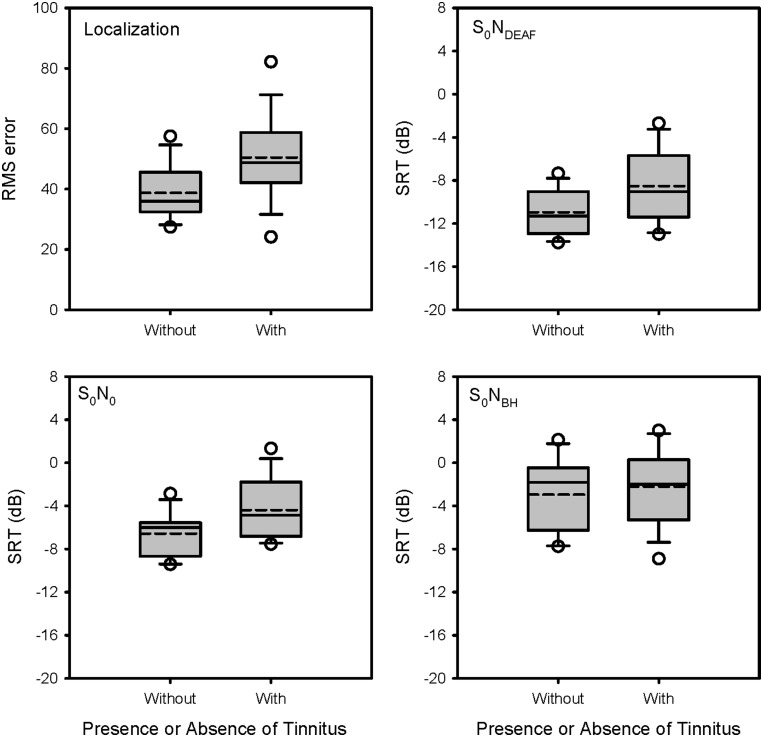
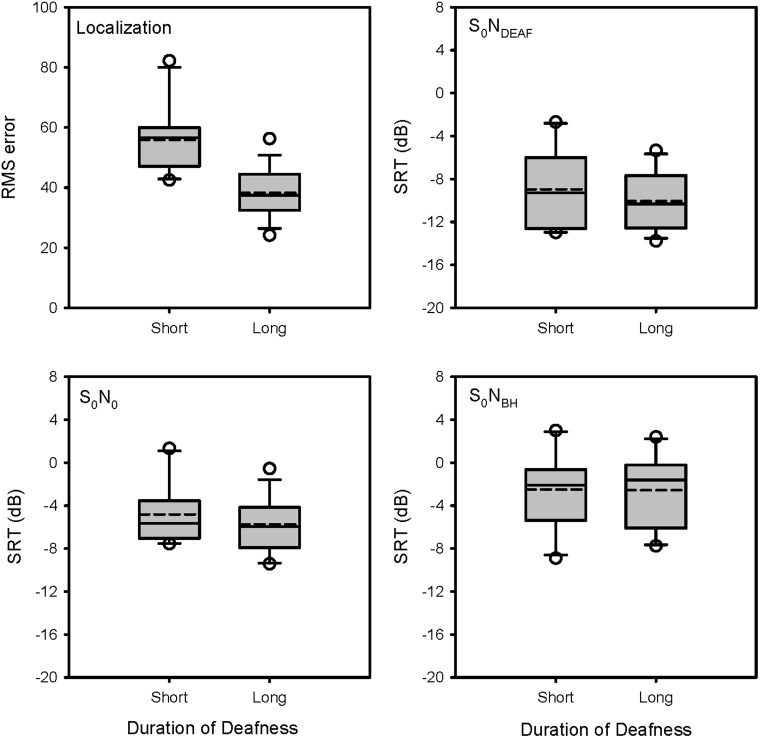
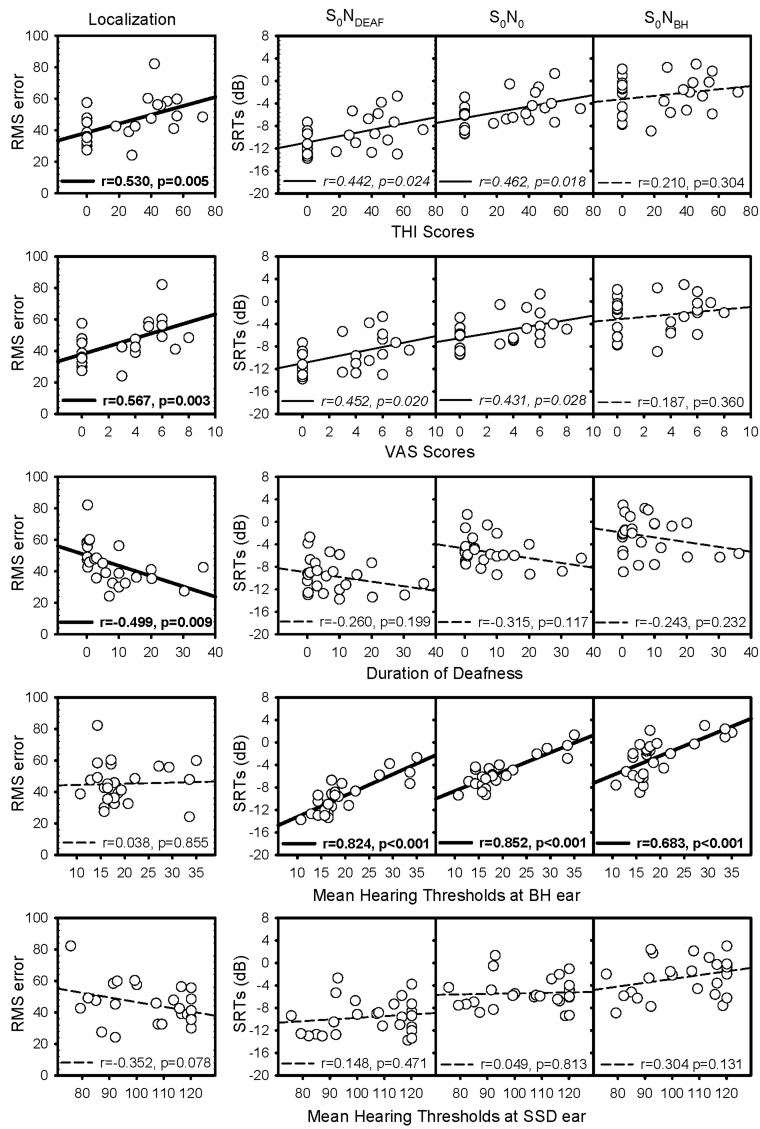
Patients with single-sided deafness (SSD) often experience poor sound localization, reduced speech understanding in noise, reduced quality of life, and tinnitus. The present study aims to evaluate effects of tinnitus and duration of deafness on sound localization and speech recognition in noise by SSD subjects. Sound localization and speech recognition in noise were measured in 26 SSD and 10 normal-hearing (NH) subjects. Speech was always presented directly in front of the listener. Noise was presented to the deaf ear, in front of the listener, or to the better hearing ear. Tinnitus severity was measured using visual analog scale and Tinnitus Handicap Inventory. Relative to NH subjects, SSD subjects had significant deficits in sound localization and speech recognition in all listening conditions ( p < .001). For SSD subjects, speech recognition in noise was correlated with mean hearing thresholds in the better hearing ear ( p < .001) but not in the deaf ear. SSD subjects with tinnitus performed poorer in sound localization and speech recognition in noise than those without tinnitus. Shorter duration of deafness was associated with greater tinnitus and sound localization difficulty. Tinnitus visual analog scale and Tinnitus Handicap Inventory were highly correlated; the degree of tinnitus was negatively correlated with sound localization and speech recognition in noise. Those experiencing noticeable tinnitus may benefit more from cochlear implantation than those without; subjective tinnitus reduction may be correlated with improved sound localization and speech recognition in noise. Subjects with longer duration of deafness demonstrated better sound localization, suggesting long-term compensation for loss of binaural cues.
Keywords: duration of deafness; single-sided deafness; sound localization; speech recognition in noise; tinnitus.
Figures
References
-
- Arndt S., Aschendorff A., Laszig R., Beck R., Schild C., Kroeger S., Wesarg T. (2011) Comparison of pseudobinaural hearing to real binaural hearing rehabilitation after cochlear implantation in patients with unilateral deafness and tinnitus. Otology & Neurotology 32(1): 39–47. doi:10.1097/MAO.0b013e3181fcf271. - PubMed
-
- Arts R. A., George E. L., Stokroos R. J., Vermeire K. (2012) Review: Cochlear implants as a treatment of tinnitus in single-sided deafness. Current Opinion in Otolaryngology & Head and Neck Surgery 20(5): 398–403. doi:10.1097/MOO.0b013e3283577b66. - PubMed
-
- Bosman A. J., Hol M. K., Snik A. F., Mylanus E. A., Cremers C. W. (2003) Bone-anchored hearing aids in unilateral inner ear deafness. Acta Oto-Laryngologica 123(2): 258–260. doi:10.1080/000164580310001105. - PubMed
-
- Buechner A., Brendel M., Lesinski-Schiedat A., Wenzel G., Frohne-Buechner C., Jaeger B., Lenarz T. (2010) Cochlear implantation in unilateral deaf subjects associated with ipsilateral tinnitus. Otology & Neurotology 31(9): 1381–1385. doi:10.1097/MAO.0b013e3181e3d353. - PubMed
Publication types
MeSH terms
Grants and funding
LinkOut - more resources
Full Text Sources
Medical
