


Effects of salinity changes on aquatic organisms in a multiple stressor context
- PMID: 30509913
- PMCID: PMC6283958
- DOI: 10.1098/rstb.2018.0011
Effects of salinity changes on aquatic organisms in a multiple stressor context
Abstract
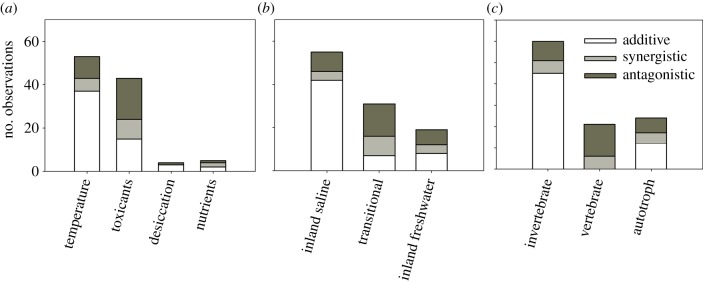
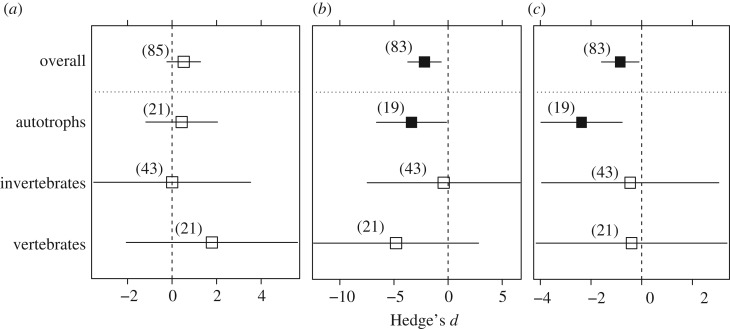
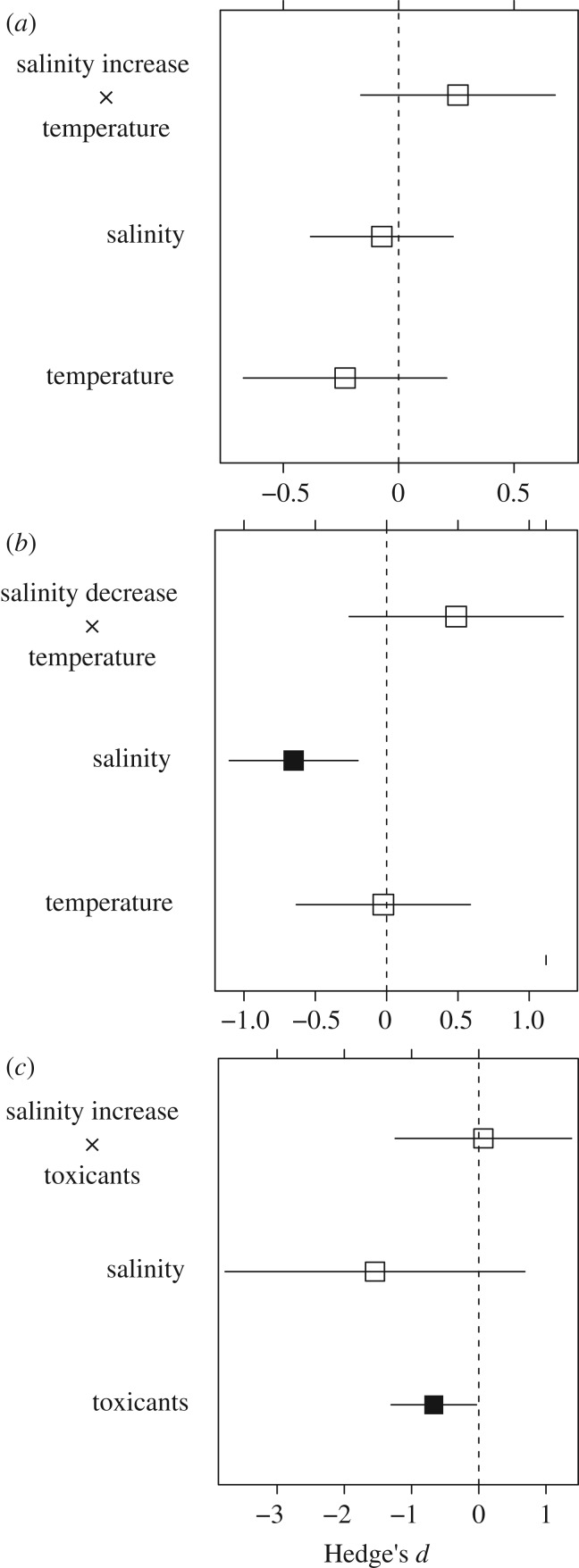
Under global change, the ion concentration of aquatic ecosystems is changing worldwide. Many freshwater ecosystems are being salinized by anthropogenic salt inputs, whereas many naturally saline ones are being diluted by agricultural drainages. This occurs concomitantly with changes in other stressors, which can result in additive, antagonistic or synergistic effects on organisms. We reviewed experimental studies that manipulated salinity and other abiotic stressors, on inland and transitional aquatic habitats, to (i) synthesize their main effects on organisms' performance, (ii) quantify the frequency of joint effect types across studies and (iii) determine the overall individual and joint effects and their variation among salinity-stressor pairs and organism groups using meta-analyses. Additive effects were slightly more frequent (54%) than non-additive ones (46%) across all the studies (n = 105 responses). However, antagonistic effects were dominant for the stressor pair salinity and toxicants (44%, n = 43), transitional habitats (48%, n = 31) and vertebrates (71%, n = 21). Meta-analyses showed detrimental additive joint effects of salinity and other stressors on organism performance and a greater individual impact of salinity than the other stressors. These results were consistent across stressor pairs and organism types. These findings suggest that strategies to mitigate multiple stressor impacts on aquatic ecosystems should prioritize restoring natural salinity concentrations.This article is part of the theme issue 'Salt in freshwaters: causes, ecological consequences and future prospects'.
Keywords: additive effects; dilution; inland waters; meta-analysis; salinization; transitional waters.
© 2018 The Author(s).
Conflict of interest statement
We have no competing interests.
Figures
References
Publication types
MeSH terms
Associated data
LinkOut - more resources
Full Text Sources
