


Repurposing CRISPR-Cas12b for mammalian genome engineering
- PMID: 30510770
- PMCID: PMC6255809
- DOI: 10.1038/s41421-018-0069-3
Repurposing CRISPR-Cas12b for mammalian genome engineering
Abstract
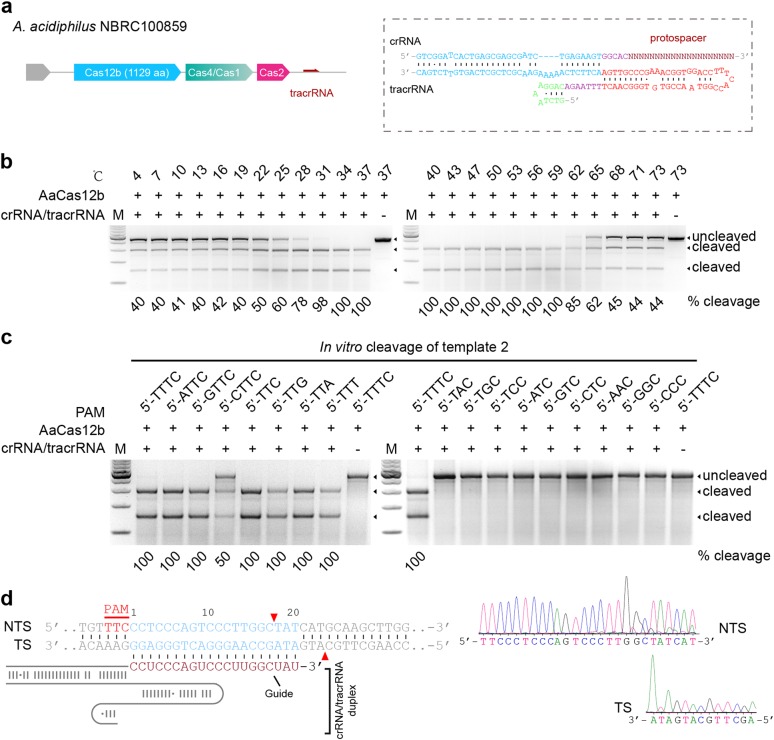
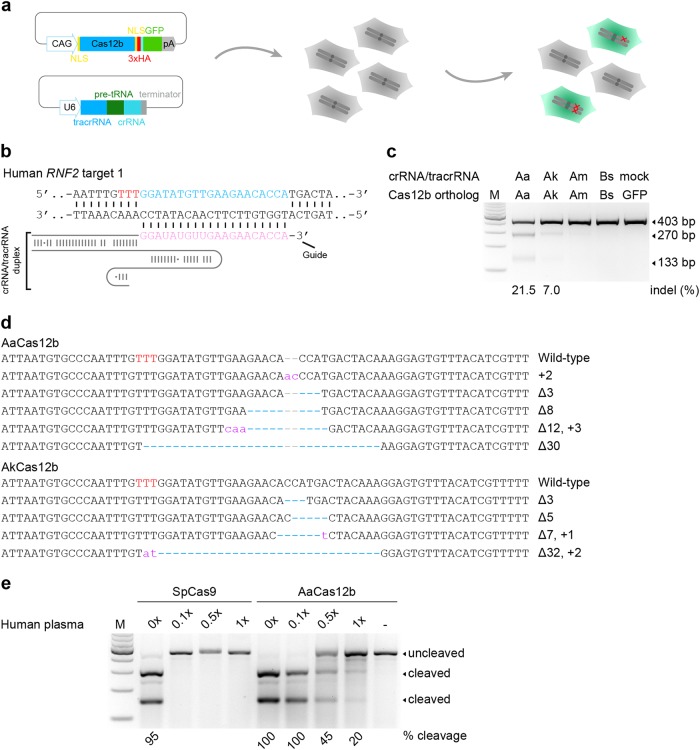
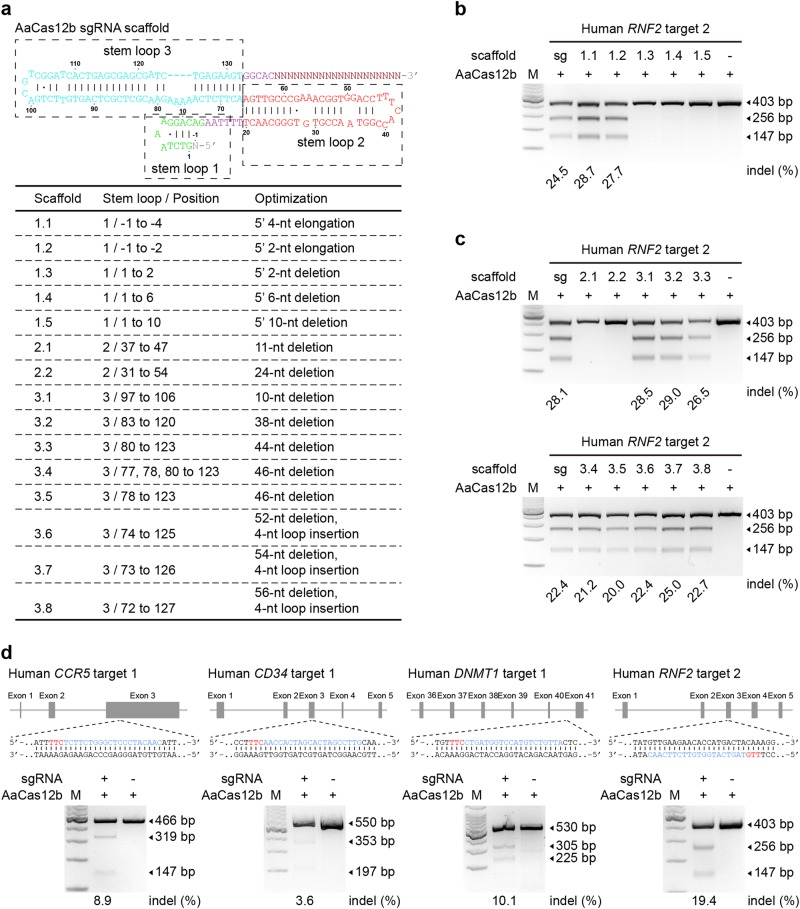
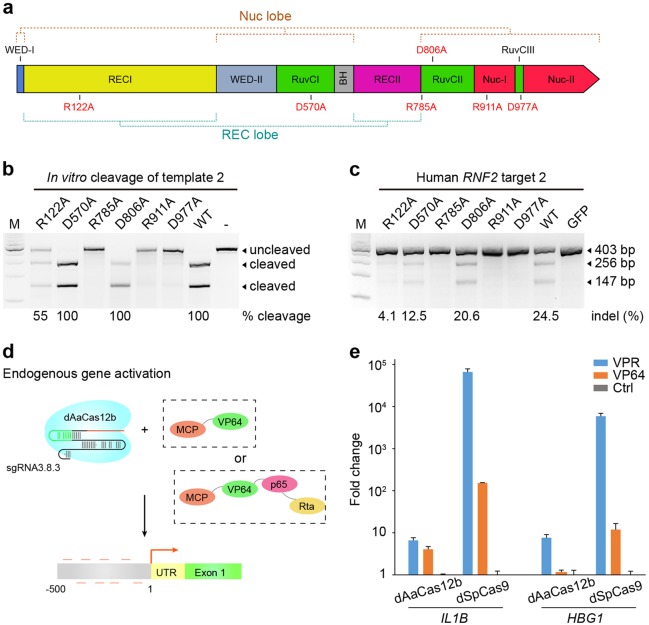
The prokaryotic CRISPR-Cas adaptive immune systems provide valuable resources to develop genome editing tools, such as CRISPR-Cas9 and CRISPR-Cas12a/Cpf1. Recently, CRISPR-Cas12b/C2c1, a distinct type V-B system, has been characterized as a dual-RNA-guided DNA endonuclease system. Though being active in vitro, its cleavage activity at endogenous genome remains to be explored. Furthermore, the optimal cleavage temperature of the reported Cas12b orthologs is higher than 40 °C, which is unsuitable for mammalian applications. Here, we report the identification of a Cas12b system from the Alicyclobacillus acidiphilus (AaCas12b), which maintains optimal nuclease activity over a wide temperature range (31 °C-59 °C). AaCas12b can be repurposed to engineer mammalian genomes for versatile applications, including single and multiplex genome editing, gene activation, and generation of gene mutant mouse models. Moreover, whole-genome sequencing reveals high specificity and minimal off-target effects of AaCas12b-meditated genome editing. Our findings establish CRISPR-Cas12b as a versatile tool for mammalian genome engineering.
Conflict of interest statement
A patent application has been filed relating to this work. The authors declare that there is no conflict of financial interests, and they plan to deposit the reagents in Addgene to freely share with the academic community.
Figures
References
LinkOut - more resources
Full Text Sources
Other Literature Sources
Molecular Biology Databases
Research Materials
