Review
. 2018 Oct 31:2018:9023027.
doi: 10.1155/2018/9023027. eCollection 2018.

Relationship between Experimental Diet in Rats and Nonalcoholic Hepatic Disease: Review of Literature

Affiliations
Review

Relationship between Experimental Diet in Rats and Nonalcoholic Hepatic Disease: Review of Literature

Ayane A Rodrigues et al. Int J Hepatol. .

Abstract

Background: The pathophysiology of nonalcoholic fatty liver disease (NAFLD) is related to unhealthy lifestyles that combine sedentary lifestyle, hypercaloric diets, excessive saturated fats, refined carbohydrates, and high intake of fructose as a food additive to various processed products. Both the broader recognition of the disease and the additional efforts to elucidate the NAFLD pathogenesis have led to an increase in animal models in recent years. Objective. This review was performed to provide better understanding of the association between the NAFLD and animal models.

Methods: The search in the literature occurred before May of 2018 in the PUBMED database.

Results: Most studies investigating the influence of diet on liver fat content have been performed using a high-calorie diet that leads to a significant increase in fat content in the liver.

Conclusion: The findings of this review show that diet is one of the factors that predisposes to the appearance of NAFLD and that the studies presented a wide variety of designs.


Figures
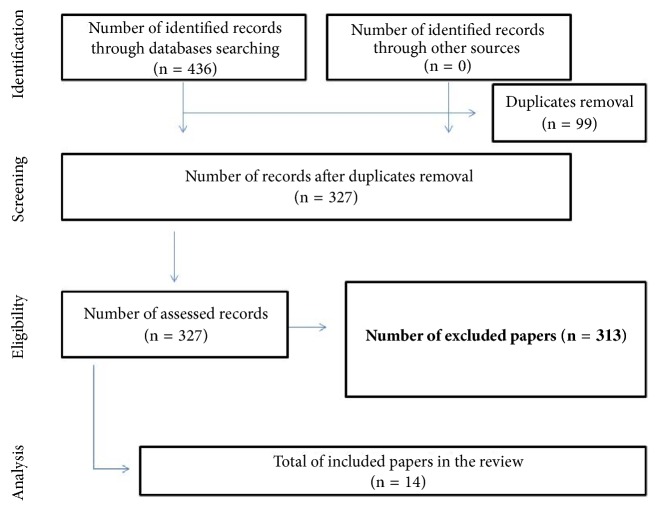
Figure 1
Figure 1
Flow diagram for identification, screening, eligibility, and analysis of studies included in the review.
Figure 2
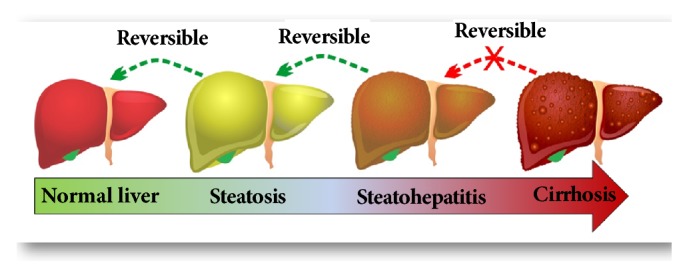
Figure 2
The progression of nonalcoholic fatty liver disease (NAFLD).

References

    1. Araújo A. R., Rosso N., Bedogni G., Tiribelli C., Bellentani S. Global epidemiology of non-alcoholic fatty liver disease/non-alcoholic steatohepatitis: What we need in the future. Liver International. 2018;38:47–51. doi: 10.1111/liv.13643. - DOI - PubMed
    1. Schwenk R. W., Vogel H., Schürmann A. Genetic and epigenetic control of metabolic health. Molecular Metabolism. 2013;2(4):337–347. doi: 10.1016/j.molmet.2013.09.002. - DOI - PMC - PubMed
    1. Deng T., Lyon C. J., Bergin S., Caligiuri M. A., Hsueh W. A. Obesity, inflammation, and cancer. Annual Review of Pathology: Mechanisms of Disease. 2016;11:421–449. doi: 10.1146/annurev-pathol-012615-044359. - DOI - PubMed
    1. Fazel Y., Koenig A. B., Sayiner M., Goodman Z. D., Younossi Z. M. Epidemiology and natural history of non-alcoholic fatty liver disease. Metabolism - Clinical and Experimental. 2016;65(8):1017–1025. doi: 10.1016/j.metabol.2016.01.012. - DOI - PubMed
    1. Vizuete J., Camero A., Malakouti M., Garapati K., Gutierrez J. Perspectives on Nonalcoholic Fatty Liver Disease: An Overview of Present and Future Therapies. Journal of Clinical and Translational Hepatology. 2017;5(1):67–75. doi: 10.14218/JCTH.2016.00061. - DOI - PMC - PubMed

LinkOut - more resources