Estimates of the Prevalence of Speech and Motor Speech Disorders in Youth With 22q11.2 Deletion Syndrome
- PMID: 30515510
- PMCID: PMC6503865
- DOI: 10.1044/2018_AJSLP-18-0037
Estimates of the Prevalence of Speech and Motor Speech Disorders in Youth With 22q11.2 Deletion Syndrome
Abstract
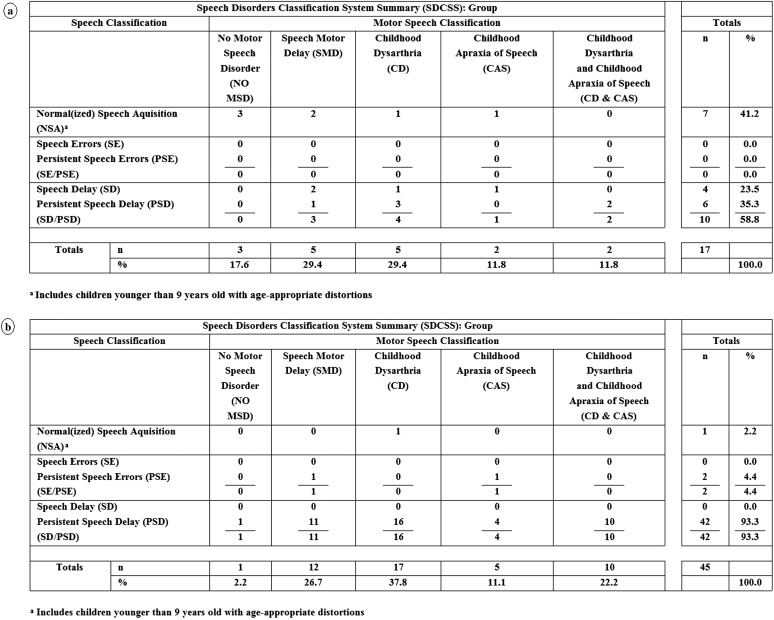
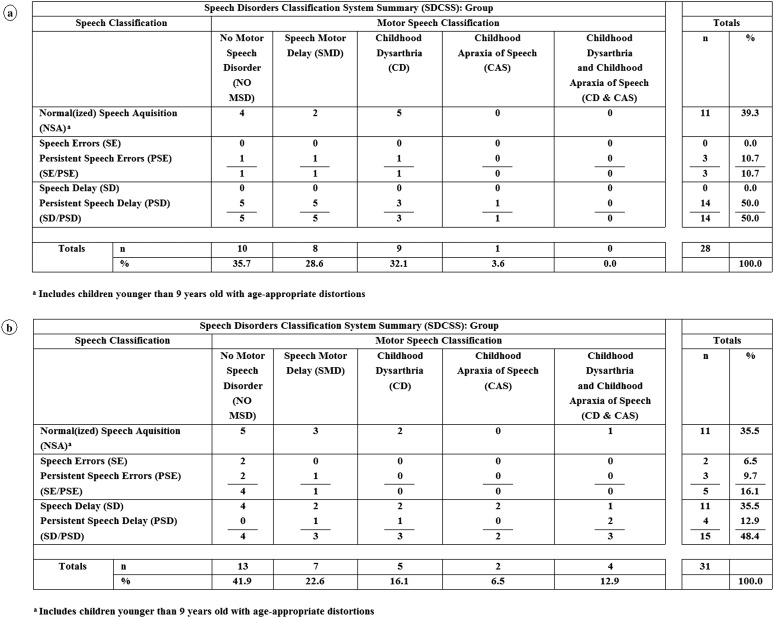
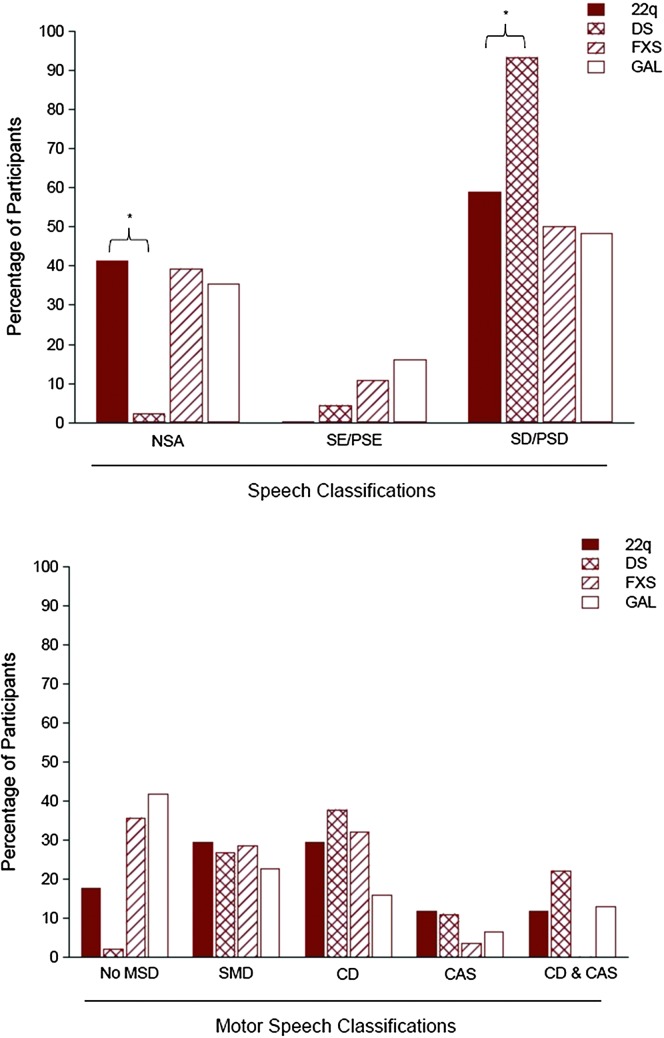
Purpose Speech sound disorders and velopharyngeal dysfunction are frequent features of 22q11.2 deletion syndrome (22q). We report the first estimate of the prevalence of motor speech disorders (MSDs) in youth with 22q. Method Seventeen children and adolescents with 22q completed an assessment protocol that included a conversational speech sample. Data reduction included phonetic transcription, perceptual speech ratings, prosody-voice coding, and acoustic analyses. Data analyses included 3 motor speech measures and a cross-classification analytic. Prevalence estimates of speech and MSDs in youth with 22q were compared with estimates in speakers with other complex neurodevelopmental disorders: Down syndrome, fragile X syndrome, and galactosemia. Results Results indicated that 58.8% of the participants with 22q met criteria for speech delay, and 82.4% of the participants met criteria for MSDs, including 29.4% with speech motor delay, 29.4% with childhood dysarthria, 11.8% with childhood apraxia of speech, and 11.8% with concurrent childhood dysarthria and childhood apraxia of speech. MSDs were not significantly associated with velopharyngeal dysfunction. Conclusions In summary, 82.4% of the participants with 22q met criteria for 1 of 4 MSDs, predominantly speech motor delay and childhood dysarthria. Cross-validation of the present findings would support viewing MSDs as a core phenotypic feature of 22q.
Figures
References
-
- Abbeduto L., Murphy M. M., Cawthon S. W., Richmond E. K., Weissman M. D., Karadottir S., & O'Brien A. (2003). Receptive language skills of adolescents and young adults with Down or fragile X syndrome. American Journal on Mental Retardation, 108, 149–160. - PubMed
-
- American Speech-Language-Hearing Association. (2007). Childhood apraxia of speech [Technical report]. Retrieved from http://www.asha.org/public/speech/disorders/ChildhoodApraxia/
-
- Bales A. M., Zaleski C. A., & McPherson E. W. (2010). Newborn screening programs: Should 22q11 deletion syndrome be added? Genetics in Medicine, 12, 135–144. - PubMed
-
- Barnea-Goraly N., Eliez S., Menon V., Bammer R., & Reiss A. L. (2005). Arithmetic ability and parietal alterations: A diffusion tensor imaging study in velocardiofacial syndrome. Cognitive Brain Research, 25, 735–740. - PubMed
-
- Barnea-Goraly N., Menon V., Krasnow B., Ko A., Reiss A., & Eliez S. (2003). Investigation of white matter structure in velocardiofacial syndrome: A diffusion tensor imaging study. American Journal of Psychiatry, 160, 1863–1869. - PubMed
Publication types
MeSH terms
Grants and funding
LinkOut - more resources
Full Text Sources
Medical
Miscellaneous