


Posttraumatic Stress Disorder Symptom Network Analysis in U.S. Military Veterans: Examining the Impact of Combat Exposure
- PMID: 30519198
- PMCID: PMC6259007
- DOI: 10.3389/fpsyt.2018.00608
Posttraumatic Stress Disorder Symptom Network Analysis in U.S. Military Veterans: Examining the Impact of Combat Exposure
Abstract
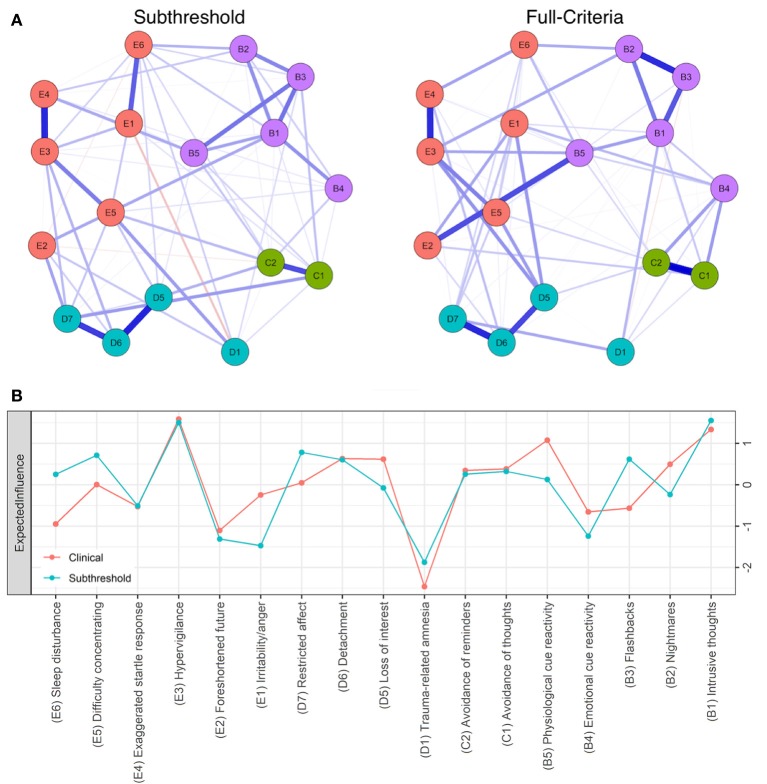
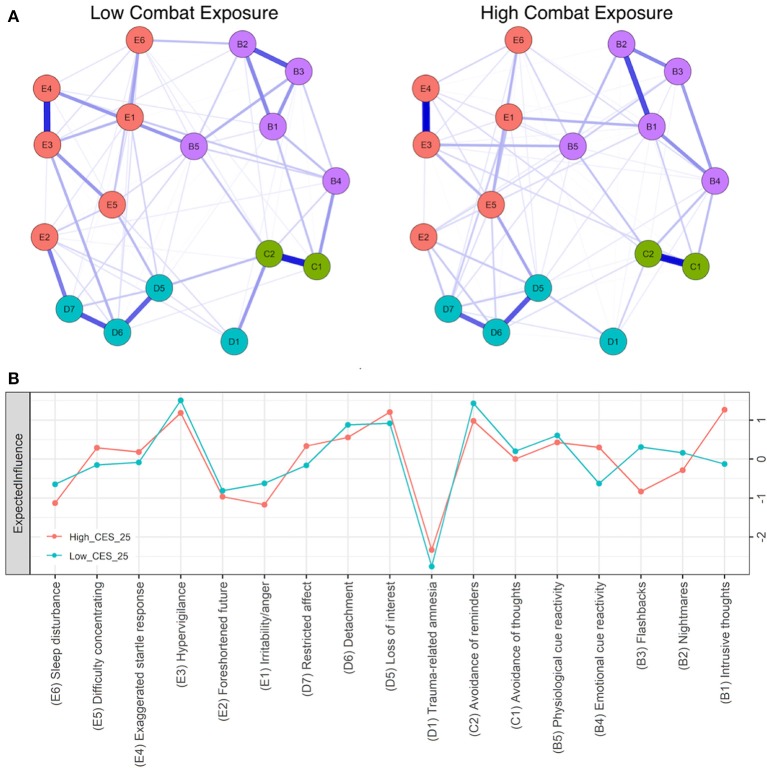
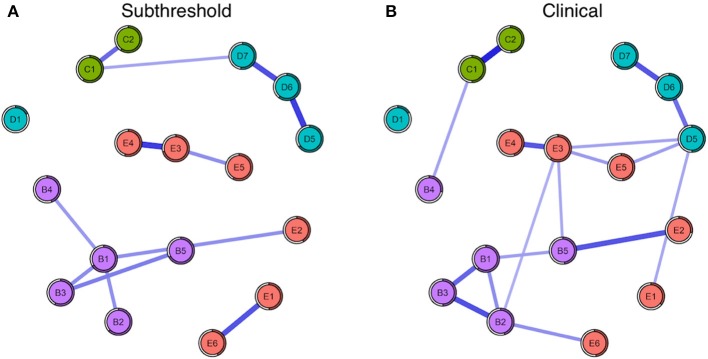
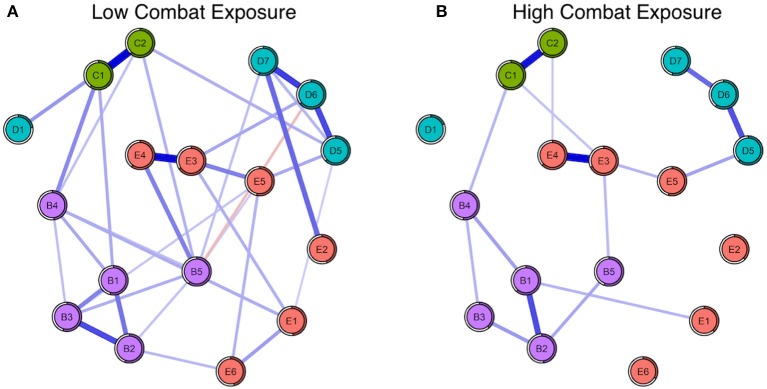
Recent work inspired by graph theory has begun to conceptualize mental disorders as networks of interacting symptoms. Posttraumatic stress disorder (PTSD) symptom networks have been investigated in clinical samples meeting full diagnostic criteria, including military veterans, natural disaster survivors, civilian survivors of war, and child sexual abuse survivors. Despite reliable associations across reported networks, more work is needed to compare central symptoms across trauma types. Additionally, individuals without a diagnosis who still experience symptoms, also referred to as subthreshold cases, have not been explored with network analysis in veterans. A sample of 1,050 Iraq/Afghanistan-era U.S. military veterans (851 males, mean age = 36.3, SD = 9.53) meeting current full-criteria PTSD (n = 912) and subthreshold PTSD (n = 138) were assessed with the Structured Clinical Interview for DSM-IV Disorders (SCID). Combat Exposure Scale (CES) scores were used to group the sample meeting full-criteria into high (n = 639) and low (n = 273) combat exposure subgroups. Networks were estimated using regularized partial correlation models in the R-package qgraph, and robustness tests were performed with bootnet. Frequently co-occurring symptom pairs (strong network connections) emerged between two avoidance symptoms, hypervigilance and startle response, loss of interest and detachment, as well as, detachment and restricted affect. These associations replicate findings reported across PTSD trauma types. A symptom network analysis of PTSD in a veteran population found significantly greater overall connectivity in the full-criteria PTSD group as compared to the subthreshold PTSD group. Additionally, novel findings indicate that the association between intrusive thoughts and irritability is a feature of the symptom network of veterans with high levels of combat exposure. Mean node predictability is high for PTSD symptom networks, averaging 51.5% shared variance. With the tools described here and by others, researchers can help refine diagnostic criteria for PTSD, develop more accurate measures for assessing PTSD, and eventually inform therapies that target symptoms with strong network connections to interrupt interconnected symptom complexes and promote functional recovery.
Keywords: PTSD; combat exposure; subthreshold PTSD; symptom network analysis; trauma; veterans.
Figures
References
-
- McNally RJ, Robinaugh DJ, Wu GWY, Wang L, Deserno MK, Borsboom D. Mental disorders as causal systems. Clin Psychol Sci. (2015) 3:836–49. 10.1177/2167702614553230 - DOI
Grants and funding
LinkOut - more resources
Full Text Sources
