


Early-onset colorectal cancer in young individuals
- PMID: 30520562
- PMCID: PMC6360363
- DOI: 10.1002/1878-0261.12417
Early-onset colorectal cancer in young individuals
Abstract
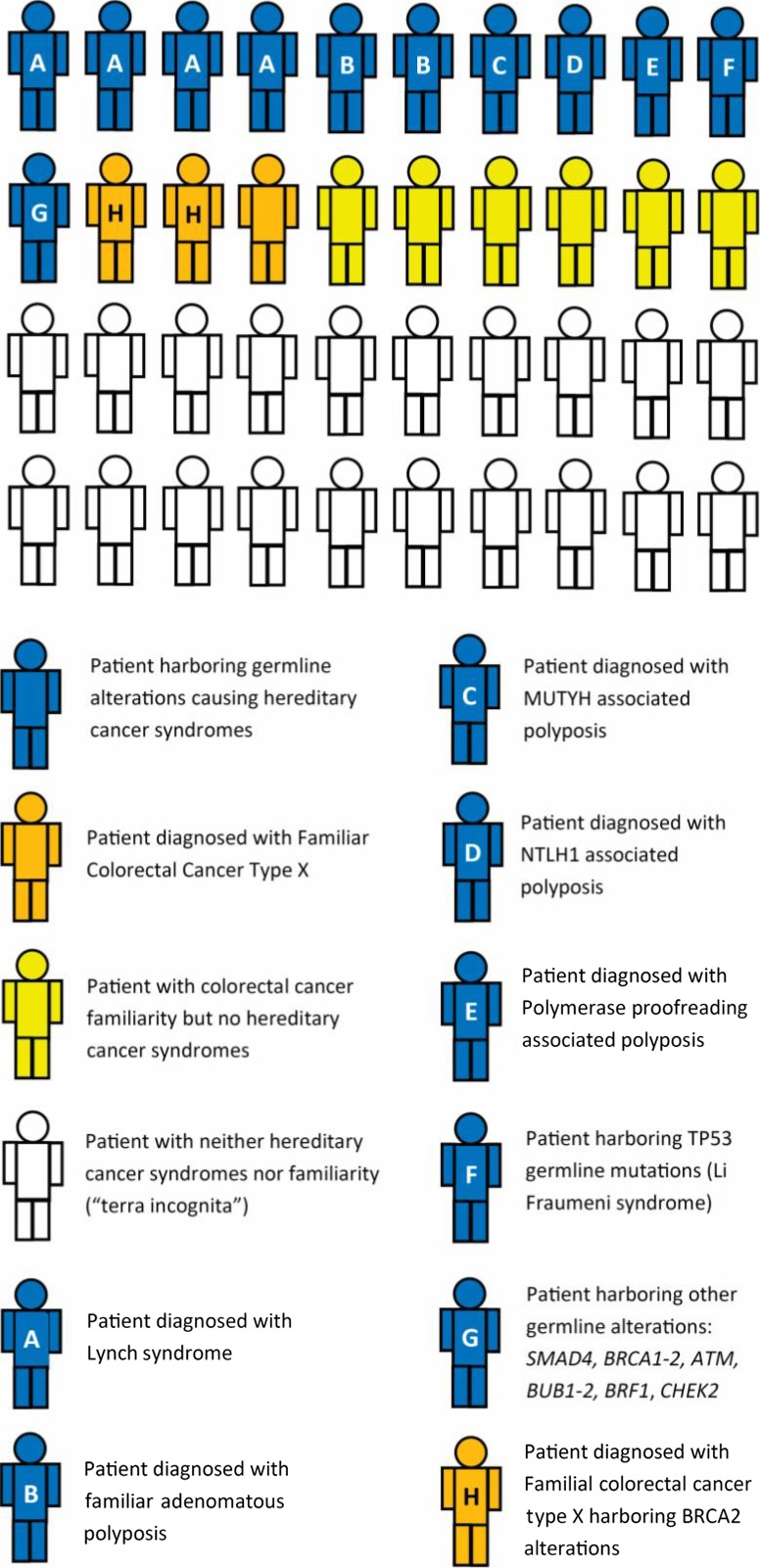
Treatment of young adults with colorectal cancer (CRC) represents an unmet clinical need, especially as diagnosis in this population might lead to the greatest loss of years of life. Since 1994, CRC incidence in individuals younger than 50 years has been increasing by 2% per year. The surge in CRC incidence in young adults is particularly alarming as the overall CRC frequency has been decreasing. Early-onset CRC are characterized by a more advanced stage at diagnosis, poorer cell differentiation, higher prevalence of signet ring cell histology, and left colon-sided location of the primary tumor. Among EO-CRC, approximately 30% of patients are affected by tumors harboring mutations causing hereditary cancer predisposing syndromes, and 20% have familial CRC. Most notably, the remaining 50% of EO-CRC patients have neither hereditary syndromes nor familial CRC, thus representing a formidable challenge for research. In this review article we summarize epidemiology, clinical and molecular features, heredity and outcome of treatments of EO-CRC, and provide considerations for future perspectives.
Keywords: colorectal cancer; familial colorectal cancer; hereditary colorectal cancer; sporadic early-onset colorectal cancer; young adults.
© 2018 The Authors. Published by FEBS Press and John Wiley & Sons Ltd.
Figures
References
-
- Abou‐Zeid AA, Jumuah WA, Ebied EF, Abd El Samee Atia KS, El Ghamrini Y, Somaie DA (2017) Hereditary factors are unlikely behind unusual pattern of early‐onset colorectal cancer in Egyptians: a study of family history and pathology features in Egyptians with large bowel cancer (cross‐sectional study). Int J Surg 44, 71–75. - PubMed
-
- Ågesen TH, Berg M, Clancy T, Thiis‐Evensen E, Cekaite L, Lind GE, Nesland JM, Bakka A, Mala T, Hauss HJ et al (2011) CLC and IFNAR1 are differentially expressed and a global immunity score is distinct between early‐ and late‐onset colorectal cancer. Genes Immun 12, 653–662. - PubMed
-
- Ahnen DJ, Wade SW, Jones WF, Sifri R, Mendoza Silveiras J, Greenamyer J, Guiffre S, Axilbund J, Spiegel A and You YN (2014) The increasing incidence of young‐onset colorectal cancer: a call to action. Mayo Clin Proc 89, 216–224. - PubMed
-
- Alberts SR, Sargent DJ, Nair S, Mahoney MR, Mooney M, Thibodeau SN, Smyrk TC, Sinicrope FA, Chan E, Gill S et al (2012) Effect of oxaliplatin, fluorouracil, and leucovorin with or without cetuximab on survival among patients with resected stage III colon cancer: a randomized trial. JAMA 307, 1383–1393. - PMC - PubMed
