Cardiovascular Effects and Molecular Mechanisms of Bisphenol A and Its Metabolite MBP in Zebrafish
- PMID: 30520632
- PMCID: PMC6333396
- DOI: 10.1021/acs.est.8b04281
Cardiovascular Effects and Molecular Mechanisms of Bisphenol A and Its Metabolite MBP in Zebrafish
Abstract
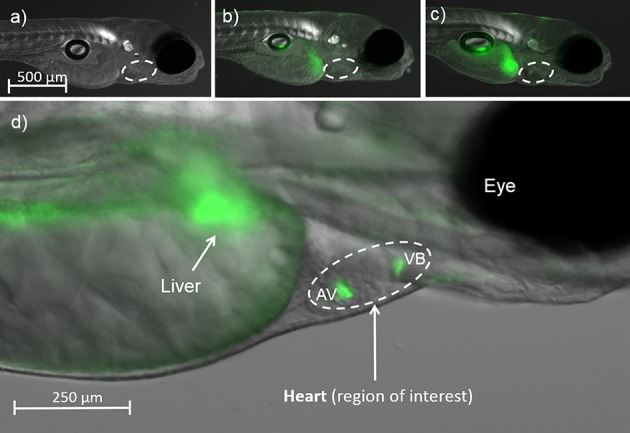
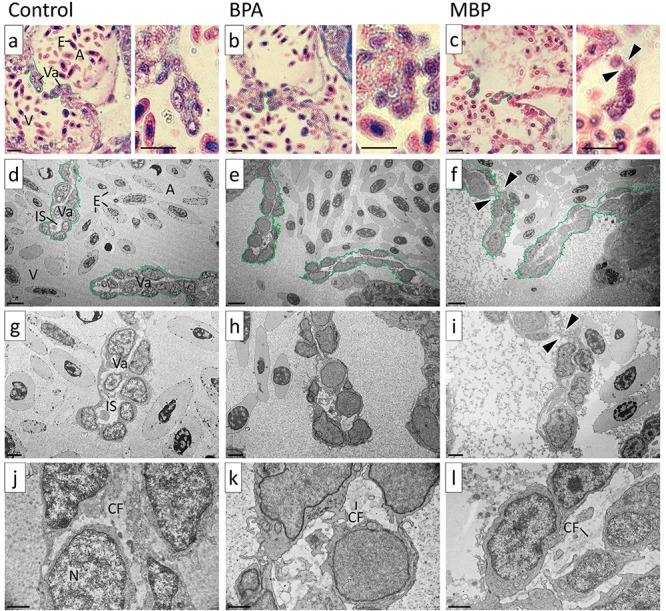
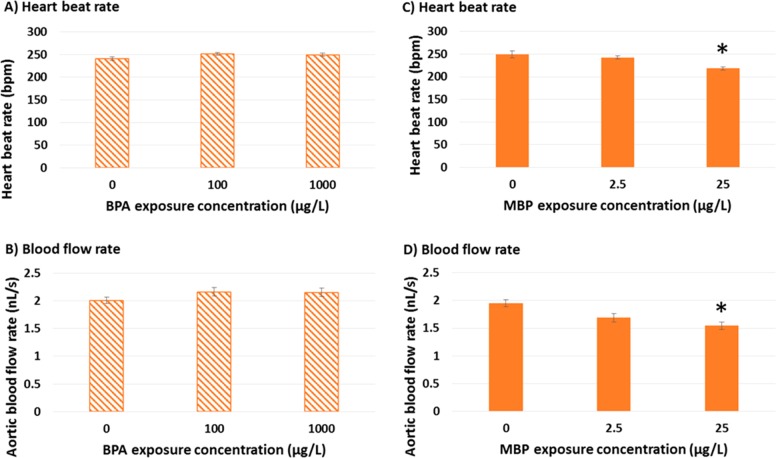
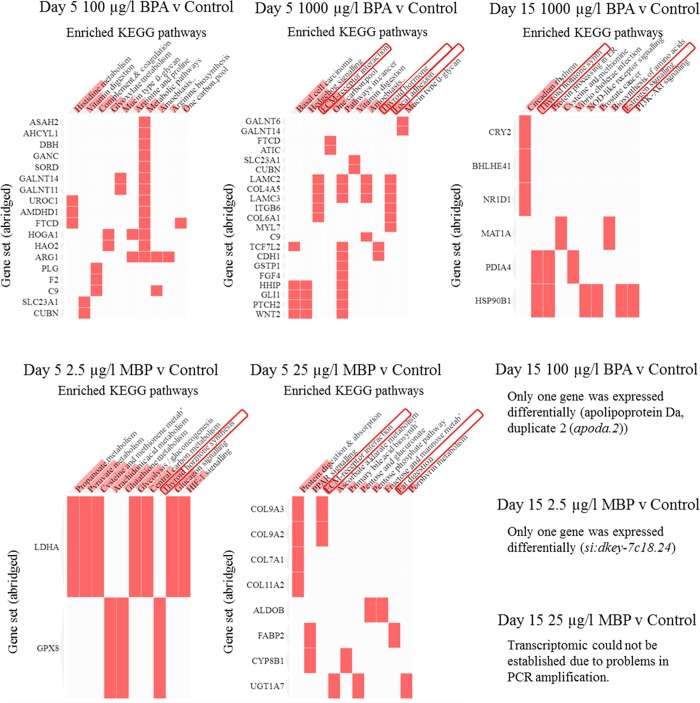
The plastic monomer bisphenol A (BPA) is one of the highest production volume chemicals in the world and is frequently detected in wildlife and humans, particularly children. BPA has been associated with numerous adverse health outcomes relating to its estrogenic and other hormonal properties, but direct causal links are unclear in humans and animal models. Here we simulated measured (1×) and predicted worst-case (10× ) maximum fetal exposures for BPA, or equivalent concentrations of its metabolite MBP, using fluorescent reporter embryo-larval zebrafish, capable of quantifying Estrogen Response Element (ERE) activation throughout the body. Heart valves were primary sites for ERE activation by BPA and MBP, and transcriptomic analysis of microdissected heart tissues showed that both chemicals targeted several molecular pathways constituting biomarkers for calcific aortic valve disease (CAVD), including extra-cellular matrix (ECM) alteration. ECM collagen deficiency and impact on heart valve structural integrity were confirmed by histopathology for high-level MBP exposure, and structural defects (abnormal curvature) of the atrio-ventricular valves corresponded with impaired cardiovascular function (reduced ventricular beat rate and blood flow). Our results are the first to demonstrate plausible mechanistic links between ERE activation in the heart valves by BPA's reactive metabolite MBP and the development of valvular-cardiovascular disease states.
Conflict of interest statement
The authors declare no competing financial interest.
Figures
References
-
- TEDX . TEDX list of potential endocrine disruptors. 2018; (accessed 26 June 2018): https://endocrinedisruption.org/interactive-tools/tedx-list-of-potential....
-
- EC European Commission . European workshop on the impact of endocrine disrupters on human health and wildlife. Weybridge, UK. 1996; (accessed 1 February 2018): http://www.iehconsulting.co.uk/IEH_Consulting/IEHCPubs/EndocrineDisrupte....
-
- WHO . IPCS Global assessment of the state-of-the-science of endocrine disruptors WHO/PCS/EDC/02.2. 2002; (accessed 15 January 2017): http://www.who.int/ipcs/publications/new_issues/endocrine_disruptors/en/.
-
- WHO/UNEP . State of the science of endocrine disrupting chemicals – 2012. An assessment of the state of the science of endocrine disruptors prepared by a group of experts for the United Nations Environment Programme (UNEP) and World Health Organisation (WHO). 2012; (accessed 15 January 2017): http://www.who.int/ceh/publications/endocrine/en/.
-
- EEA European Environment Agency . Impacts of endocrine disrupters on wildlife, people and their environments. The Weybridge+15 (1996–2011) report. EEA Technical report No 2/2012, ISSN 1725-2237. 2012; (accessed March 2018): https://www.eea.europa.eu/publications/the-impacts-of-endocrine-disrupters.
Publication types
MeSH terms
Substances
Grants and funding
LinkOut - more resources
Full Text Sources
Molecular Biology Databases
Miscellaneous