. 2018 Dec 6;6(1):217.
doi: 10.1186/s40168-018-0591-4.

Uncovering complex microbiome activities via metatranscriptomics during 24 hours of oral biofilm assembly and maturation

Affiliations

Uncovering complex microbiome activities via metatranscriptomics during 24 hours of oral biofilm assembly and maturation

Anna Edlund et al. Microbiome. .

Abstract

Background: Dental plaque is composed of hundreds of bacterial taxonomic units and represents one of the most diverse and stable microbial ecosystems associated with the human body. Taxonomic composition and functional capacity of mature plaque is gradually shaped during several stages of community assembly via processes such as co-aggregation, competition for space and resources, and by bacterially produced reactive agents. Knowledge on the dynamics of assembly within complex communities is very limited and derives mainly from studies composed of a limited number of bacterial species. To fill current knowledge gaps, we applied parallel metagenomic and metatranscriptomic analyses during assembly and maturation of an in vitro oral biofilm. This model system has previously demonstrated remarkable reproducibility in taxonomic composition across replicate samples during maturation.

Results: Time course analysis of the biofilm maturation was performed by parallel sampling every 2-3 h for 24 h for both DNA and RNA. Metagenomic analyses revealed that community taxonomy changed most dramatically between three and six hours of growth when pH dropped from 6.5 to 5.5. By applying comparative metatranscriptome analysis we could identify major shifts in overall community activities between six and nine hours of growth when pH dropped below 5.5, as 29,015 genes were significantly up- or down- expressed. Several of the differentially expressed genes showed unique activities for individual bacterial genomes and were associated with pyruvate and lactate metabolism, two-component signaling pathways, production of antibacterial molecules, iron sequestration, pH neutralization, protein hydrolysis, and surface attachment. Our analysis also revealed several mechanisms responsible for the niche expansion of the cariogenic pathogen Lactobacillus fermentum.

Conclusion: It is highly regarded that acidic conditions in dental plaque cause a net loss of enamel from teeth. Here, as pH drops below 5.5 pH to 4.7, we observe blooms of cariogenic lactobacilli, and a transition point of many bacterial gene expression activities within the community. To our knowledge, this represents the first study of the assembly and maturation of a complex oral bacterial biofilm community that addresses gene level functional responses over time.

Keywords: /oral biofilm/ biofilm succession/ community function/ low pH/ metatranscriptomics/ metagenomics/ Streptococcus/ Lactobacillus/ Veillonella/ Granulicatella.


Conflict of interest statement

Ethics approval and consent to participate

The Institutional Review Boards at the School of Dentistry, University of California in Los Angeles, and J. Craig Venter Institute approved this study, and all subjects provided informed consent. This study conformed to the guidelines of the Helsinki Declaration.

Consent for publication

Not applicable.

Competing interests

The authors declare that Dr. W Shi is a part time Chief Science Officer of C3J Therapeutics, Inc., which has licensed technologies from UC Regents that could be indirectly related to this research project. The authors declare that they have no competing interests.

Publisher’s Note

Springer Nature remains neutral with regard to jurisdictional claims in published maps and institutional affiliations.

Figures
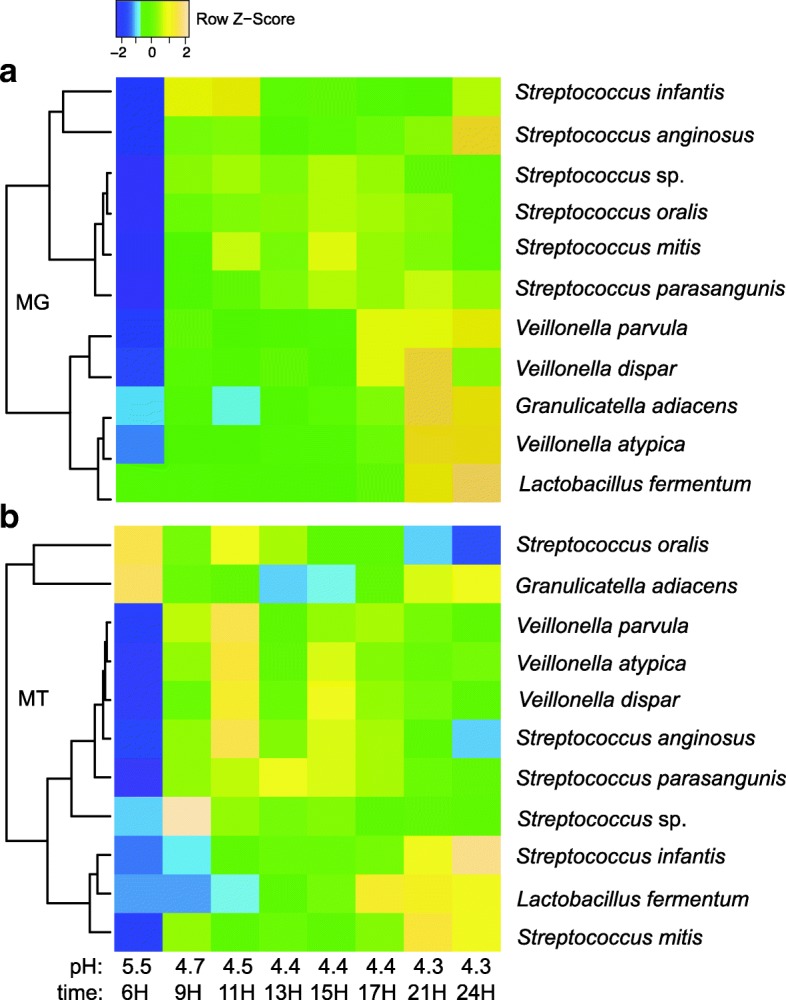
Fig. 1
Fig. 1
Hierarchical cluster analysis of key bacterial taxa relative abundances in the biofilm community obtained by analyzing DNA (a) and mRNA (b) reads and averaging the biological replicates with the Metagenomic Intra-Species Diversity Analysis System (MIDAS) pipeline. Pearson correlation was used as distance measure. Color gradients correspond to z-score values calculated from normalized abundance values. Taxa were included in bar graph if they contributed with ≥0.5% to the total number of sequence reads at any given time point between 6 h and 24 h of biofilm growth. Detailed bar graphs based on BWA-MEM read mapping results and DESeq and GABE normalization, which also include the biological replicates and less abundant taxa are visualized in Additional file 2: Figure S1
Fig. 2
Fig. 2
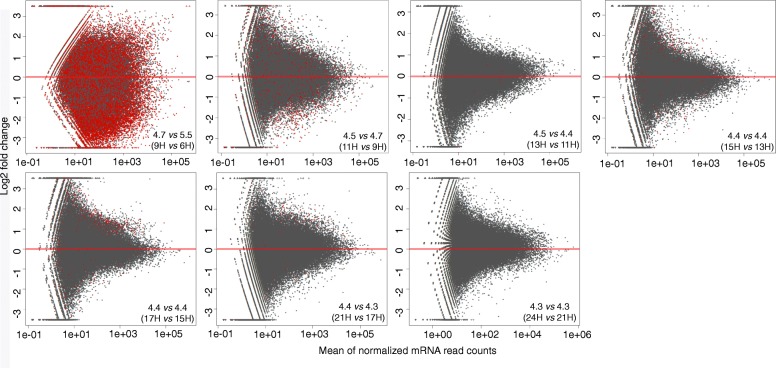
MA plots from DESeq analysis showing differences in gene transcription activity between pH stages. Log2 fold changes are presented on y-axes, while means of the normalized read counts are presented on x-axes. Red horizontal lines indicate zero-fold change, and red dots in individual graphs represent all genes independent of fold change cutoffs that changed significantly (fdr corrected p-value < 0.05)
Fig. 3
Fig. 3
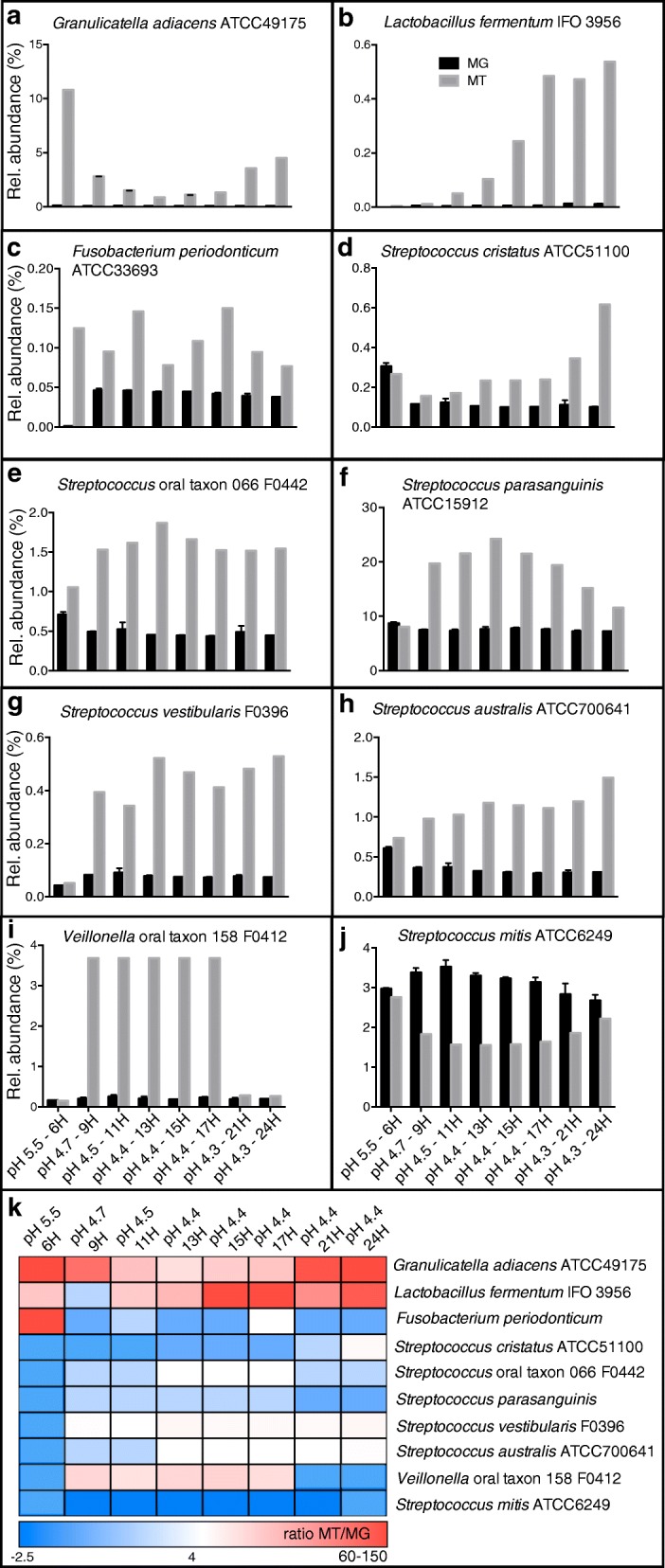
Relative abundance estimates from read mapping of bacterial DNA (black bars) and mRNA (gray bars). Ten bacterial genomes (a-j) with the largest differences between mRNA/DNA ratios were included. Panel k show a heat map of mRNA/DNA ratios for each genome across time points and pH stages. Ratios range between 2.5- and 150-fold differences
Fig. 4
Fig. 4
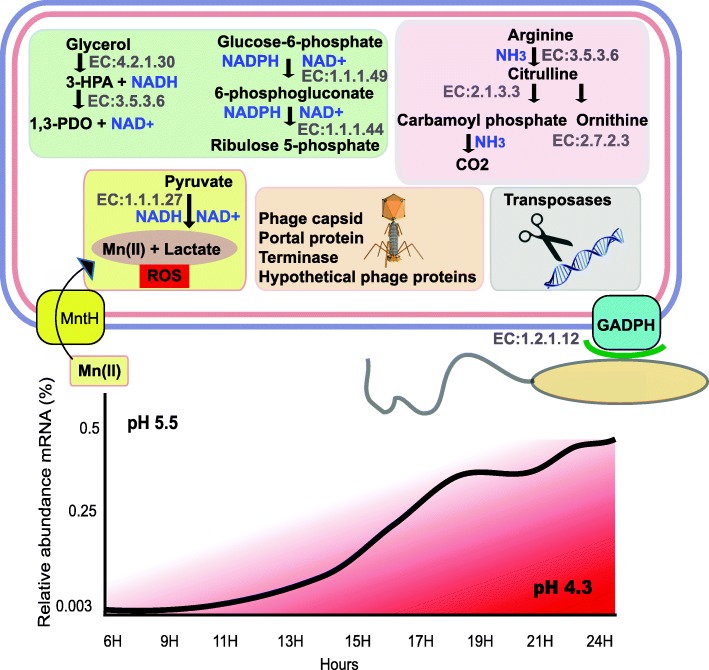
Metabolic functions represented by gene transcription activities that changed significantly in the L. fermentum genome. Y-axis: relative mRNA read abundance values in percent; x-axis: time points of biofilm maturation (x-axis). Upper panel: Metabolism of carbohydrates via the pentose pathway, pyruvate and glycerol oxidation, as well as the pH neutralizing arginine deiminase pathways were highly expressed during L. fermentum’s establishment as a secondary biofilm colonizer. Phage related proteins, and 67 transposases were also highly upexpressed suggesting that gene rearrangements and phage induction are of major importance in L. fermentum colonization success. Genes encoding two membrane proteins, a glyceraldehyde 3-phosphate dehydrogenase (GAPDH) and a manganese transporter (MntH) were also highly upexpressed and suggest that: L. fermentum is capable of forming a Lactate-Mn(II) complex that assists in the intracellular removal of reactive oxygen species (ROS); and employs GADPH in glycolysis or for attaching to primary colonizers in the in vitro biofilm community, which supports its further colonization and growth
Fig. 5
Fig. 5
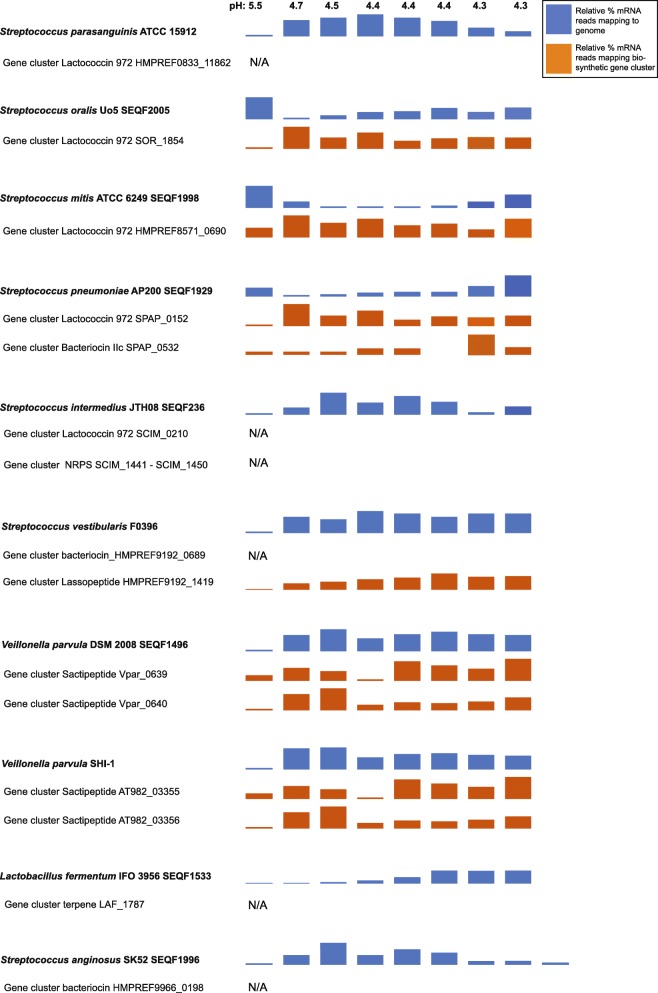
Gene transcription activity of biosynthetic gene clusters (BGCs) for individual community members. BGCs were identified by using the antiSMASH program available at https://antismash.secondarymetabolites.org/. Bars show relative abundance of mRNA reads that mapped to core-biosynthetic genes within each cluster. Relative transcription activity for individual genomes is shown as blue bars next to genome identifier while activity for BGCs is shown as orange bars next to the gene cluster name. X-axis shows different time points and pH stages. Five genomes harbor two BGCs each while five harbor one BGC. BGCs that show no expression are indicated with N/A

References

    1. Kolenbrander PE. Oral microbial communities: biofilms, interactions, and genetic systems. Annu Rev Microbiol. 2000;54:413–437. doi: 10.1146/annurev.micro.54.1.413. - DOI - PubMed
    1. He X, McLean JS, Guo L, Lux R, Shi W. The social structure of microbial community involved in colonization resistance. ISME J. 2014;8:564–574. doi: 10.1038/ismej.2013.172. - DOI - PMC - PubMed
    1. Tanner A, Maiden MF, Macuch PJ, Murray LL, Kent RL., Jr Microbiota of health, gingivitis, and initial periodontitis. J Clin Periodontol. 1998;25:85–98. doi: 10.1111/j.1600-051X.1998.tb02414.x. - DOI - PubMed
    1. Peterson SN, Snesrud E, Liu J, Ong AC, Kilian M, Schork NJ, Bretz W. The dental plaque microbiome in health and disease. PLoS One. 2013;8:e58487. doi: 10.1371/journal.pone.0058487. - DOI - PMC - PubMed
    1. Leishman SJ, Do HL, Ford PJ. Cardiovascular disease and the role of oral bacteria. J Oral Microbiol. 2010;2. 10.3402/jom.v2i0.5781. - PMC - PubMed

Publication types

LinkOut - more resources