The ColoCare Study: A Paradigm of Transdisciplinary Science in Colorectal Cancer Outcomes
- PMID: 30523039
- PMCID: PMC6420345
- DOI: 10.1158/1055-9965.EPI-18-0773
The ColoCare Study: A Paradigm of Transdisciplinary Science in Colorectal Cancer Outcomes
Abstract
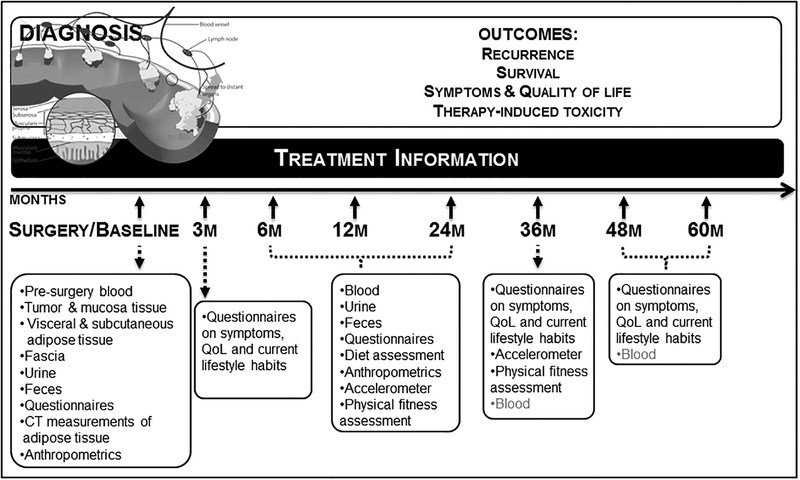
Background: Colorectal cancer is a leading cause of cancer death. Biomarkers to predict treatment outcomes are needed, as is evidence whether postdiagnosis diet and lifestyle can affect well-being and clinical outcomes. The international ColoCare Consortium aims to identify new biologic markers (e.g., metabolomic, transcriptomic, metagenomic, genetic, epigenetic, proteomic markers) that predict clinical outcomes, and to characterize associations between modifiable risk factors (e.g., diet, supplement use, physical activity) with short-term and long-term patient-reported and clinical outcomes among patients with colorectal cancer.Methods/Results: ColoCare is recruiting newly diagnosed patients with colorectal cancer across six sites in the United States and one site in Germany. As of April 2018, we have recruited >2,000 patients across all sites. Our projected enrollment is >4,000 multiethnic patients with colorectal cancer. The study includes uniformly collected, comprehensive sets of data and biospecimens at multiple time points up to 5 years after diagnosis. Treatment and clinical data are abstracted from medical records and centrally harmonized. Biospecimens are archived according to standardized procedures. Our initial studies demonstrated metabolic differences in adipose tissue types. We further reported on associations of biological factors (e.g., inflammation, DNA methylation, metabolomics) with lifestyle factors (e.g., adiposity, smoking, physical activity, dietary supplement use) or joint associations with clinical outcomes.
Conclusions: ColoCare is a consortium for the investigation of multilevel factors relevant to colorectal cancer survivorship.
Impact: The combination of a comprehensive set of biospecimens collected at multiple time points, jointly with detailed assessments of health behaviors and other prognostic factors, results in a unique resource that facilitates wide-ranging, innovative, and impactful research on colorectal cancer.
Trial registration: ClinicalTrials.gov NCT02328677.
©2018 American Association for Cancer Research.
Conflict of interest statement
Disclosure of Potential Conflicts of Interest
The authors declare no conflict of interest.
Figures
References
-
- Sargent DJ, Wieand HS, Haller DG, Gray R, Benedetti JK, Buyse M, et al. Disease-free survival versus overall survival as a primary end point for adjuvant colon cancer studies: individual patient data from 20,898 patients on 18 randomized trials. J Clin Oncol 2005;23(34):8664–70 doi 10.1200/JCO.2005.01.6071. - DOI - PubMed
Publication types
MeSH terms
Substances
Associated data
Grants and funding
LinkOut - more resources
Full Text Sources
Medical
Research Materials
Miscellaneous