Review
. 2018 Nov 20:6:557.
doi: 10.3389/fchem.2018.00557. eCollection 2018.

Post-Ugi Cyclization for the Construction of Diverse Heterocyclic Compounds: Recent Updates

Affiliations
Review

Post-Ugi Cyclization for the Construction of Diverse Heterocyclic Compounds: Recent Updates

Jitender Bariwal et al. Front Chem. .

Abstract

Multicomponent reactions (MCRs) have proved as a valuable tool for organic and medicinal chemist because of their ability to introduce a large degree of chemical diversity in the product in a single step and with high atom economy. One of the dominant MCRs is the Ugi reaction, which involves the condensation of an aldehyde (or ketone), an amine, an isonitrile, and a carboxylic acid to afford an α-acylamino carboxamide adduct. The desired Ugi-adducts may be constructed by careful selection of the building blocks, opening the door for desired post-Ugi modifications. In recent times, the post-Ugi transformation has proved an important synthetic protocol to provide a variety of heterocyclic compounds with diverse biological properties. In this review, we have discussed the significant advancements reported in the recent literature with the emphasis to highlight the concepts and synthetic applications of the derived products along with critical mechanistic aspects.

Keywords: MCR; Post-Ugi modifications; heterocycles; multicomponent reactions; post-Ugi cyclization.


Figures
Scheme 1
Scheme 1
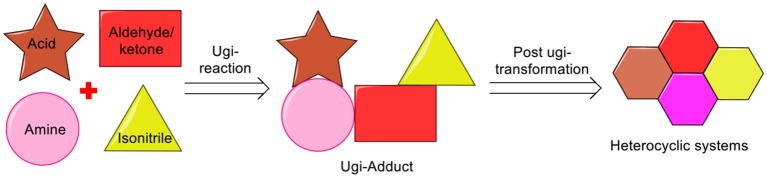
Ugi multicomponent reaction and post Ugi transformation to heterocyclic system.
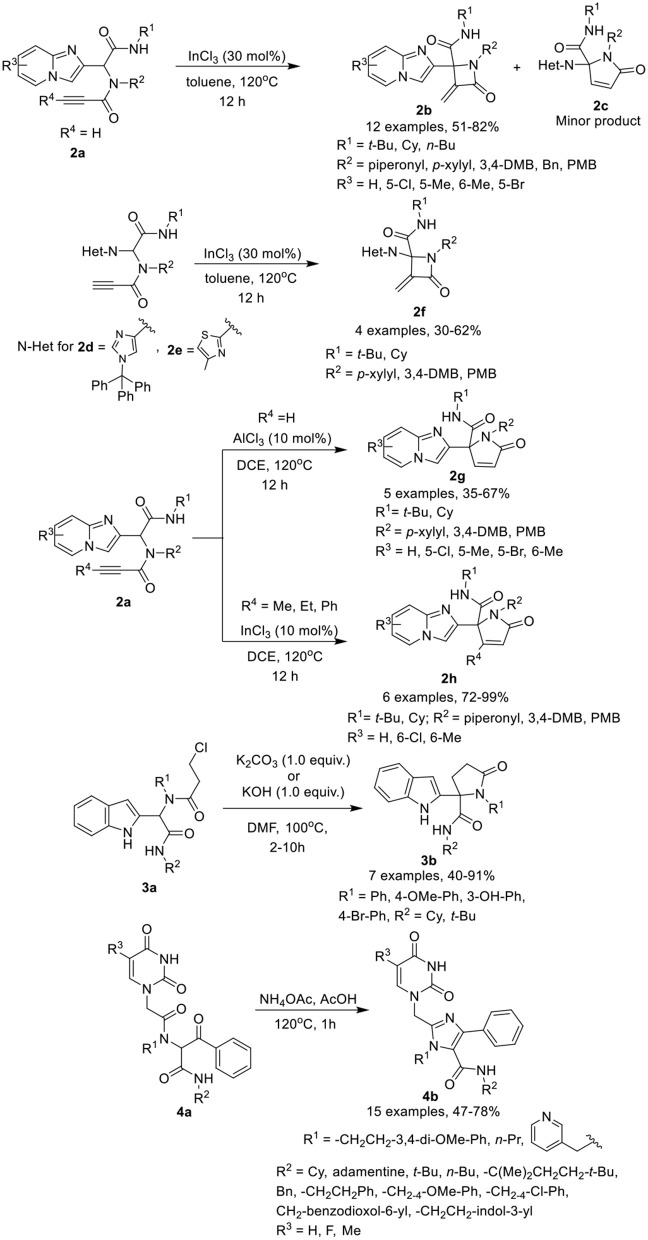
Scheme 2
Scheme 2
Synthesis of fused α-methylene β-lactams 2b, 2f, α,β-unsaturated γ-lactams 2g, 2h, indolyl based γ-lactams 3b and tetra-substituted Imidazoles 4b.
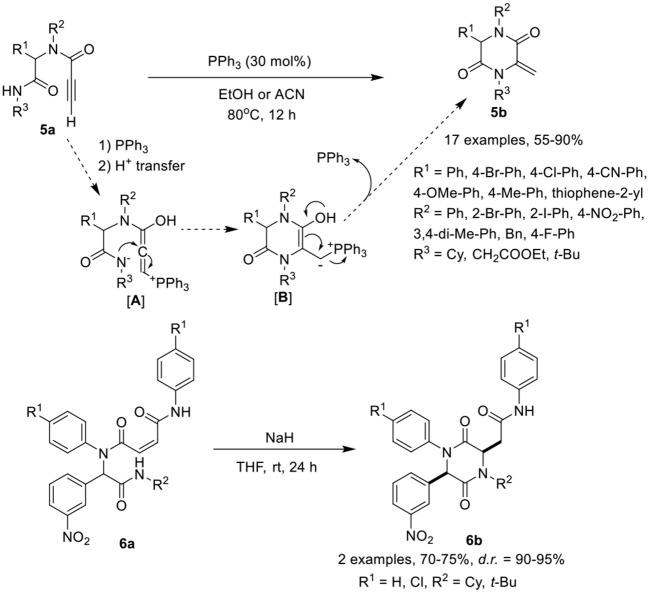
Scheme 3
Scheme 3
Synthesis of arylidence 2,5-diketopiperazines 5b and piperazine 2,5-dione 6b.
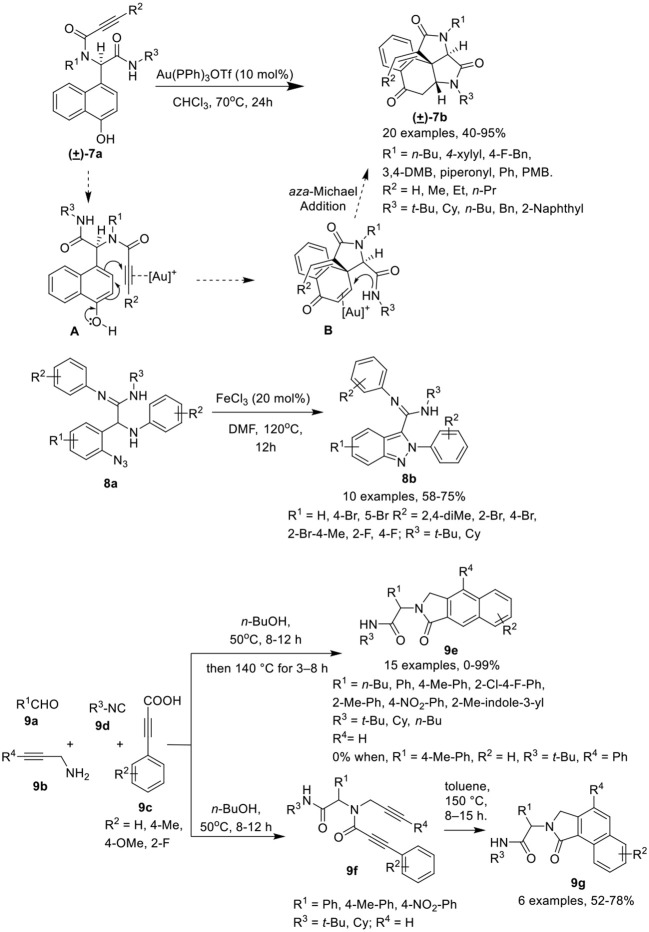
Scheme 4
Scheme 4
Synthesis of azaspiro tetracyclic scaffolds 7b, amidino substituted indazoles 8b and N-substitutednenzo[e]-or [f]isoindolones 9e,g.
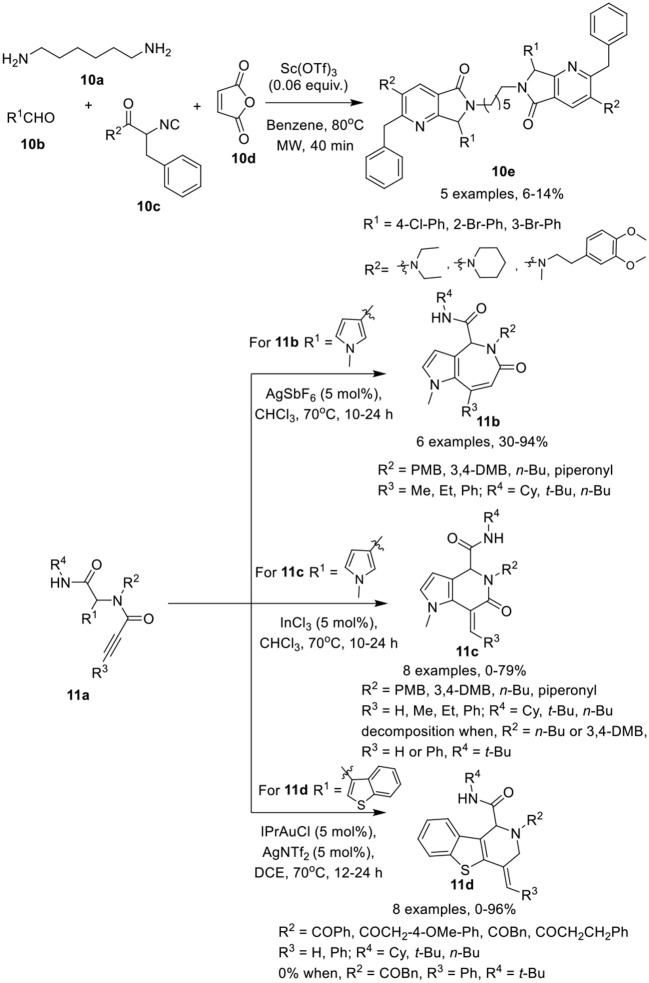
Scheme 5
Scheme 5
Synthesis of cyclic analogs of HMBPA 10e, pyrroloazepinones 11b, pyrroloazepinones 11c, and benzothienopyridines 11d.
Scheme 6
Scheme 6
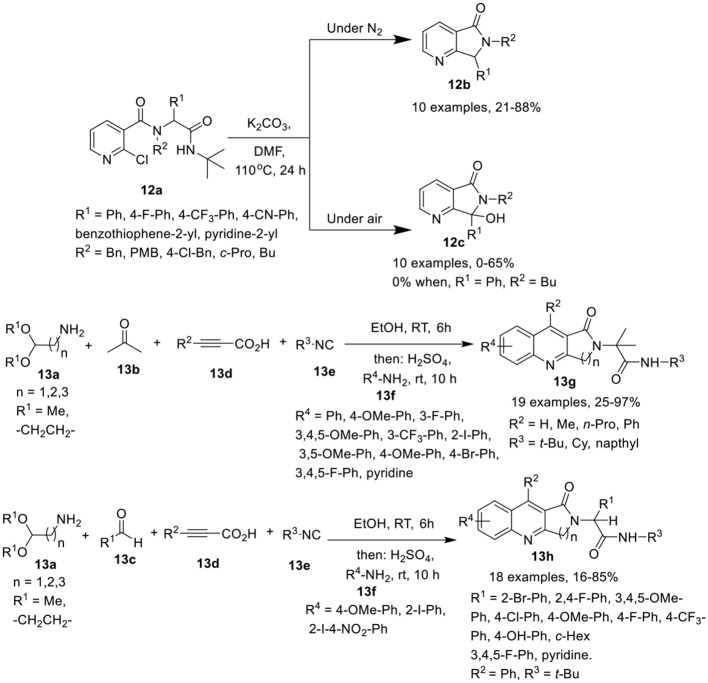
Synthesis of 6,7-dihydro-5H-pyrrolo[3,4-b]pyridine-5-ones 12b and the oxidized product 12c and fused quinolones 13g and 13h.
Scheme 7
Scheme 7
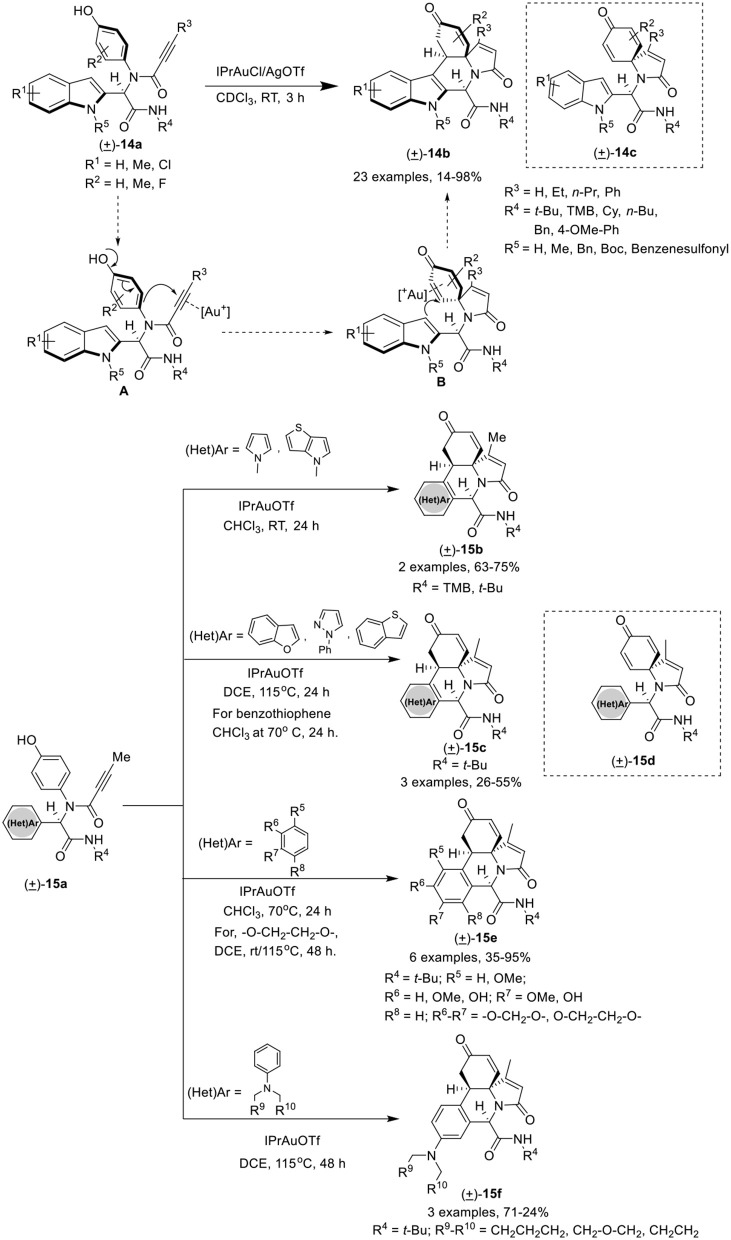
Synthesis of indole-annulated tricyclic heterocycle 14b and diverse (hetero)-arene-annulated tricyclic heterocycle 15b-f.
Scheme 8
Scheme 8
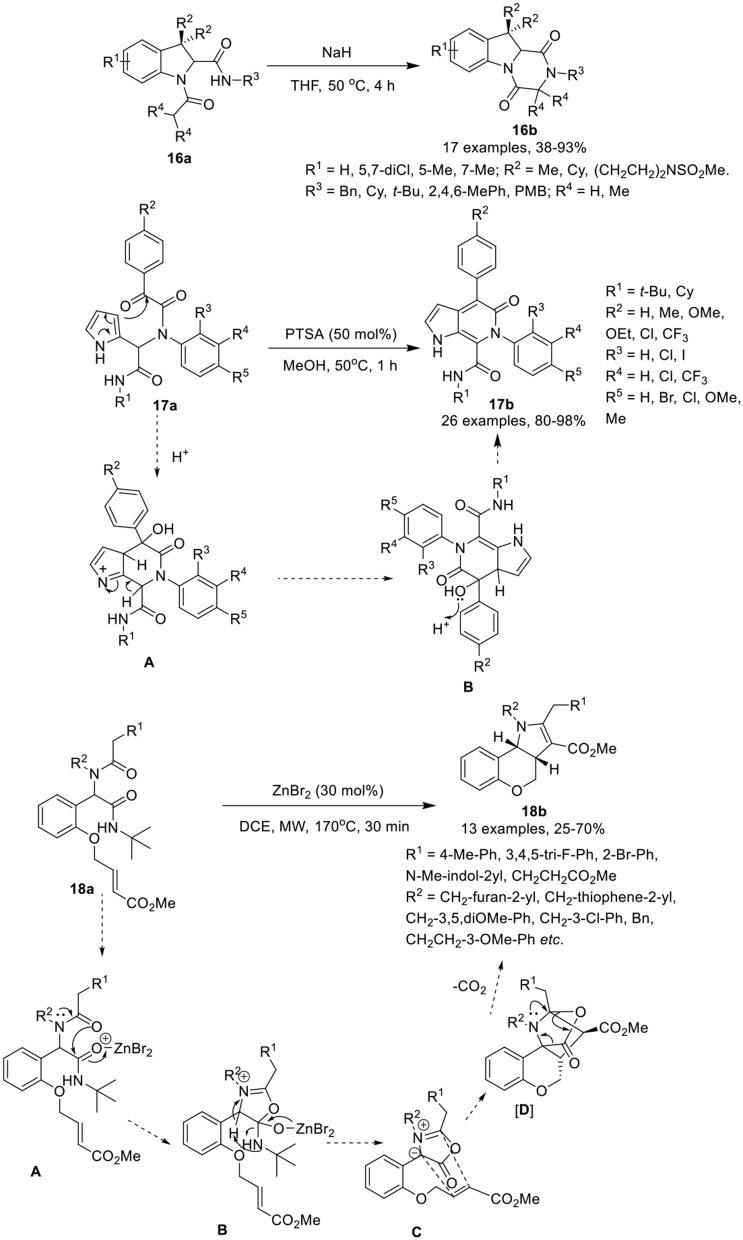
Synthesis of substituted tetrahydropyrazino[1,2-a]indole-1,4-diones 16b, pyrrolo[2,3-c]pyridines 17b and tricyclic chromenopyrroles 18b.
Scheme 9
Scheme 9
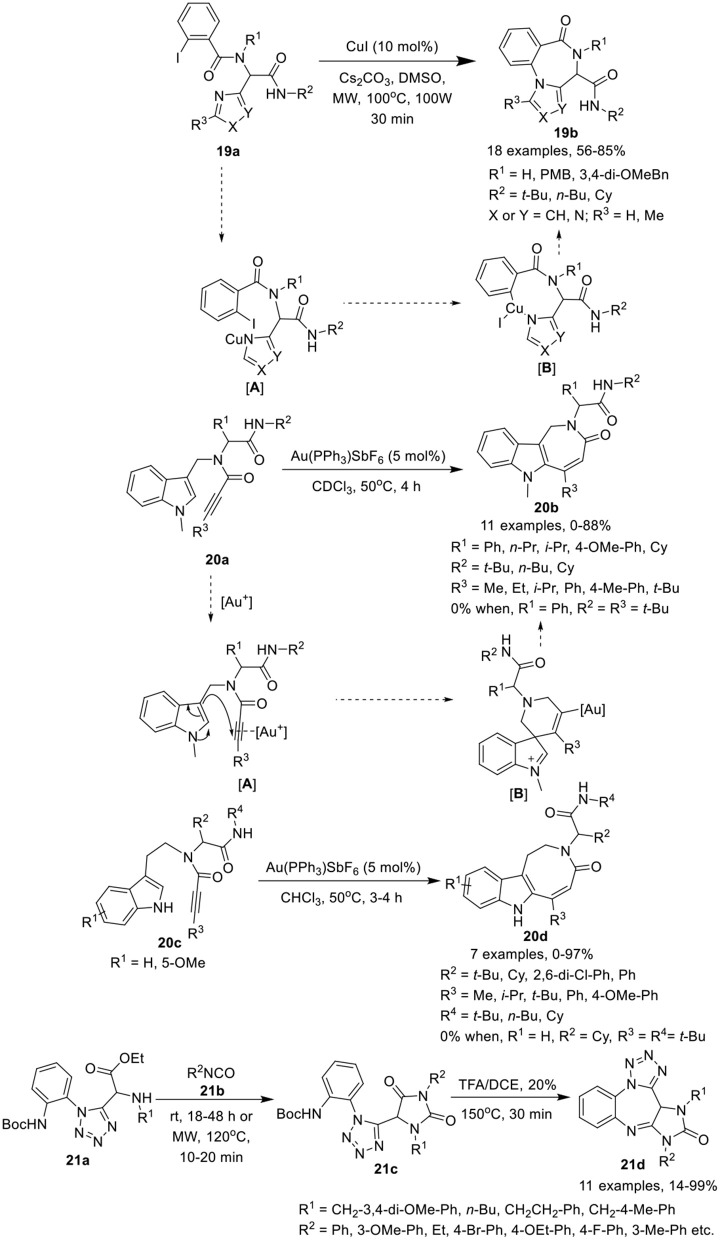
Synthesis of 4H-benzo[f ]imidazo[1,4]diazepin-6-ones 19b, indoloazepinones 20b and indoloazocinones 20d, and imidazo-tetrazolodiazepinones 21d.
Scheme 10
Scheme 10
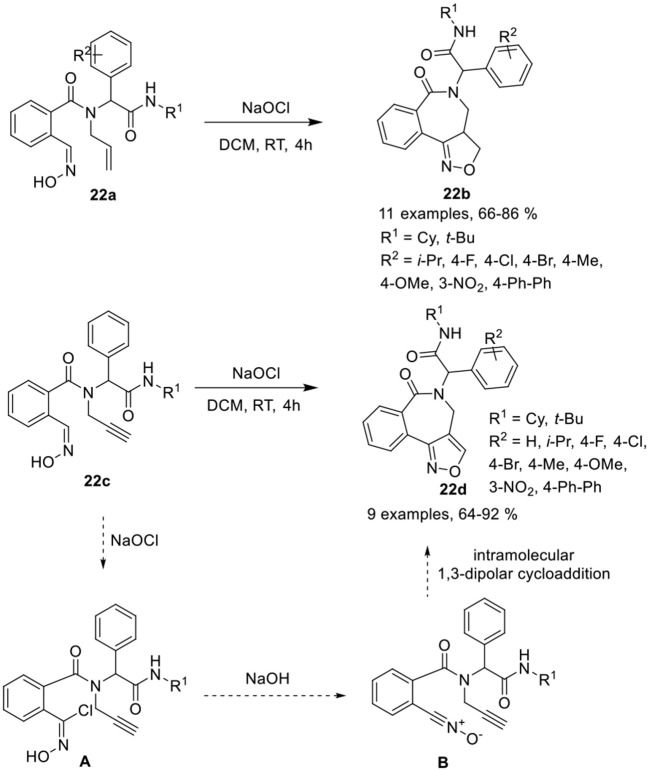
Synthesis of isoxazolino-benzazepines 22b and isoxazolo-benzazepines 22d.
Scheme 11
Scheme 11
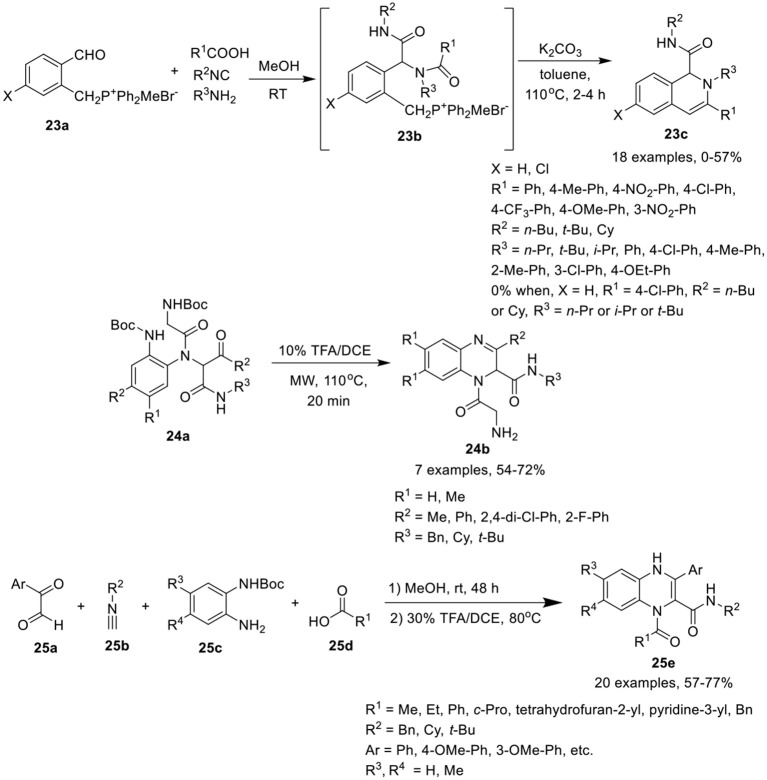
Synthesis of 1,2-dihydroisoquinolines 23c, quinoxalines 24b and quinoxalines 25e.
Scheme 12
Scheme 12
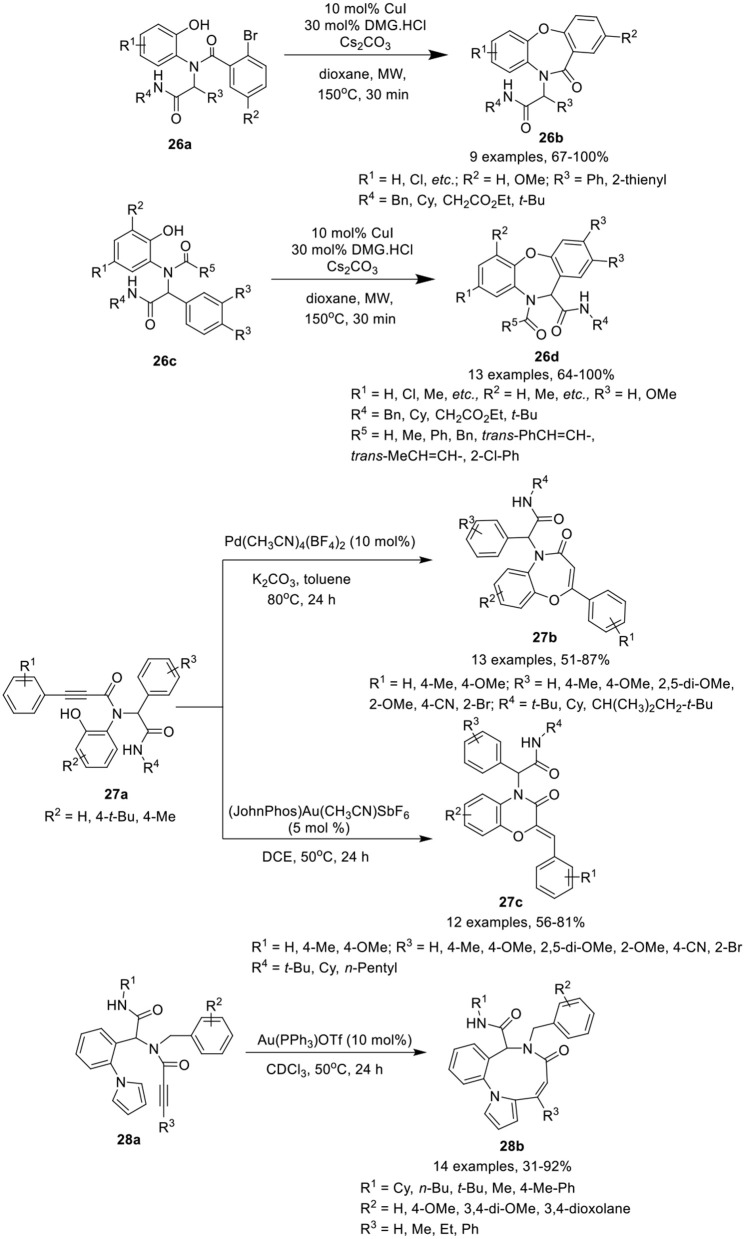
Synthesis of dibenz[b,f ][1,4]oxazepin-11(10H)once 26b and dibenze[b,f][1,4]oxazepin-11(10H)-carboxamides 26d, benzoxazepinones 27b and benzoxazinones 27c, and benzo[b]pyrrole[2-1-i][1,5]diazonin-7(6H)-once 28b.
Scheme 13
Scheme 13
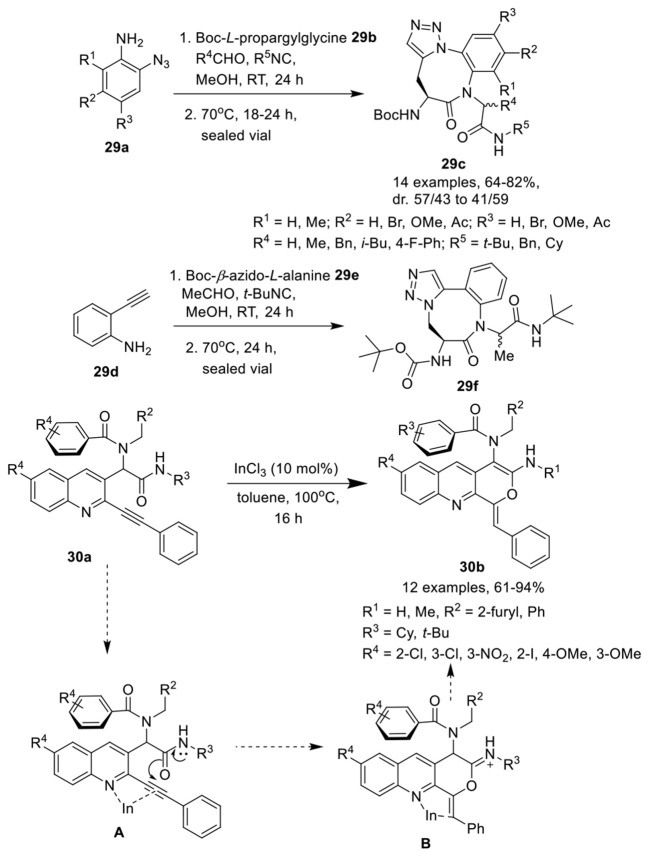
Synthesis of amino-benzotriazocine-bearing dipeptides 29c, 29f and tricyclic pyranoquinolines 30b.
Scheme 14
Scheme 14
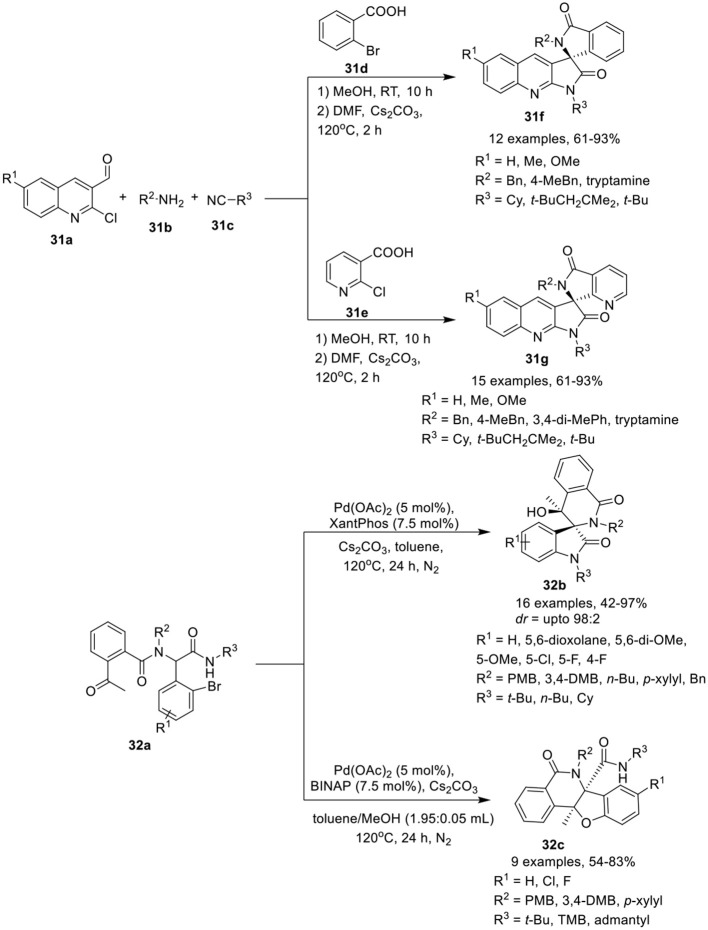
Synthesis of spiropyrroloquinoline-isolinone 31f and their aza-azalogs 31g and (spiro)polyheterocycles 32b and 32c.
Scheme 15
Scheme 15
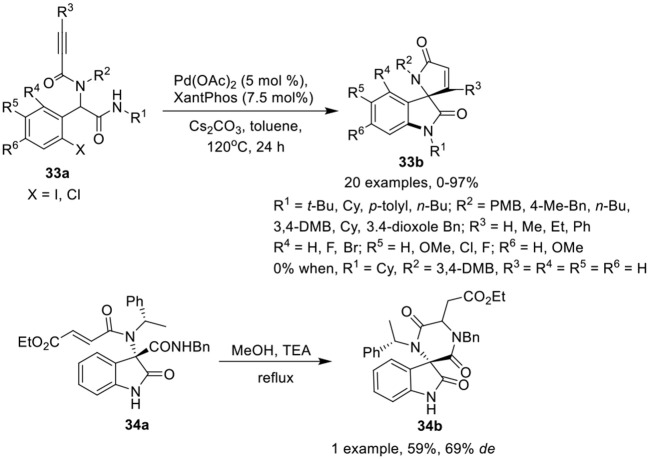
Synthesis of spiro[indoline-3,2′-pyrrole]-2,5′-diones 33b and spiro-diketopiperazines 34b.

References

    1. Ambasana P. A., Vachhani D. D., Galli M., Jacobs J., Van Meervelt L., Shah A. K., et al. (2014). Solvent switchable cycloaddition: a (one-pot) metal-free approach towards N-substituted benzo[e]- or [f ]isoindolones via Csp2-H functionalization. Org. Biomol. Chem. 12, 8861–8865. 10.1039/C4OB01644K - DOI - PubMed
    1. Azuaje J., Maatougui E. A., Garcia-Mera X., Sotelo E. (2014). Ugi-based approaches to quinoxaline libraries. ACS Comb. Sci. 16, 403–411. 10.1021/CO500036N - DOI - PubMed
    1. Balalaie S., Kejani R. R., Ghabraie E., Darvish F., Rominger F., Hamdan F., et al. (2017a). Diastereoselective synthesis of functionalized diketopiperazines through post-transformational reactions. J. Org. Chem. 82, 12141–12152. 10.1021/acs.joc.7b01855 - DOI - PubMed
    1. Balalaie S., Mirzaie S., Nikbakht A., Hamdan F., Rominger F., Navari R., et al. (2017b). Indium-catalyzed intramolecular hydroamidation of alkynes: an exo-dig cyclization for the synthesis of pyranoquinolines through post-transformational reaction. Org. Lett. 19, 6124–6127. 10.1021/acs.orglett.7b02603 - DOI - PubMed
    1. Balalaie S., Shamakli M., Nikbakht A., Alavijeh N. S., Rominger F., Rostamizadeh S., et al. (2017c). Direct access to isoxazolino and isoxazolo benzazepines from 2-((hydroxyimino)methyl)benzoic acid via a post-Ugi heteroannulation. Org. Biomol. Chem. 15, 5737–5742. 10.1039/C7OB01142C - DOI - PubMed

LinkOut - more resources