Review
. 2019 Feb;35(2):129-144.
doi: 10.1016/j.tig.2018.11.001. Epub 2018 Dec 4.

Non-duplex G-Quadruplex Structures Emerge as Mediators of Epigenetic Modifications

Affiliations
Review

Non-duplex G-Quadruplex Structures Emerge as Mediators of Epigenetic Modifications

Ananda Kishore Mukherjee et al. Trends Genet. 2019 Feb.

Abstract

The role of non-duplex DNA, the guanine-quadruplex structure in particular, is becoming widely appreciated. Increasing evidence in the last decade implicates quadruplexes in important processes such as transcription and replication. Interestingly, more recent work suggests roles for quadruplexes, in association with quadruplex-interacting proteins, in epigenetics through both DNA and histone modifications. Here, we review the effect of the quadruplex structure on post-replication epigenetic memory and quadruplex-induced promoter DNA/histone modifications. Furthermore, we highlight the epigenetic state of the telomerase promoter where quadruplexes could play a key regulatory role. Finally, we discuss the possibility that DNA structures such as quadruplexes, within a largely duplex DNA background, could act as molecular anchors for locally induced epigenetic modifications.

Keywords: epigenetic modifications; guanine-quadruplex structure; non-duplex DNA.


Figures

Figure 1
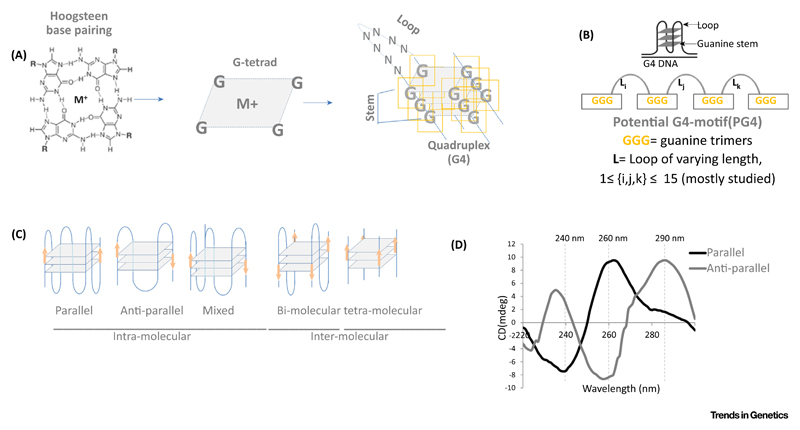
Figure 1. The G4 Topology.
(A) Hoogsteen base pairing gives self-assembly of G-tetrads [assisted by metal (M) ions] in sequences with repetitive G tracts (G-stem). (B) These G-tetrads are separated by stretches of nucleotides called ‘loops’ (L). Two or more G-tetrads form DNA secondary structure G-quadruplex (G4) DNA. (C) Different topologies in which G4s usually exist in intra-molecular and inter-molecular forms. (D) Schematic showing typical circular dichroism (CD) spectral signatures of parallel and anti-parallel G-quadruplexes (G4s).
Figure 2
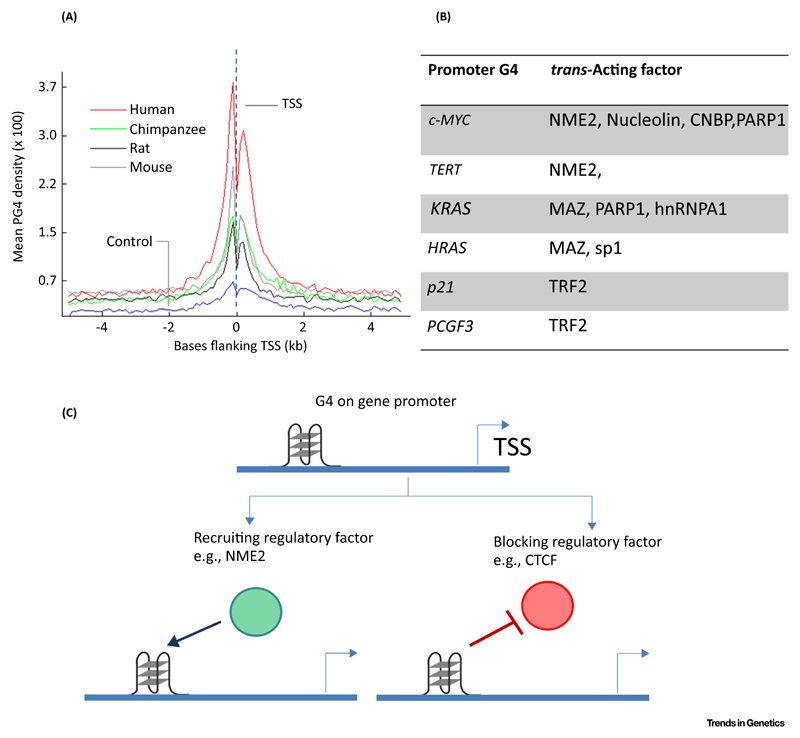
Figure 2. G4 in Gene Regulation.
(A) G-quadruplexes (G4s) are enriched near transcription start sites (TSS) of multiple species. Adapted, with permission, from [28]. (B) Reported trans-acting factors that are recruited to promoter G4s. (C) Schematic showing different mechanisms by which promoter G4s might affect recruitment of regulatory trans-acting factors.
Figure 3
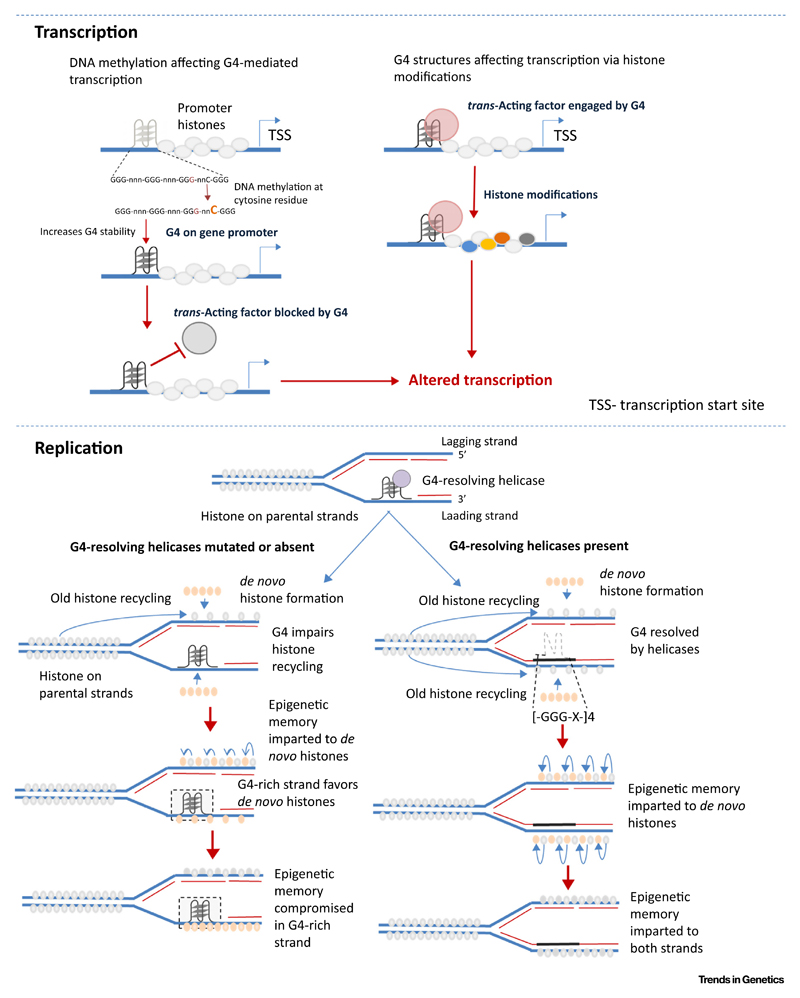
Figure 3. Key Figure: G4s in Epigenetic Modifications
Schematic of reported mechanisms by which G-quadruplexes (G4s) are linked to epigenetic modifications in transcription and replication.
Figure 4
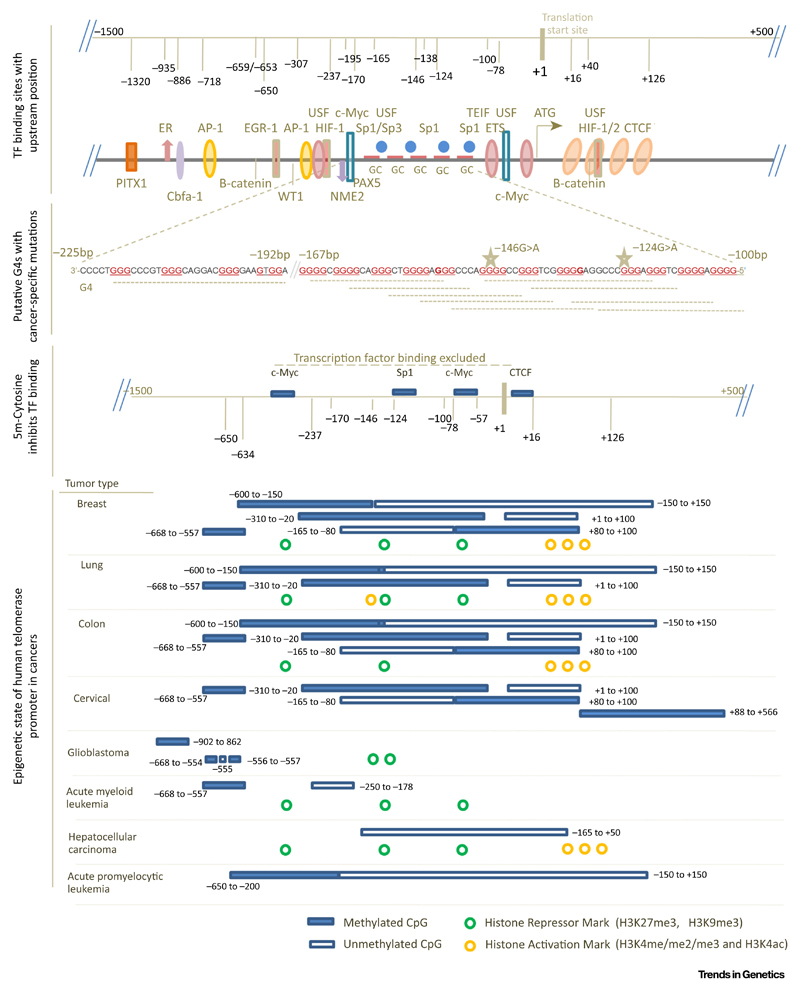
Figure 4. Tandem G4 Structures within Telomerase Promoter Constitute Important Sites of Epigenetic Alterations.
The 2-kb region of hTERT promoter (+500 to −1500 bp) overlaying important transcription factor (TF) binding sites, tandem reported G4s110, specific CpG island methylation resulting in exclusion of transcription factor binding followed by epigenetic changes [103,107,108], that is, histone modifications and DNA methylation observed across cancers. Clinically important cancer-specific mutations −124 G > A and −146G > A are found within G4s [–98].

References

    1. Dickerson RE, et al. The anatomy of A-, B-, and Z-DNA. Science. 1982;216:475–485. - PubMed
    1. McMurray CT. DNA secondary structure: a common and causative factor for expansion in human disease. Proc Natl Acad Sci U S A. 1999;96:1823–1825. - PMC - PubMed
    1. Phan AT, et al. DNA architecture: from G to Z. Curr Opin Struct Biol. 2006;16:288–298. - PMC - PubMed
    1. Zeraati M, et al. I-motif DNA structures are formed in the nuclei of human cells. Nat Chem. 2018;10:631–637. - PubMed
    1. Huppert JL. Four-stranded nucleic acids: structure, function and targeting of G-quadruplexes. Chem Soc Rev. 2008;37:1375–1384. - PubMed

Publication types