. 2018 Dec 7;14(12):e1006651.
doi: 10.1371/journal.pcbi.1006651. eCollection 2018 Dec.

Predicting protein targets for drug-like compounds using transcriptomics

Affiliations

Predicting protein targets for drug-like compounds using transcriptomics

Nicolas A Pabon et al. PLoS Comput Biol. .

Abstract

An expanded chemical space is essential for improved identification of small molecules for emerging therapeutic targets. However, the identification of targets for novel compounds is biased towards the synthesis of known scaffolds that bind familiar protein families, limiting the exploration of chemical space. To change this paradigm, we validated a new pipeline that identifies small molecule-protein interactions and works even for compounds lacking similarity to known drugs. Based on differential mRNA profiles in multiple cell types exposed to drugs and in which gene knockdowns (KD) were conducted, we showed that drugs induce gene regulatory networks that correlate with those produced after silencing protein-coding genes. Next, we applied supervised machine learning to exploit drug-KD signature correlations and enriched our predictions using an orthogonal structure-based screen. As a proof-of-principle for this regimen, top-10/top-100 target prediction accuracies of 26% and 41%, respectively, were achieved on a validation of set 152 FDA-approved drugs and 3104 potential targets. We then predicted targets for 1680 compounds and validated chemical interactors with four targets that have proven difficult to chemically modulate, including non-covalent inhibitors of HRAS and KRAS. Importantly, drug-target interactions manifest as gene expression correlations between drug treatment and both target gene KD and KD of genes that act up- or down-stream of the target, even for relatively weak binders. These correlations provide new insights on the cellular response of disrupting protein interactions and highlight the complex genetic phenotypes of drug treatment. With further refinement, our pipeline may accelerate the identification and development of novel chemical classes by screening compound-target interactions.


Conflict of interest statement

The authors have declared that no competing interests exist.

Figures
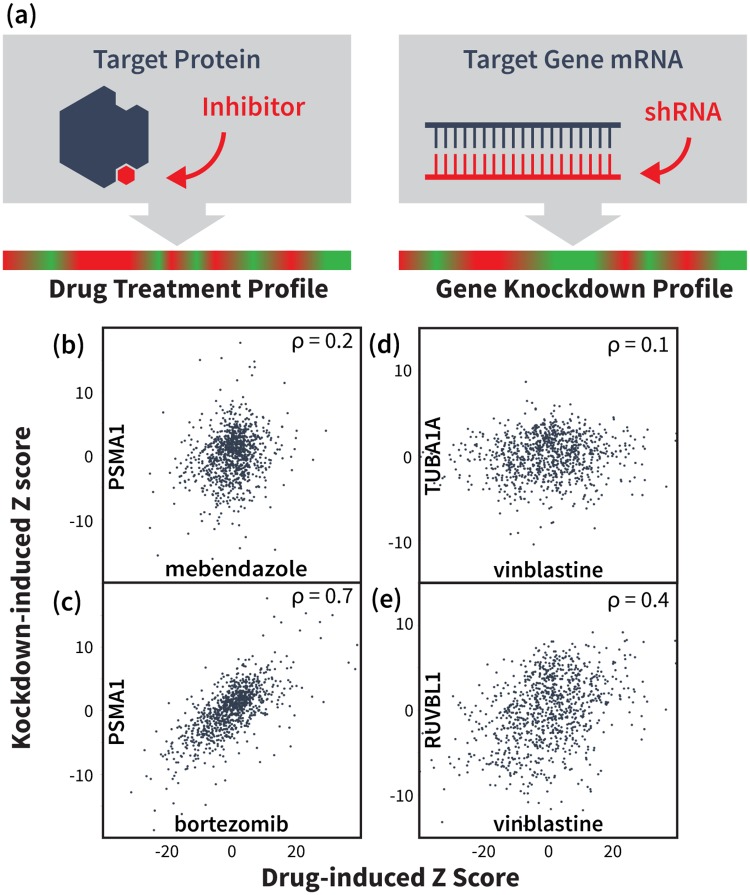
Fig 1
Fig 1. Drug and gene knockdown induced mRNA expression profile correlations reveal drug-target interactions.
(a) Illustration of our main hypothesis: we expect a drug-induced mRNA signature to correlate with the knockdown (KD) signature of the drug’s target gene and/or genes on the same pathway(s). (b,c) mRNA signature from KD of proteasome gene PSMA1 does not significantly correlate with signature induced by tubulin-binding drug mebendazole, but shows strong correlation with signature from proteasome inhibitor bortezomib. Data points represent differential expression levels (Z-scores) for the 978 landmark genes measured in the LINCS L1000 experiments. (d,e) Signature from tubulin-binding drug vinblastine shows little signature correlation with KD of its target TUBA1A, but instead correlates with the KD of functionally related genes, such as RUVBL1.
Fig 2
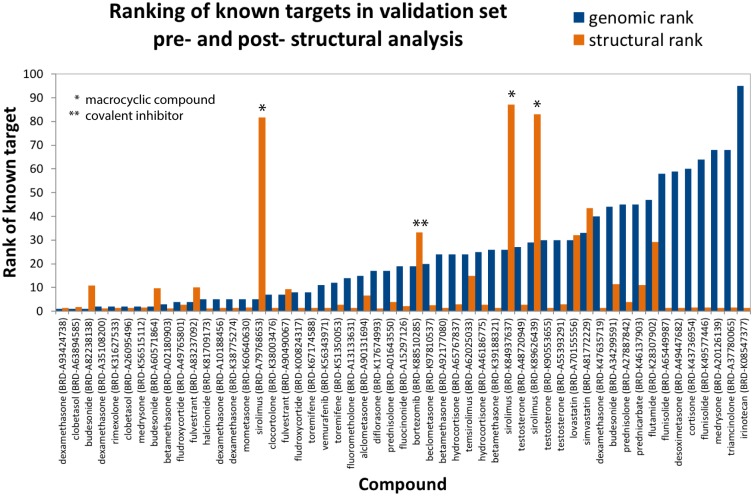
Fig 2. Structural enrichment of genomic target predictions.
Predicted ranking (lower is better) of the highest-ranking known target for the 53 hits in our validation set with known target structures. Percentile rankings are shown following RF analysis (blue) and following structural re-ranking (orange). We note that docking and scoring macrocycles or covalent inhibitors is particularly challenging. Furthermore, scoring functions are destined to predict false positives, yet within the limited and orthogonal set of drug targets predicted by the genomic screening the scoring function used in our pipeline [36] shows significant enrichment.
Fig 3
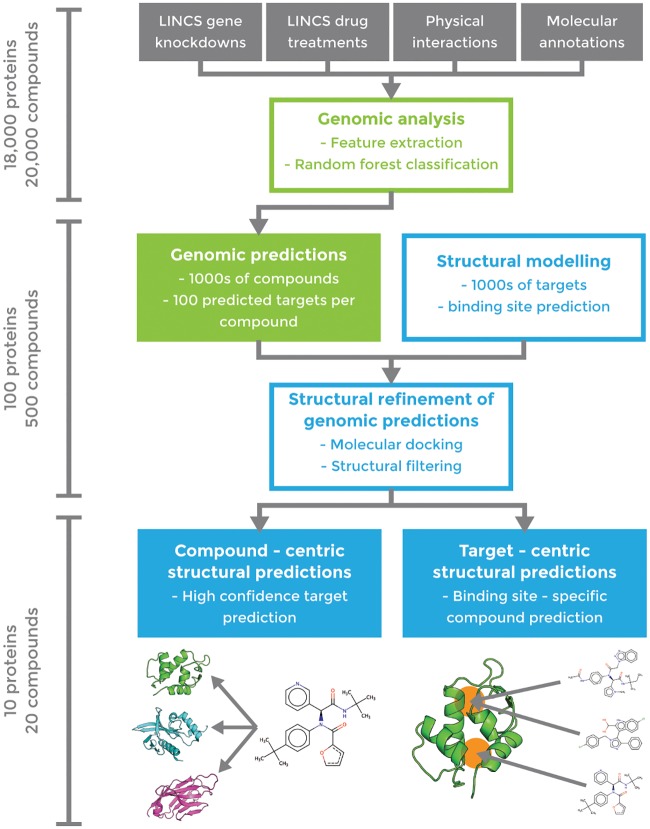
Fig 3. Workflow of combined genomic (green) and structural (blue) pipeline for drug-target interaction prediction.
Approximate numbers of proteins/compounds in each phase are indicated on the left.
Fig 4
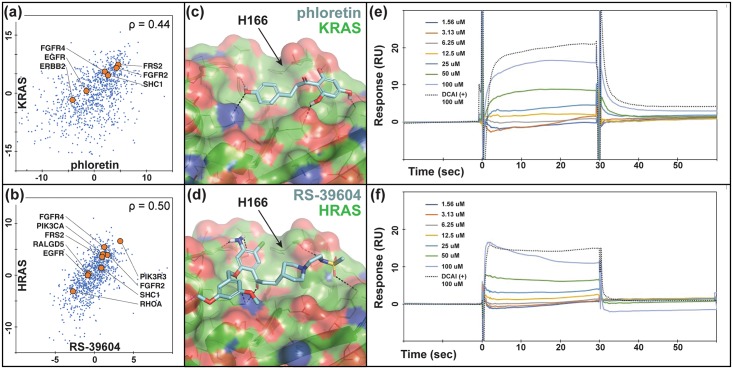
Fig 4. HRAS/KRAS inhibitors predicted based on direct correlations and docked poses show direct binding in SPR assays.
Differential gene expression profiles of (a) Phloretin and (b) RS-39604 cell treatments and KRAS and HRAS KD experiments, respectively. Several functionally related genes listed in BioGrid [32] are indicated to demonstrate the relevance of these profiles as suggestive of direct drug-target interactions. Models of (c) phloretin and (d) RS-39604 bound to an allosteric site on the KRAS and HRAS catalytic domains, respectively. (e) SPR titration response curves for (e) phloretin and (f) RS-39604 binding to KRAS and HRAS, respectively, compared to DCAI positive control.
Fig 5
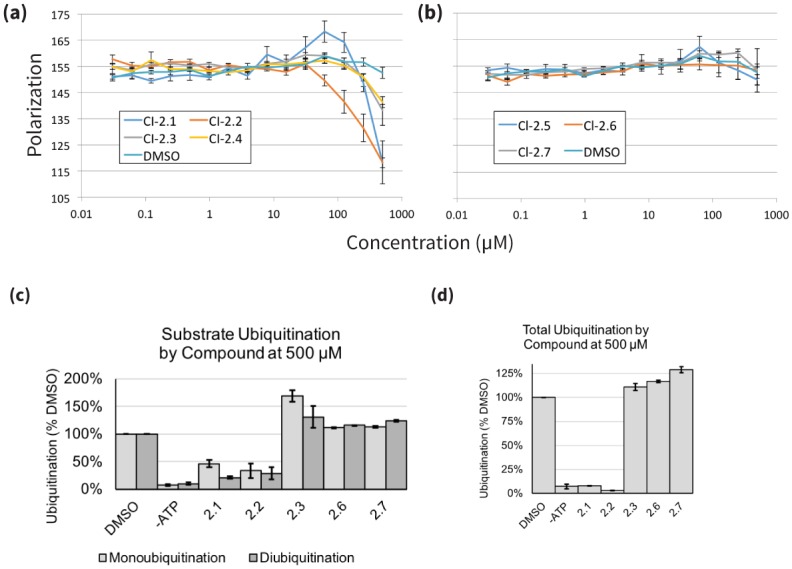
Fig 5. Predicted inhibitors show direct binding to and functional inhibition of CHIP.
(a,b) Predicted CHIP inhibitors disrupt binding to chaperone peptide by fluorescence polarization. High ranked (a) and low ranked (b) compounds were tested for the ability to compete with a known TPR ligand (5-FAM-GSGPTIEEVD, 0.1 μM) for binding to CHIP (0.5 μM). Results are the average and standard error of the mean of two experiments each performed in triplicate. (c,d) CHIP inhibitors prevent ubiquitination by CHIP in vitro. (c) Quantification of substrate ubiquitination by CHIP from Anti-GST western blot experiments with tested compounds at 500 μM, blotted as in S5a Fig and normalized to DMSO treated control (2.1, 2.2: N = 4; all other compounds: N = 2). (d) Quantification of total ubiquitination by CHIP from Anti-GST western blot experiments with tested compounds at 500 μM, blotted as in S5b Fig and normalized to ubiquitination by a DMSO treated control (all compounds: N = 2).
Fig 6
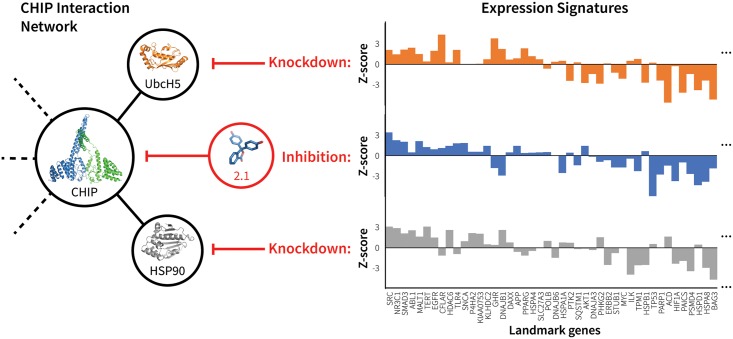
Fig 6. mRNA expression signature of CHIP inhibitor 2.1 correlates with knockdown of CHIP interacting partners.
The figure illustrates the correlation between the mRNA expression profile signatures produced by treating cells with 2.1 and by knocking down CHIP interaction partners UbcH5 and HSP90. These three perturbations have similar network effects (left), as illustrated by their resulting differential expression signatures (right). For clarity, expression signatures show only the subset of LINCS landmark genes that are functionally related to CHIP according to BioGRID [32].
Fig 7
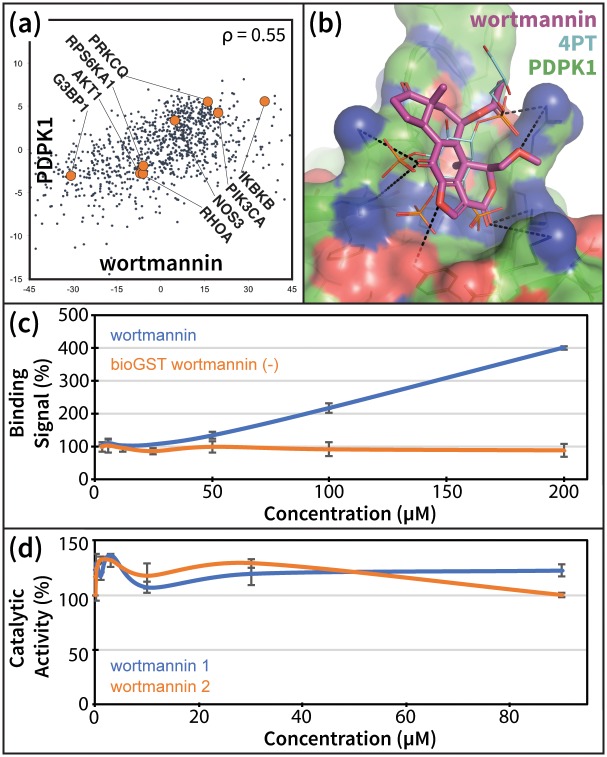
Fig 7. Wortmannin promotes PDK1 –PIP3 binding in vitro.
(a) Wortmannin treatment and PDK1 KD experiments produce directly correlating differential gene expression profiles. Several functionally related genes listed in BioGrid [32] are indicated to demonstrate the relevance of these profiles as suggestive of direct drug-target interactions. (b) Model of wortmannin bound to the PH domain of PDK1, compared to known ligand 4PT (PDB ID: 1W1G [53]). (c) Alphascreen PDK1-PIP3 interaction-displacement assay results for increasing concentrations of wortmannin. Error bars represent the standard error of the mean from two parallel runs. (d) Effect of wortmannin on the in-vitro phosphorylation of the substrate T308tide [54] by the isolated catalytic domain of PDK1. The two lines are from two replicates of the activity assay, with error bars representing the standard error of the mean from two parallel runs for each replicate.

References

    1. Edwards AM, Isserlin R, Bader GD, Frye SV, Willson TM, Yu FH. Too many roads not taken. Nature. 2011;470(7333):163–5. 10.1038/470163a . - DOI - PubMed
    1. Grueneberg DA, Degot S, Pearlberg J, Li W, Davies JE, Baldwin A, et al. Kinase requirements in human cells: I. Comparing kinase requirements across various cell types. Proc Natl Acad Sci U S A. 2008;105(43):16472–7. 10.1073/pnas.0808019105 . - DOI - PMC - PubMed
    1. Fedorov O, Muller S, Knapp S. The (un)targeted cancer kinome. Nat Chem Biol. 2010;6(3):166–9. 10.1038/nchembio.297 . - DOI - PubMed
    1. Swinney DC, Anthony J. How were new medicines discovered? Nature reviews Drug discovery. 2011;10(7):507–19. 10.1038/nrd3480 . - DOI - PubMed
    1. Bleicher KH, Bohm HJ, Muller K, Alanine AI. Hit and lead generation: beyond high-throughput screening. Nat Rev Drug Discov. 2003;2(5):369–78. 10.1038/nrd1086 . - DOI - PubMed

Publication types

MeSH terms