. 2018;4(5):233-242.
doi: 10.1007/s41048-018-0067-x. Epub 2018 Oct 11.

Animal protein toxins: origins and therapeutic applications

Affiliations

Animal protein toxins: origins and therapeutic applications

Na Chen et al. Biophys Rep. 2018.

Abstract

Venomous animals on the earth have been found to be valuable resources for the development of therapeutics. Enzymatic and non-enzymatic proteins and peptides are the major components of animal venoms, many of which can target various ion channels, receptors, and membrane transporters. Compared to traditional small molecule drugs, natural proteins and peptides exhibit higher specificity and potency to their targets. In this review, we summarize the varieties and characteristics of toxins from a few representative venomous animals, and describe the components and applications of animal toxins as potential drug candidates in the treatment of human diseases, including cancer, neurodegenerative diseases, cardiovascular diseases, neuropathic pain, as well as autoimmune diseases. In the meantime, there are many obstacles to translate new toxin discovery to their clinical applications. The challenges, strategies, and perspectives in the development of the protein toxin-based drugs are discussed as well.

Keywords: Animal venoms; Clinical applications; Human diseases; Protein and peptides; Targets.


Conflict of interest statement

Na Chen, Siqi Xu, Yuhan Zhang, and Feng Wang declare that they have no conflict of interest.This article does not contain any studies with human or animal subjects performed by any of the authors.

Figures
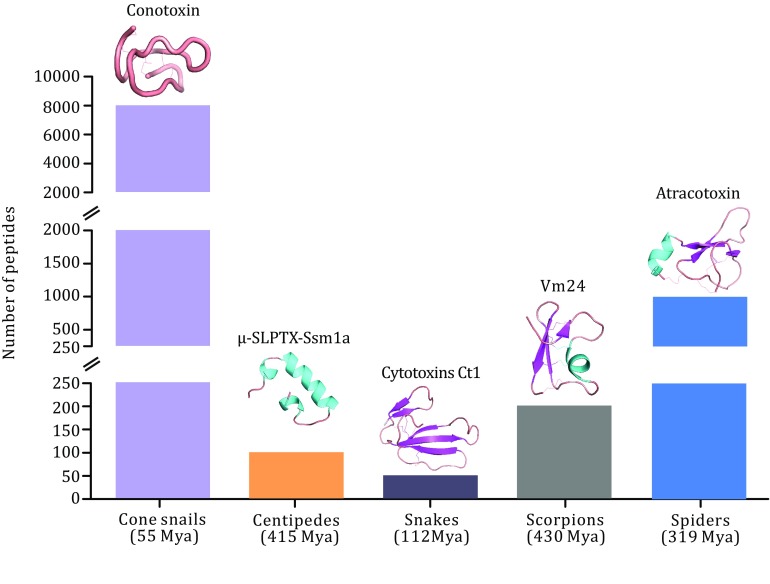
Fig. 1
Fig. 1
Comparison of the numbers of unique peptides in different venomous animals and the presentation of promising drug candidates identified from their venoms
Fig. 2
Fig. 2
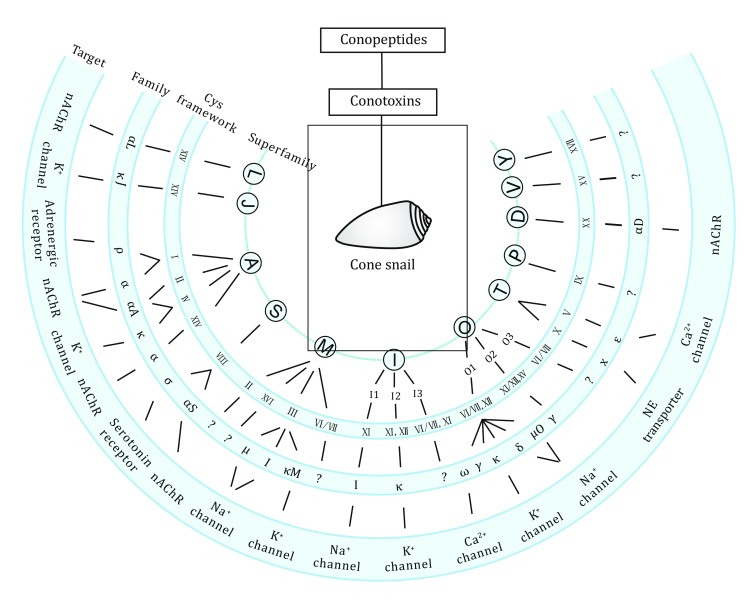
An example of the classification of disulfide-rich conotoxins modified from Akondi’s work (2014). Based on the homology of their conserved signal sequence, cysteine frameworks, as well as the targets, conotoxins can be classified into numbers of superfamilies and families. NE: norepinephrine; nAChR: nicotinic acetylcholine receptor
Fig. 3
Fig. 3
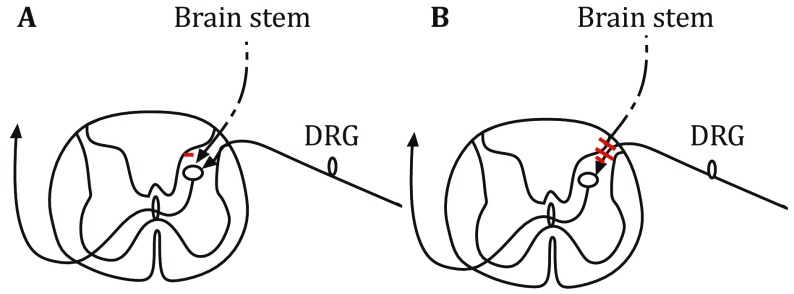
Descending pain-inhibitory systems in spinal cord. Diagrams A and B illustrate two different ways for brain stem descending axons to inhibit pain signaling from nociceptive primary afferent nerve fibers in spinal cord. A Direct postsynaptic inhibition of pain signaling. B Indirect presynaptic inhibition of pain signaling via volume transmission of an inhibitory neurotransmitter released from brain stem descending inhibitory axons
Fig. 4
Fig. 4
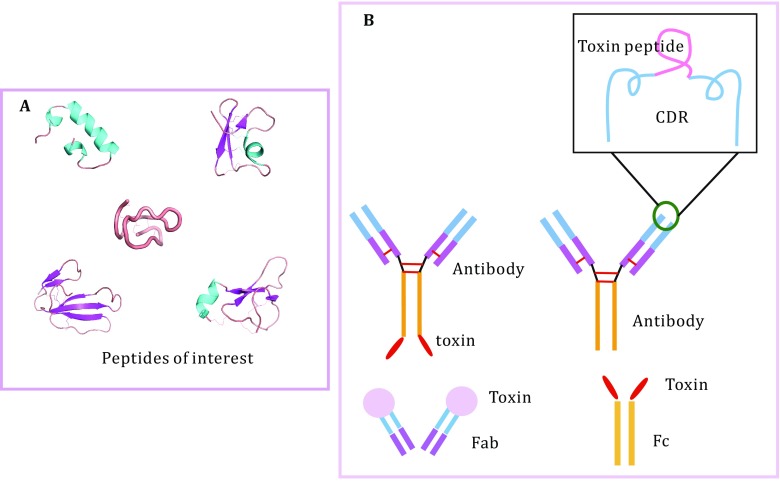
Toxin peptides of interest and toxin peptide–antibody fusion. A Toxin peptides of interest. B Toxin peptides–antibody fusion. Four patterns of fusion are illustrated: toxin–(Fab)Ab, toxin–(Fc)Ab, toxin–Fc, and toxin–Fab

References

    1. Adams DJ, Berecki G. Mechanisms of conotoxin inhibition of N-type (Ca(v)2.2) calcium channels. Biochim Biophys Acta. 2013;1828:1619–1628. doi: 10.1016/j.bbamem.2013.01.019. - DOI - PubMed
    1. Akondi KB, Muttenthaler M, Dutertre S, Kaas Q, Craik DJ, Lewis RJ, Alewood PF. Discovery, synthesis, and structure-activity relationships of conotoxins. Chem Rev. 2014;114:5815–5847. doi: 10.1021/cr400401e. - DOI - PMC - PubMed
    1. Awad K, Abushouk AI, AbdelKarim AH, Mohammed M, Negida A, Shalash AS. Bee venom for the treatment of Parkinson’s disease: how far is it possible? Biomed Pharmacother. 2017;91:295–302. doi: 10.1016/j.biopha.2017.04.065. - DOI - PubMed
    1. Calderon LA, Sobrinho JC, Zaqueo KD, de Moura AA, Grabner AN, Mazzi MV, Marcussi S, Nomizo A, Fernandes CF, Zuliani JP, Carvalho BM, da Silva SL, Stábeli RG, Soares AM. Antitumoral activity of snake venom proteins: new trends in cancer therapy. Biomed Res Int. 2014;2014:203639. doi: 10.1155/2014/203639. - DOI - PMC - PubMed
    1. Capon DJ, Chamow SM, Mordenti J, Marsters SA, Gregory T, Mitsuya H, Byrn RA, Lucas C, Wurm FM, Groopman JE, Broder S, Smith DH. Designing CD4 immunoadhesins for AIDS therapy. Nature. 1989;337:525–531. doi: 10.1038/337525a0. - DOI - PubMed

LinkOut - more resources