Synthesis and Evaluation of Troponoids as a New Class of Antibiotics
- PMID: 30533576
- PMCID: PMC6275967
- DOI: 10.1021/acsomega.8b01754
Synthesis and Evaluation of Troponoids as a New Class of Antibiotics
Abstract
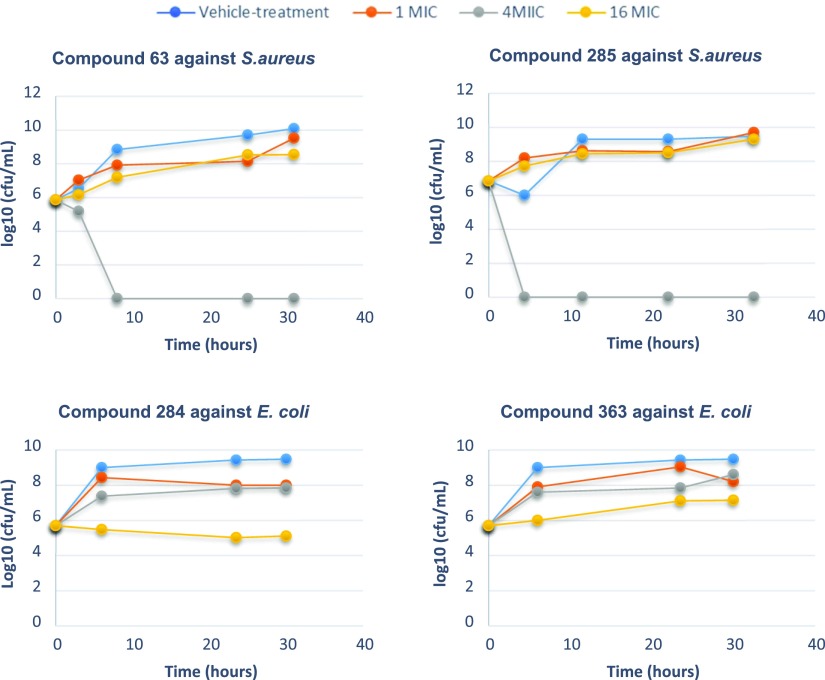
Novel antibiotics are urgently needed. The troponoids [tropones, tropolones, and α-hydroxytropolones (α-HT)] can have anti-bacterial activity. We synthesized or purchased 92 troponoids and evaluated their antibacterial activities against Staphylococcus aureus, Escherichia coli, Acinetobacter baumannii, and Pseudomonas aeruginosa. Preliminary hits were assessed for minimum inhibitory concentrations (MIC80) and cytotoxicity (CC50) against human hepatoma cells. Sixteen troponoids inhibited S. aureus/E. coli/A. baumannii growth by ≥80% growth at <30 μM with CC50 values >50 μM. Two selected tropolones (63 and 285) inhibited 18 methicillin-resistant S. aureus (MRSA) strains with similar MIC80 values as against a reference strain. Two selected thiotropolones (284 and 363) inhibited multidrug-resistant (MDR) E. coli with MIC80 ≤30 μM. One α-HT (261) inhibited MDR-A. baumannii with MIC80 ≤30 μM. This study opens new avenues for development of novel troponoid antibiotics to address the critical need to combat MDR bacterial infections.
Conflict of interest statement
The authors declare no competing financial interest.
Figures

References
Grants and funding
LinkOut - more resources
Full Text Sources
Other Literature Sources
Molecular Biology Databases