


Radiobiological considerations in combining doses from external beam radiotherapy and brachytherapy for cervical cancer
- PMID: 30534020
- PMCID: PMC6277272
- DOI: 10.1016/j.rpor.2018.05.007
Radiobiological considerations in combining doses from external beam radiotherapy and brachytherapy for cervical cancer
Abstract
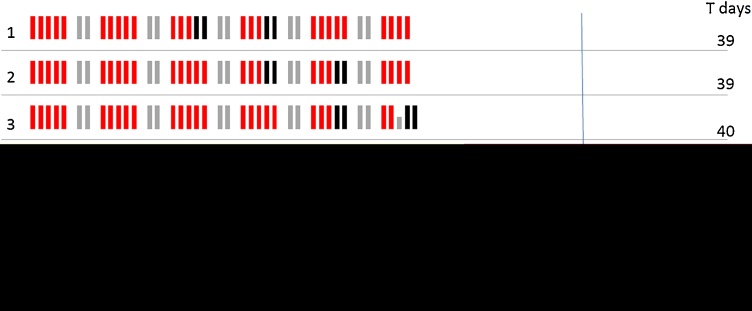
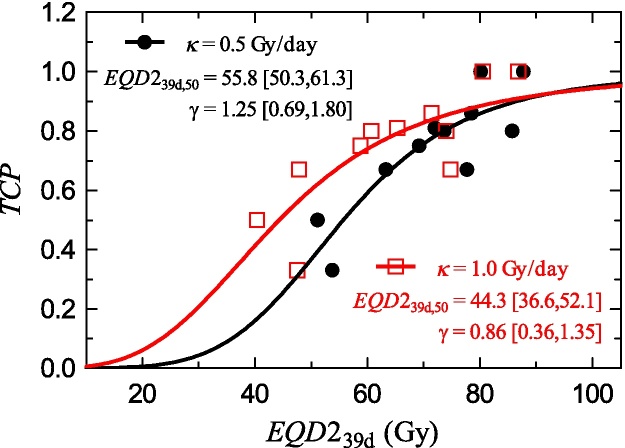
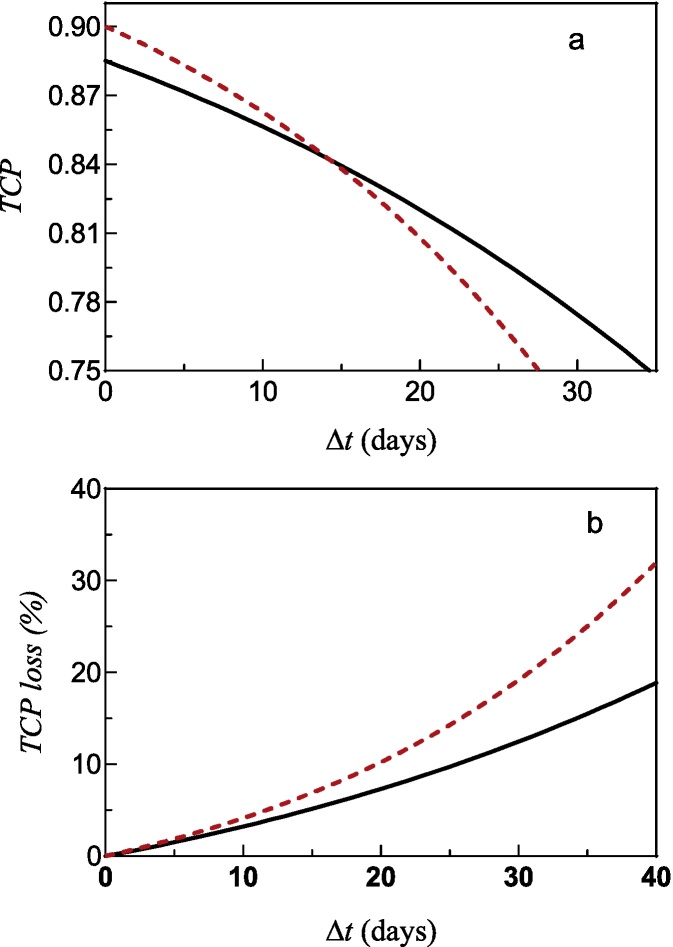
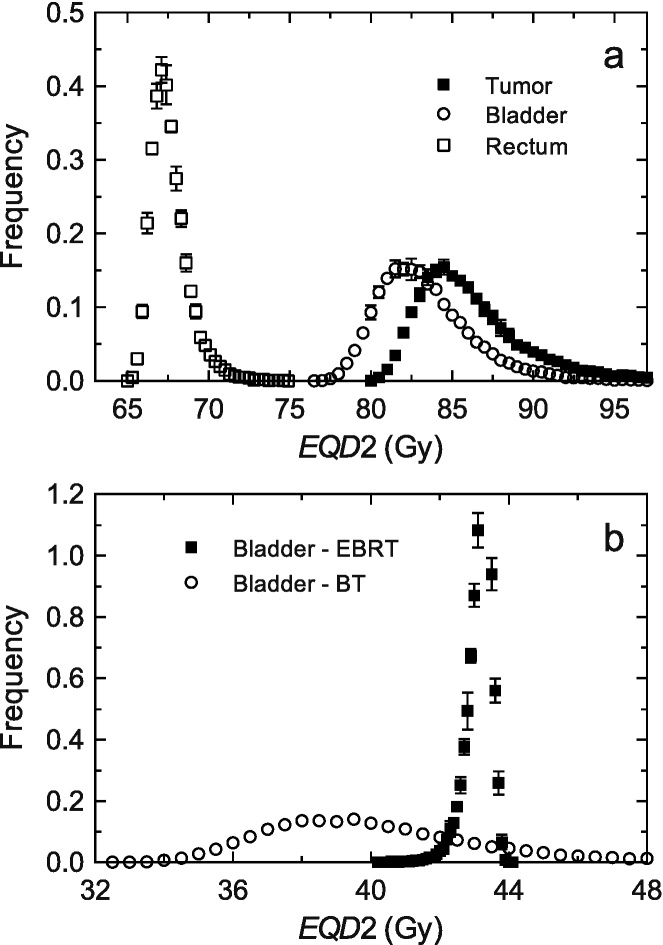
The recommended radio-therapeutic treatment for cervix cancer consists of a first phase of external beam radiotherapy (EBRT) plus a second phase of brachytherapy (BT), the combined treatment being delivered within 8 weeks. In order to assess a comprehensive dosimetry of the whole treatment, it is necessary to take into account that these two phases are characterized by different spatial and temporal dosimetric distributions, which complicates the task of the summation of the two contributions, EBRT and BT. Radiobiology allows to tackle this issue pragmatically by means of the LQ model and, in fact, this is the usual tool currently in use for this matter. In this work, we describe the rationale behind the summation of the dosimetric contributions of the two phases of the treatment, EBRT and BT, for cervix cancer, as carried out with the LQ model. Besides, we address, from a radiobiological point of view, several important considerations regarding the use of the LQ model for this task. One of them is the analysis of the effect of the overall treatment time in the result of the global treatment. Another important question considered is related to the fact that the capacity of LQ to predict the treatment outcomes is deteriorated when the dose per fraction of the radiotherapic scheme exceeds 6-10 Gy, which is a typical brachytherapy fractionation. Finally, we analyze the influence of the uncertainty and the variability of the main parameters utilized in the LQ model formulation in the assessment of the global dosimetry.
Keywords: Brachytherapy; Cervix cancer; Combined treatment; LQ model; Overall treatment time; Radiobiology.
Figures
References
-
- ICRU Report 89 Prescribing, recording, and reporting brachytherapy for cancer of the cervix. J ICRU. 2016;13(1–2) - PubMed
-
- Barraclough L.H., Swindell R., Livsey J.E., Hunter R.D., Davidson S.E. External beam boost for cancer of the cervix uteri when intracavitary therapy cannot be performed. Int J Radiat Oncol Biol Phys. 2008;71:772–778. - PubMed
-
- Beadle B.M., Jhingran A., Yom S.S., Ramirez P.T., Eifel P.J. Patterns of regional recurrence after definitive radiotherapy for cervical cancer. Int J Radiat Oncol Biol Phys. 2010;76:1396–1403. - PubMed
-
- Gerbaulet A., Pötter R., Mazeron J.J., Meertens H., Van Limbergen E. European Society for Radiotherapy and Oncology; Brussels: 2002. The GEC ESTRO handbook of brachytherapy.
-
- Lim A., Sia S. Outcomes of chemoradiotherapy in cervical cancer—the Western Australian experience. Int J Radiat Oncol Biol Phys. 2012;82:1431–1438. - PubMed
Publication types
LinkOut - more resources
Full Text Sources
Other Literature Sources
