


A Systematic Review on the Pharmacokinetics of Cannabidiol in Humans
- PMID: 30534073
- PMCID: PMC6275223
- DOI: 10.3389/fphar.2018.01365
A Systematic Review on the Pharmacokinetics of Cannabidiol in Humans
Abstract
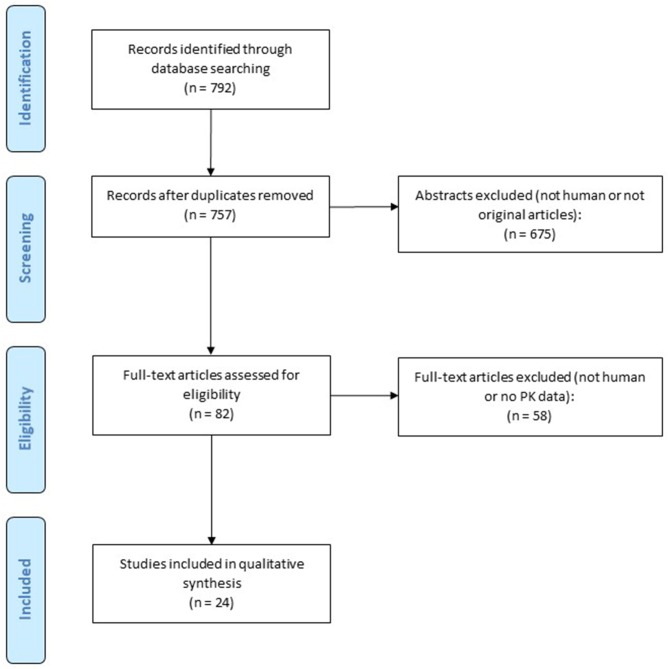
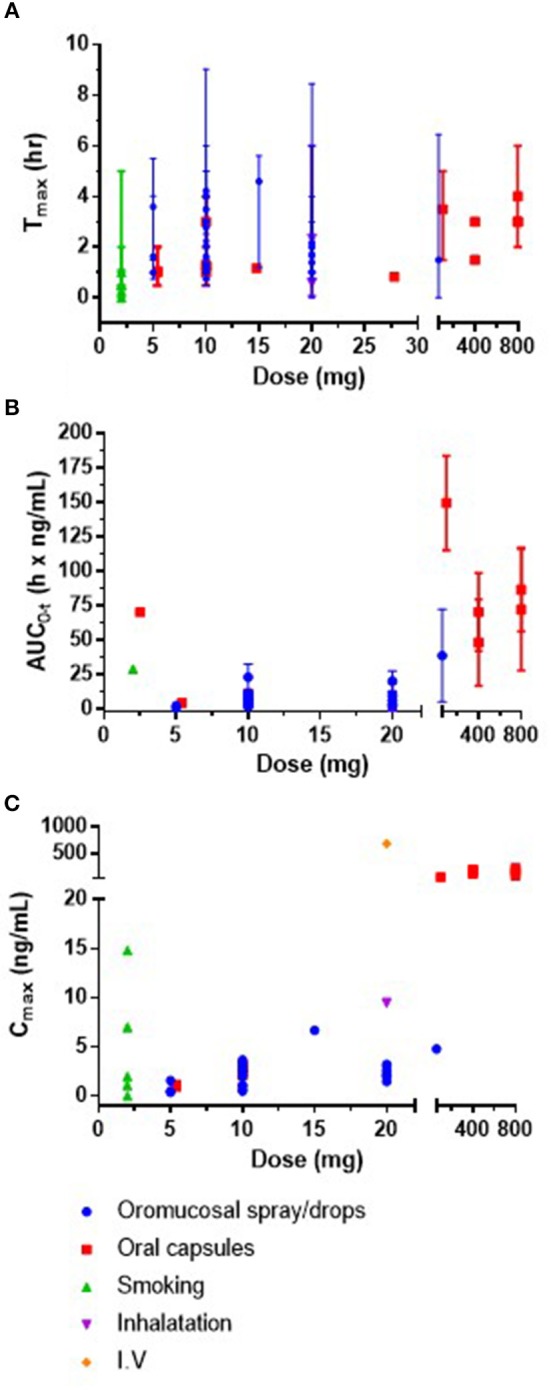
Background: Cannabidiol is being pursued as a therapeutic treatment for multiple conditions, usually by oral delivery. Animal studies suggest oral bioavailability is low, but literature in humans is not sufficient. The aim of this review was to collate published data in this area. Methods: A systematic search of PubMed and EMBASE (including MEDLINE) was conducted to retrieve all articles reporting pharmacokinetic data of CBD in humans. Results: Of 792 articles retireved, 24 included pharmacokinetic parameters in humans. The half-life of cannabidiol was reported between 1.4 and 10.9 h after oromucosal spray, 2-5 days after chronic oral administration, 24 h after i.v., and 31 h after smoking. Bioavailability following smoking was 31% however no other studies attempted to report the absolute bioavailability of CBD following other routes in humans, despite i.v formulations being available. The area-under-the-curve and Cmax increase in dose-dependent manners and are reached quicker following smoking/inhalation compared to oral/oromucosal routes. Cmax is increased during fed states and in lipid formulations. Tmax is reached between 0 and 4 h. Conclusions: This review highlights the paucity in data and some discrepancy in the pharmacokinetics of cannabidiol, despite its widespread use in humans. Analysis and understanding of properties such as bioavailability and half-life is critical to future therapeutic success, and robust data from a variety of formulations is required.
Keywords: CMAX; TMAX; bioavailability; endocannabinoid system; half life; pharmacokinetics; plasma clearance; volume of distribution.
Figures
References
LinkOut - more resources
Full Text Sources
Other Literature Sources
Medical
