Review
. 2018 Nov 26:9:1669.
doi: 10.3389/fphys.2018.01669. eCollection 2018.

Diabetes and Arrhythmias: Pathophysiology, Mechanisms and Therapeutic Outcomes

Affiliations
Review

Diabetes and Arrhythmias: Pathophysiology, Mechanisms and Therapeutic Outcomes

Laurel A Grisanti. Front Physiol. .

Abstract

The prevalence of diabetes is rapidly increasing and closely associated with cardiovascular morbidity and mortality. While the major cardiovascular complication associated with diabetes is coronary artery disease, it is becoming increasingly apparent that diabetes impacts the electrical conduction system in the heart, resulting in atrial fibrillation, and ventricular arrhythmias. The relationship between diabetes and arrhythmias is complex and multifactorial including autonomic dysfunction, atrial and ventricular remodeling and molecular alterations. This review will provide a comprehensive overview of the link between diabetes and arrhythmias with insight into the common molecular mechanisms, structural alterations and therapeutic outcomes.

Keywords: arrhythmia; atrial fibrillation; autonomic dysregulation; cardiac fibrosis; diabetes mellitus.


Figures
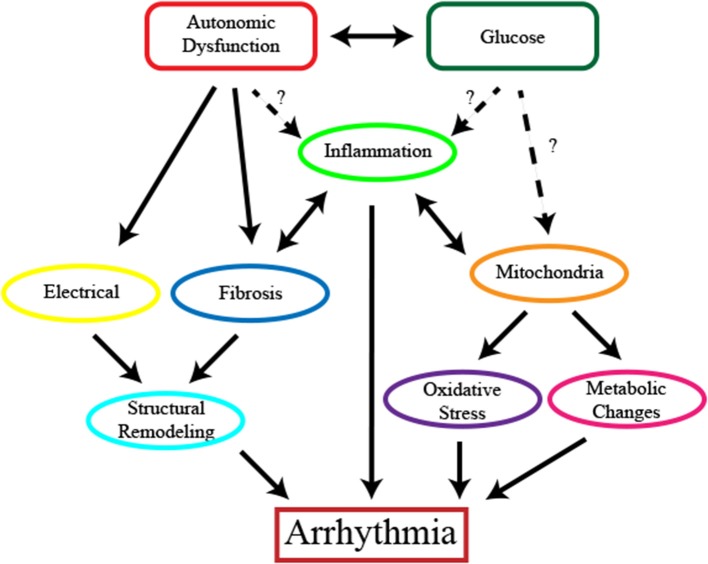
Figure 1
Figure 1
The complex relationship between diabetes and cardiac arrhythmias. Potential contributors to the induction of cardiac arrhythmias including hypoglycemia, hyperglycemia or glucose fluctuations and autonomic dysfunction activate multiple mechanisms to contribute to the development of cardiac arrhythmias. Structural remodeling including changes in the electrical conduction of the heart and fibrosis promote and potentiate the progression of the disease. Mitochondrial dysfunction leads to changes in cardiomyocyte function and metabolism and contributes to disease progression through oxidative stress. Inflammation is present and may arise as a result of oxidative stress and structural changes.
Figure 2
Figure 2
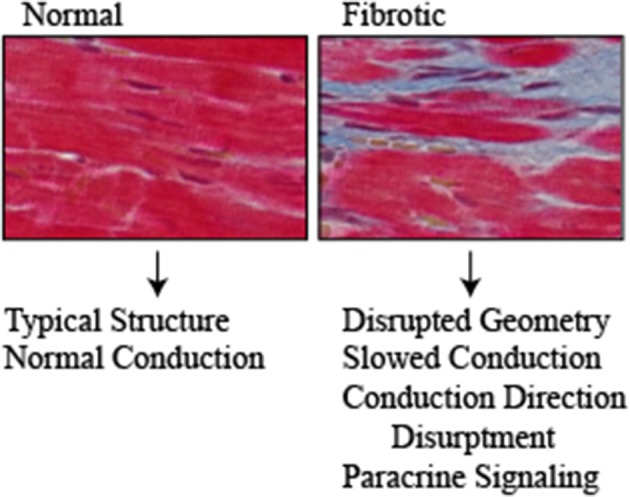
Normal and fibrotic cardiac tissue highlights the structural changes that occur with fibrosis (Red = cardiomyocytes, Blue = fibrosis). Structural changes that occur with diabetes contribute to the pathogenesis of arrhythmias through disrupting the normal architecture of the heart. Fibrosis and fat deposits slow the electrical conduction and disrupt the direction. Furthermore, they serve as a source of paracrine signaling molecules including cytokines/chemokines, adipokines and pro-fibrotic that exasperate the disease.

References

    1. Abe I., Teshima Y., Kondo H., Kaku H., Kira S., Ikebe Y., et al. (2018). Association of fibrotic remodeling and cytokines/chemokines content in epicardial adipose tissue with atrial myocardial fibrosis in patients with atrial fibrillation. Heart Rhythm. 15, 1717–27. 10.1016/j.hrthm.2018.06.025 - DOI - PubMed
    1. Action to Control Cardiovascular Risk in Diabetes Study G., Gerstein H. C., Miller M. E., Byington R. P., Goff D. C., Bigger J. T., et al. (2008). Effects of intensive glucose lowering in type 2 diabetes. N. Engl. J. Med. 358, 2545–2559. 10.1056/NEJMoa0802743 - DOI - PMC - PubMed
    1. Agarwal S. K., Norby F. L., Whitsel E. A., Soliman E. Z., Chen L. Y., Loehr L. R., et al. . (2017). Cardiac autonomic dysfunction and incidence of atrial fibrillation: results from 20 years follow-up. J. Am. Coll. Cardiol. 69, 291–299. 10.1016/j.jacc.2016.10.059 - DOI - PMC - PubMed
    1. Al Chekakie M. O., Welles C. C., Metoyer R., Ibrahim A., Shapira A. R., Cytron J., et al. . (2010). Pericardial fat is independently associated with human atrial fibrillation. J. Am. Coll. Cardiol. 56, 784–788. 10.1016/j.jacc.2010.03.071 - DOI - PubMed
    1. Anderson E. J., Kypson A. P., Rodriguez E., Anderson C. A., Lehr E. J., Neufer P. D. (2009). Substrate-specific derangements in mitochondrial metabolism and redox balance in the atrium of the type 2 diabetic human heart. J. Am. Coll. Cardiol. 54, 1891–1898. 10.1016/j.jacc.2009.07.031 - DOI - PMC - PubMed

LinkOut - more resources