


Two-year prevalence of dysphagia and related outcomes in head and neck cancer survivors: An updated SEER-Medicare analysis
- PMID: 30536748
- PMCID: PMC6355350
- DOI: 10.1002/hed.25412
Two-year prevalence of dysphagia and related outcomes in head and neck cancer survivors: An updated SEER-Medicare analysis
Abstract
Background: The aim of the study was to examine prevalence of dysphagia at the population level in head and neck cancer (HNC) survivors.
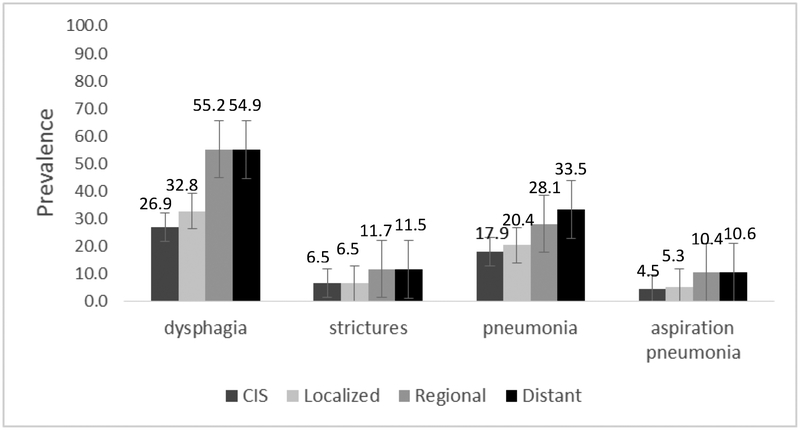
Methods: Surveillance, Epidemiology, and End Results-Medicare claims among 16 194 patients with HNC (2002-2011) were analyzed to estimate 2-year prevalence of dysphagia, stricture, and aspiration pneumonia, and derive treatment- and site-specific estimates.
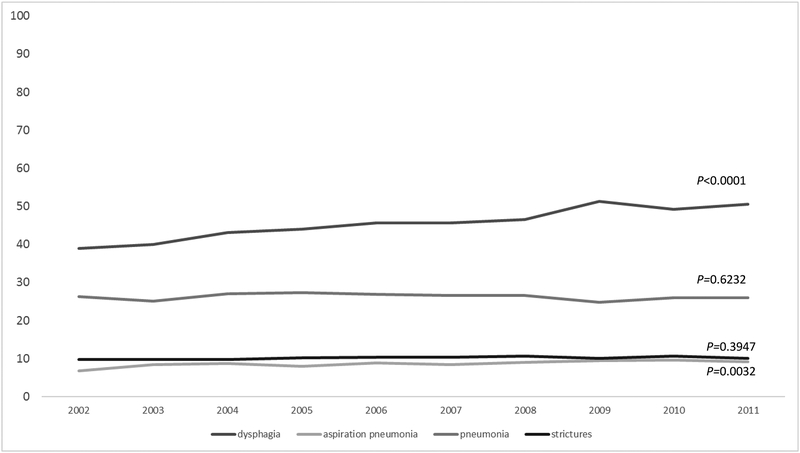
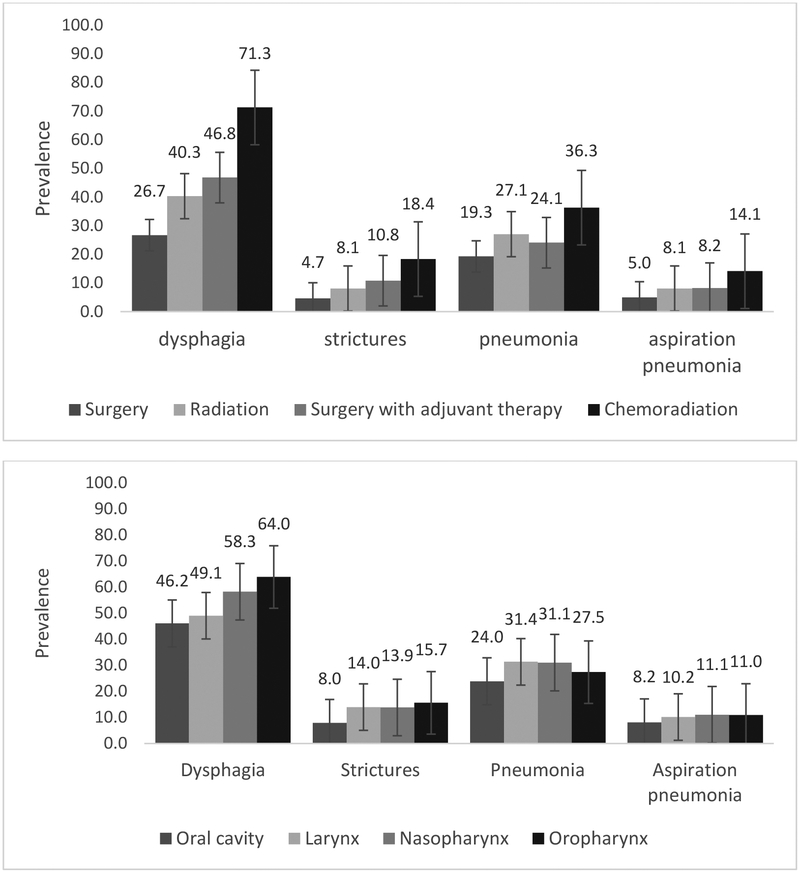
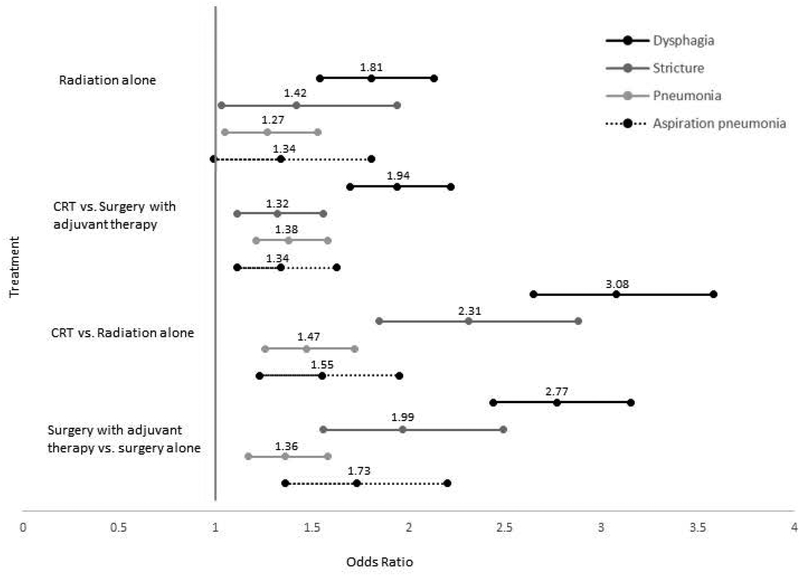
Results: Prevalence of dysphagia, stricture, pneumonia, and aspiration pneumonia was 45.3% (95% confidence interval [CI]: 44.5-46.1), 10.2% (95% CI: 9.7-10.7), 26.3% (95% CI: 25.6-26.9), and 8.6% (95% CI: 8.2-9.1), respectively. Dysphagia increased by 11.7% over the 10-year period (P < .001). Prevalence was highest after chemoradiation and multimodality therapy.
Conclusion: Comparing to published rates using similar methodology the preceding decade (1992-1999), prevalence of dysphagia based on claims data was similar in 2002-2011 in this study. These results suggest persistence of dysphagia as a highly prevalent morbidity, even in the decade in which highly conformal radiotherapy and minimally invasive surgeries were popularized.
Keywords: SEER-Medicare; aspiration pneumonia; dysphagia; head and neck cancer; stricture.
© 2018 Wiley Periodicals, Inc.
Conflict of interest statement
CONFLICT OF INTEREST: The authors made no disclosures.
Figures
References
-
- Goepfert RP, Fuller CD, Gunn GB, et al. Symptom burden as a driver of decisional regret in long-term oropharyngeal carcinoma survivors. Head Neck 2017;39(11):2151–2158. - PubMed
Publication types
MeSH terms
Grants and funding
- R01CA218148/CA/NCI NIH HHS/United States
- P30 CA016672/CA/NCI NIH HHS/United States
- R01CA218148R03CA188162/CA/NCI NIH HHS/United States
- R01 DE025248/DE/NIDCR NIH HHS/United States
- R03 CA188162/CA/NCI NIH HHS/United States
- P30CA016672/NCI Cancer Center/International
- Toward Preventing Pneumonia in Chronic Aspirators Videofluoroscopic Grading of Dysphagia in Organ Pr/University of Texas MD Anderson Cancer Center/International
- R03CA188162/CA/NCI NIH HHS/United States
- R01 CA218148/CA/NCI NIH HHS/United States
- MD Anderson Institutional Research/International
- 1R01DE025248/National Institutes of Health (NIH)/National Institute for Dental and Craniofacial Research/International
LinkOut - more resources
Full Text Sources
Medical
