


Prefronto-cerebellar neuromodulation affects appetite in obesity
- PMID: 30538282
- PMCID: PMC6559868
- DOI: 10.1038/s41366-018-0278-8
Prefronto-cerebellar neuromodulation affects appetite in obesity
Abstract
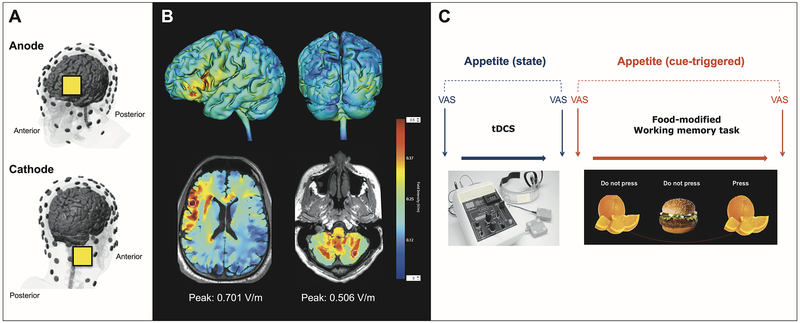
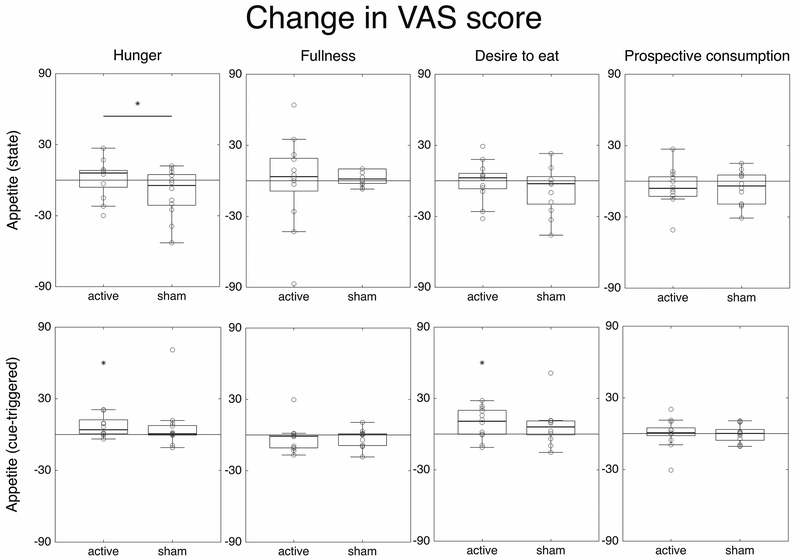
Human neuroimaging studies have consistently reported changes in cerebellar function and integrity in association with obesity. To date, however, the nature of this link has not been studied directly. Emerging evidence suggests a role for the cerebellum in higher cognitive functions through reciprocal connections with the prefrontal cortex. The purpose of this exploratory study was to examine appetite changes associated with noninvasive prefronto-cerebellar neuromodulation in obesity. Totally, 12 subjects with class I obesity (mean body mass index 32.9 kg/m2) underwent a randomized, single-blinded, sham-controlled, crossover study, during which they received transcranial direct current stimulation ((tDCS); active/sham) aimed at simultaneously enhancing the activity of the prefrontal cortex and decreasing the activity of the cerebellum. Changes in appetite (state and food-cue-triggered) and performance in a food-modified working memory task were evaluated. We found that active tDCS caused an increase in hunger and desire to eat following food-cue exposure. In line with these data, subjects also tended to make more errors during the working memory task. No changes in basic motor performance occurred. This study represents the first demonstration that prefronto-cerebellar neuromodulation can influence appetite in individuals with obesity. While preliminary, our findings support a potential role for prefronto-cerebellar pathways in the behavioral manifestations of obesity.
Conflict of interest statement
Conflict of Interest
Drs. Abhishek Datta and Marom Bikson are co-founders of Soterix Medical. The City University of New York has patent applications in Drs. Datta and Bikson’s name on brain stimulation. The rest of the authors declare no conflict of interest.
Figures
References
-
- Gautier JF, Chen K, Salbe AD, Bandy D, Pratley RE, Heiman M et al. Differential brain responses to satiation in obese and lean men. Diabetes 2000; 49: 838–846. - PubMed
Publication types
MeSH terms
Grants and funding
LinkOut - more resources
Full Text Sources
Medical
