


The role of the personality traits and work characteristics in the prediction of the burnout syndrome among nurses-a new approach within predictive, preventive, and personalized medicine concept
- PMID: 30538787
- PMCID: PMC6261904
- DOI: 10.1007/s13167-018-0151-9
The role of the personality traits and work characteristics in the prediction of the burnout syndrome among nurses-a new approach within predictive, preventive, and personalized medicine concept
Abstract
Background: The burnout syndrome is characterized by emotional exhaustion, depersonalization, and lack of personal accomplishment. It was identified in some professional categories, the most often being affected those in public health services.
Objectives: This study mainly aims to identify and analyze the value of the personality traits and work characteristics as predictive factors for the occurrence of the burnout syndrome in nurses, under the new approach of predictive, preventive, and personalized medicine.
Method: A total of 192 nurses were included in the study. The NEO-Five-Factor Inventory, the Copenhagen Burnout Inventory, and the Inventory of Nursing Work Characteristics were administered to all of the participants.
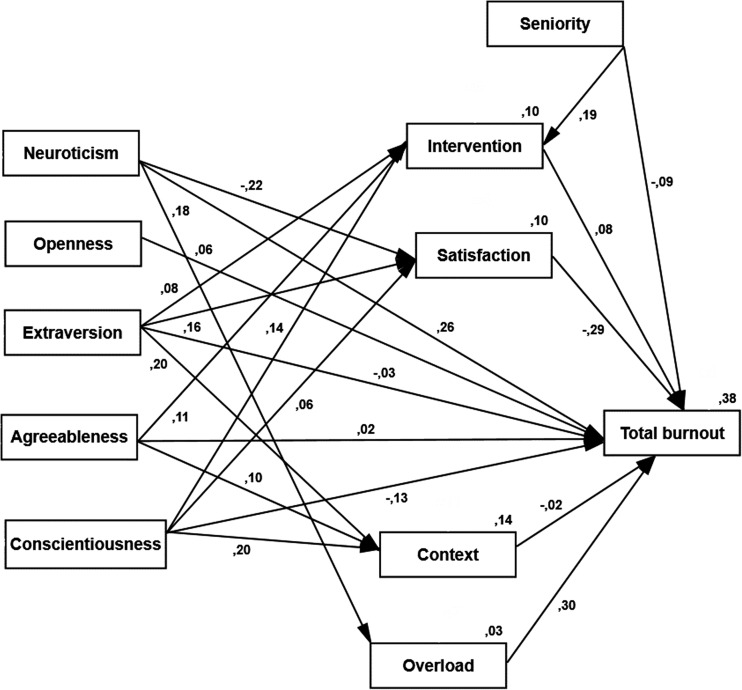
Results: Some personality traits proved to be predictive factors for the occurrence of the burnout syndrome. Neuroticism, negative self-esteem, and negative emotionality predict burnout vulnerability. The negative correlations between sociability and the burnout dimensions show that the positive affectivity of the extraverted individuals and the strong positive orientation of the extraverts towards others are protective factors against burnout. There are also significant associations between certain personality traits and nursing work characteristics (work overload, the existence of problems in the department, and satisfaction in the professional and family life), which could be defined, also, as predictive factors for burnout.
Conclusions: This study confirms the influence of the Big Five personality traits and nursing work characteristics as predictive factors of the burnout occurrence, opening real possibilities to perform a targeted prevention and provide personalized interventions as organizational services.
Keywords: Burnout syndrome; Copenhagen Burnout Inventory; Nurses; Personality traits; Predictive, preventive personalized medicine; Work characteristics.
Conflict of interest statement
The authors declare that they have no conflict of interest. All authors approve the content of the manuscript and have contributed significantly to the research and the writing of the manuscript.The research did not involve any risk for the participants. All ethical guidelines were followed as required for conducting human research. The procedures performed in this study involving human participants were in accordance with the ethical standards of the institutional research, the study being approved to be run by the manager of the Emergency County Hospital Brasov, where the study was conducted and by the Committee for Ethical Research of Transylvania University of Brasov (Ethical approval number 06.2/2017). The research was also consistent with the ethical guidelines of The College of Psychologists in Romania. The research complies with the provisions of the Declaration of Helsinki (as revised in Brazil 2013). All the participants gave their informed consent for the research and their anonymity was preserved.
Figures
References
-
- Aiken LH, Sloan D. Effects of organizational innovations on AIDS care on burnout among hospital nurses. Work Occup. 1977;24(4):455–477.
-
- Grigorescu S, Grigorescu D, Rogozea L. Psihosocial factors generators of burnout in the public health system. J Med Brasov. 2016:4–10 ISSN 1841-0782.
LinkOut - more resources
Full Text Sources
